Are you wondering whether the “12V 112Ah 84Ah Rechargeable LiFePO4 Lithium Iron Phosphate Battery 2000 Deep Cycle Battery 1400Wh Batteries for Rv Solar Boat Marine Trolling Motor” is the right power solution for your RV, boat, solar setup, or trolling motor?

Quick overview
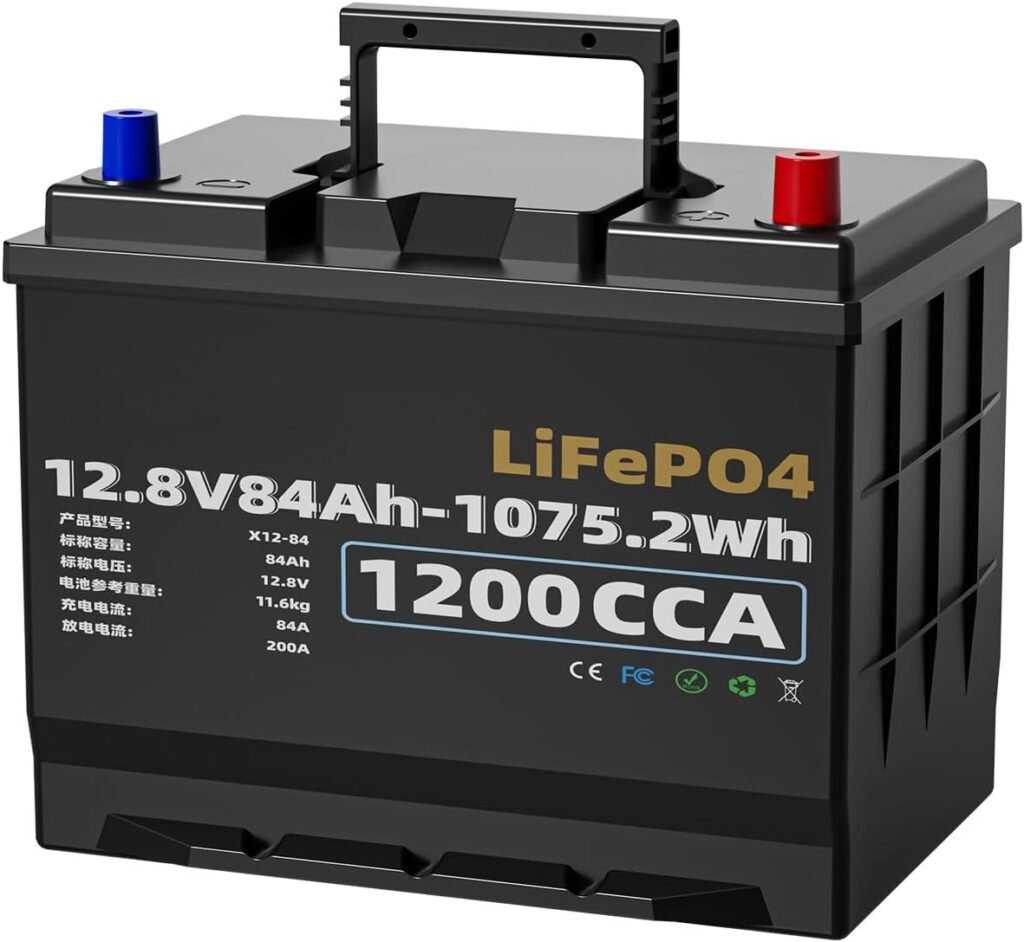
You’ll get a lot of useful features packed into this LiFePO4 battery offering, including an integrated BMS, aluminum alloy housing, and long cycle life. The listing mixes two capacity options (112Ah and 84Ah) and gives practical specs like operating temperature range, charge/discharge cycle life, and self-discharge rate that matter for real-world use.
What’s included in the product description
You’re given two capacity options in the product name and several key data points: max constant discharge current (30A), two different physical sizes, integrated BMS protections, operating temperature range (-20 to 60 °C), water-resistant aluminum shell, and claimed cycle life up to 2000 cycles. Those are the headline items you’ll want to check against your needs.
Specifications at a glance
You’ll appreciate a clear table to summarize the most important numbers, so you can compare against your equipment and figure out whether the battery will meet your demands.
| Specification | Details |
|---|---|
| Product name | 12V 112Ah 84Ah Rechargeable LiFePO4 Lithium Iron Phosphate Battery 2000 Deep Cycle Battery 1400Wh Batteries for Rv Solar Boat Marine Trolling Motor |
| Nominal voltage | 12V |
| Capacity options | 112Ah or 84Ah (two models) |
| Approx. energy (12V) | ~1344 Wh (112Ah), ~1008 Wh (84Ah) — note product lists 1400Wh |
| Max constant discharge | 30A |
| Recommended motor rating (listed) | Suitable for 1400W motors (see notes below) |
| BMS protections | Overcharge, over-discharge, overload, short circuit |
| Operating temperature | -20 to 60 °C |
| Self-discharge (idle) | ≤ 3% |
| Cycle life | Up to 2000 cycles |
| Expected lifespan | 5–7 years (typical) |
| Charge time | ~5–7 hours for full charge (typical) |
| Shell material | Aluminum alloy, water-resistant and shock-resistant |
| Dimensions | 260 × 221 × 175 mm and 318 × 187 × 176 mm (two sizes) |
Notes on the specs table
You’ll notice the listing mixes numbers that need a little interpretation. For instance, the 1400Wh figure doesn’t match 12V × 112Ah exactly (that’s ≈1344Wh). Also, the 30A continuous current rating limits sustained power to about 360W at 12V (12V × 30A), so you should be careful interpreting the “suitable for 1400W motors” claim. You’ll want to read the sections below to understand how to reconcile these numbers with your real needs.
Capacity and energy calculations
You’ll want to translate amp-hours into run-time and usable energy so you can match the battery to your devices.
How to read the amp-hour numbers
Amp-hours (Ah) tell you how much charge the battery stores at a specific voltage. If you have the 112Ah model, multiply 12V × 112Ah to get the theoretical stored energy (~1344Wh). For the 84Ah model, that’s ~1008Wh. Keep in mind usable energy will often be less depending on inverter losses and how deeply you discharge the battery.
Practical usable capacity
You’ll usually avoid discharging a LiFePO4 battery below 10–20% if you want long life, but LiFePO4 chemistry tolerates deeper discharges better than lead-acid. If you use 80–90% of the capacity safely, you could expect usable energy roughly:
- 112Ah model: ~1,075–1,210 Wh usable (80–90%)
- 84Ah model: ~806–907 Wh usable (80–90%)
Continuous discharge and motor compatibility
This is a crucial area where you need to pay attention. The product lists a max constant discharge of 30A, and also says it’s suitable for 1400W motors — you’ll want to reconcile those two claims carefully.
Understanding the 30A limit
30A continuous at 12V equals ~360W continuous. If you run a 360W load, the battery can theoretically sustain it continuously without exceeding the 30A rating. If your load draws more than 30A, you risk activating BMS protections, voltage sag, or overheating.
Why the “suitable for 1400W motors” claim requires caution
A 1400W motor at 12V would draw about 116–117A continuously (1400W ÷ 12V ≈ 116.7A). That is far above the 30A continuous rating of this battery. You shouldn’t expect a single battery of this model to reliably run a 1400W motor on its own. If you need to run a high-power motor, you’ll have to:
- Use multiple batteries in parallel to increase the available current (each added battery adds its 30A continuous capability, roughly), or
- Choose a battery with a higher continuous discharge rating, or
- Use a higher-voltage system that reduces current draw (e.g., 24V or 36V motor systems and appropriate battery bank), or
- Consider whether the motor’s rated power is a peak rating rather than continuous — some trolling motors list peak watts far above continuous draw, and short bursts may be tolerated by the BMS for limited time.

BMS and safety features
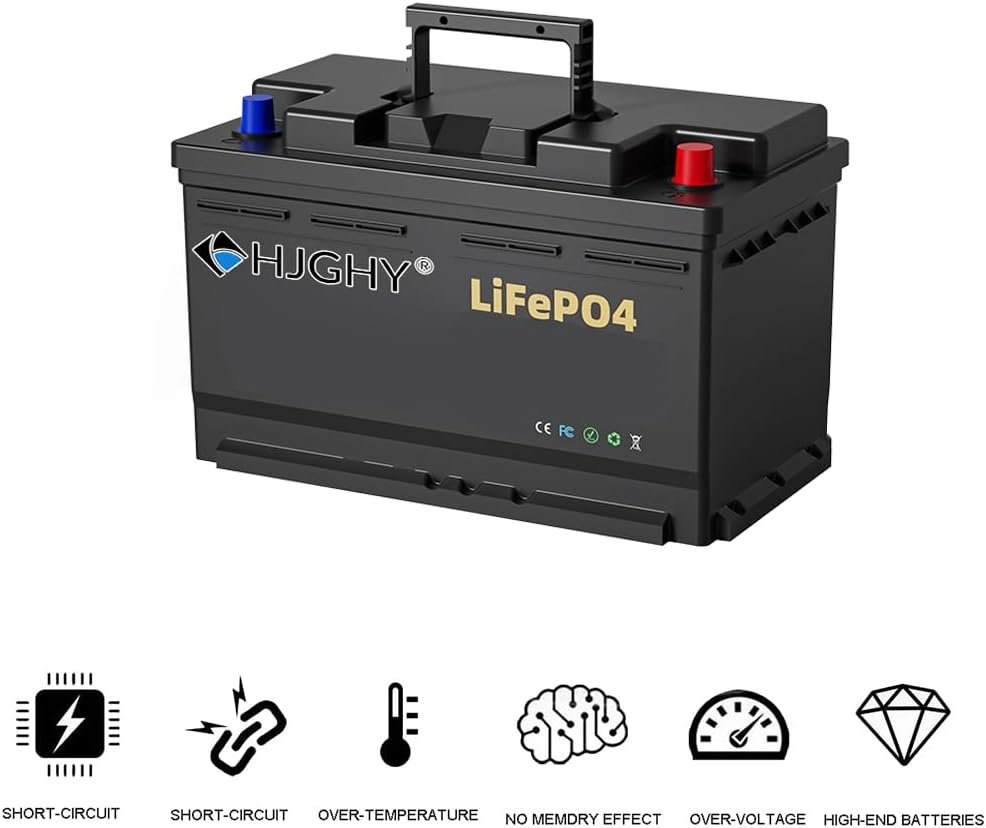
You’ll find the integrated BMS is one of the biggest advantages of modern LiFePO4 batteries, and this product includes standard protections that matter to you.
What the integrated BMS does for you
The BMS protects the battery from overcharge, over-discharge, overload, and short circuits. That means the battery will attempt to prevent scenarios that can damage cells or create unsafe conditions. The protection is essential for vehicle and marine use, where electrical loads can be unpredictable.
Temperature and environmental protections
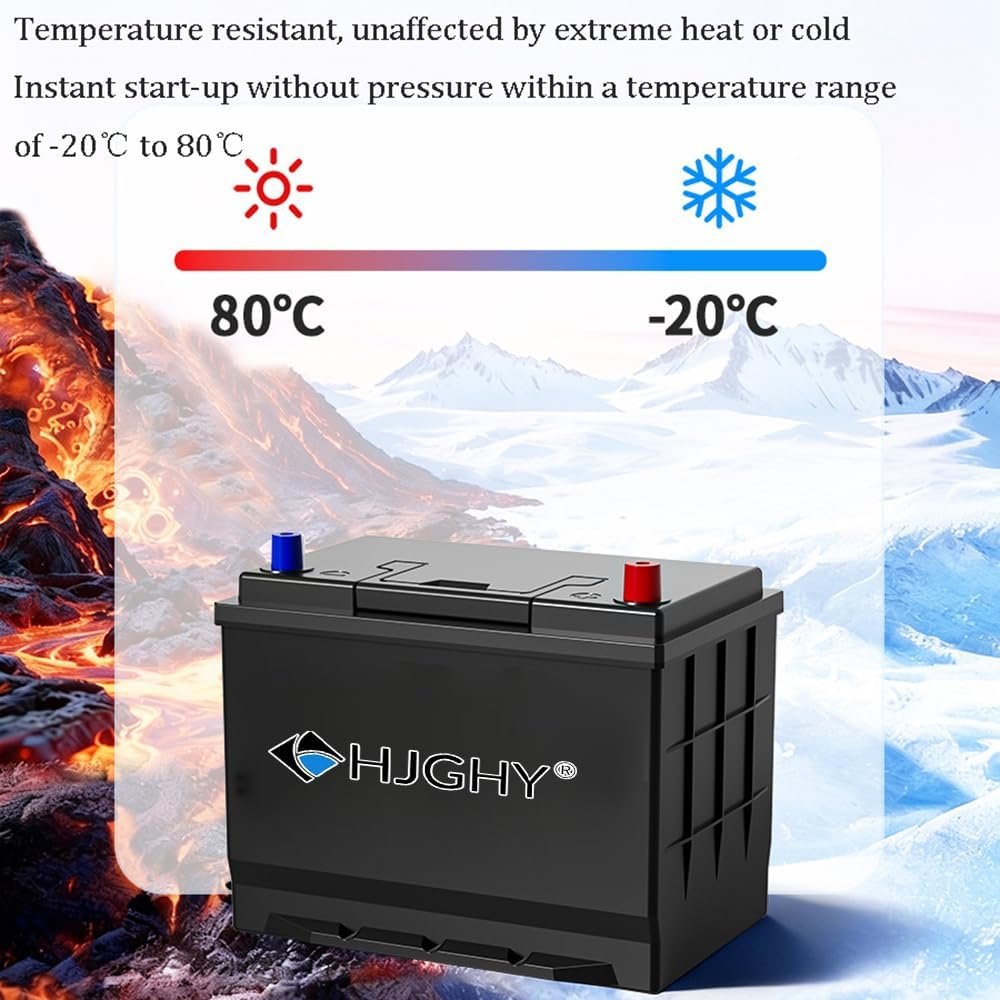
You’ll be able to use this battery across a wide range of temperatures (-20 to 60 °C). That range covers most climates, but charging performance at the extremes can be affected, and some BMS units restrict charging below certain temperatures to protect the cells. The aluminum alloy housing helps protect against impact, vibration, and moisture.
Durability and build quality
The physical construction matters when you’re putting a battery in an RV, boat, or similar mobile environment.
Aluminum shell and water-resistance
You’ll like the aluminum alloy shell because it balances strength and weight. The manufacturer claims water resistance and the ability to resist vibration and shock, which is useful for marine and mobile applications. That said, you should still mount the battery securely and protect electrical connections from moisture.
Vibration, shock, and installation positions
You’ll appreciate that the battery can be installed in most positions, which gives you installation flexibility. Still, you should follow the manufacturer’s mounting recommendations to avoid undue stress on terminals or connections.
Cycle life and lifespan expectations
You’ll want to know how long the battery will last under real-world use.
Cycle-life figures and practical meaning
The listing claims up to 2000 charge/discharge cycles. If you cycle the battery once per day, you could expect multiple years of operation—2000 cycles translates to about 5–7 years depending on depth of discharge and load patterns. If you cycle less frequently (e.g., weekend or occasional use), the calendar life may be longer.
Factors that influence lifespan
You’ll get the longest life if you:
- Avoid extreme temperatures during charge/discharge,
- Keep the battery within recommended SOC (state of charge) ranges when possible,
- Use a proper charger and avoid over-discharging,
- Avoid continuous operation near the battery’s max discharge limit and avoid frequent high-rate discharges.
Charging recommendations and compatibility
How you charge this battery matters for performance and lifespan.
Charge time and chargers
You’ll typically charge a 112Ah battery in about 5–7 hours to full using a properly sized charger. For faster charging you can use a higher current charger as long as it follows LiFePO4 charging profiles and doesn’t exceed manufacturer-specified input charging current. LiFePO4 batteries prefer a CC/CV (constant current/constant voltage) profile with an upper voltage around 14.4V for 12V systems, though exact voltages can vary slightly by manufacturer.
Solar charging and charge controllers
You’ll be able to integrate this battery into a solar system. Use an MPPT or PWM charge controller configured for LiFePO4 charging parameters. If your solar controller is programmable, set bulk/absorption/float voltages according to LiFePO4 recommendations (reportedly 14.2–14.6V absorption and 13.4–13.6V float depending on the system). If you don’t configure the controller properly, you risk undercharging or overcharging.
Installation tips and safety
Installation choices influence safety and performance.
Physical mounting and ventilation
You’ll mount this battery on a flat surface and secure it to minimize movement during travel. While the casing is water-resistant, you shouldn’t submerge the battery or expose terminals to steady splashing. Provide some ventilation around the battery and avoid enclosing it in a completely sealed compartment without consideration for heat buildup.
Wiring, fuses, and breakers
You’ll protect the battery with appropriate fuses or battery breakers sized for your maximum expected current, not just the 30A continuous rating. If you wire batteries in parallel to increase current capacity, make sure wiring is balanced and fusing is done to protect against faults. Use torque-specified terminal connections and corrosion-resistant hardware in marine environments.
Real-world run-time examples
You’ll find a practical table useful to estimate how long the battery will run typical loads. The table below assumes approximate usable energy (80% usable) and ignores inverter losses; if you use an inverter, expect an additional 10–15% loss.
| Load (W) | Approx. current at 12V (A) | Run-time on 112Ah (~1,075Wh usable) | Run-time on 84Ah (~806Wh usable) |
|---|---|---|---|
| 100W LED lights, small fridge cycle | ~8.3A | ~10.8 hours | ~9.7 hours |
| 300W fridge + fans (average) | ~25A | ~3.6 hours | ~2.7 hours |
| 500W inverter load (AC devices) | ~41.7A | ~1.7 hours (inverter losses may reduce this) | ~1.1 hours |
| 1400W motor (continuous) | ~116.7A | Not supported by single battery (over 30A rating) | Not supported by single battery |
What these run-times mean for you
You’ll see that the battery handles light to moderate loads well, but it’s not suitable alone for sustained heavy loads like a continuous 1400W motor. For high-power loads you’ll need multiple batteries or a battery with a higher continuous discharge rating.
Use cases: where this battery fits best
This battery can be a great fit for several common scenarios when used correctly.
For RV and camping
You’ll get reliable power for lights, pumps, fans, small fridges, and electronics over a weekend or extended trip depending on your consumption. Pair the battery with a suitable inverter, charge controller, and charging strategy (solar/alternator/shore power) for flexibility.
For solar energy storage
You’ll be able to use the battery as a small to medium solar storage unit for off-grid or backup power systems. If you build a battery bank (multiple units), you’ll scale capacity and current capability for heavier loads.
For marine applications and trolling motors
You’ll enjoy the corrosion resistance and vibration tolerance of the aluminum shell. For trolling motors specifically, you must check the motor’s continuous current draw. For low-power trolling motors, a single battery may be fine. For higher-power motors, you’ll need multiple batteries in parallel or a purpose-built high-discharge battery.
Limitations and caveats you should consider
No product is perfect, and there are important limitations to keep in mind.
Continuous current limitation
You’ll need to handle the 30A continuous discharge limit carefully. If your application demands higher continuous currents, you should plan for multiple batteries or a different battery type with higher continuous discharge.
Mismatched marketing claims
You’ll notice the product listing mentions 1400W, yet the continuous current spec doesn’t support that on a single 12V unit. Always calculate the current your load needs and verify the battery can handle it continuously and during startup/peak demands.
Charger compatibility and BMS behavior
You’ll be careful to use chargers and controllers that are LiFePO4-compatible. Some cheap chargers or controllers might not follow appropriate LiFePO4 profiles, and the BMS may limit charging if voltages or temperatures are out of range.
Comparison with lead-acid and other LiFePO4 options
You’ll want to weigh this battery against alternatives before buying.
Vs. lead-acid (flooded/GEL/AGM)
You’ll get much longer cycle life, significantly lower weight, less maintenance, and a higher usable capacity percentage with LiFePO4 than lead-acid. Although the upfront cost is higher, total cost of ownership can be lower because of the cycle life and better usable capacity.
Vs. other LiFePO4 options
You’ll see LiFePO4 batteries with higher continuous discharge ratings and different form factors. If you need high-current applications (like large trolling motors), look for LiFePO4 batteries with higher C-rates or buy multiple units and wire them in parallel. For space-constrained installations, you’ll compare physical dimensions and terminal placement.
Practical setup recommendations
When you install this battery, follow practical steps to get the most from it.
Sizing your battery bank
You’ll calculate daily energy needs in watt-hours and account for inverter and system losses. Then choose a battery or battery bank with enough usable capacity to cover that requirement. If your loads occasionally surge, factor in those peaks when sizing fuses and wiring.
Wiring and parallel connections
If you parallel multiple units to increase capacity and current, you’ll wire them with equal length and gauge cables where practical so the batteries share load evenly. Use a proper battery combiner or busbar arrangement and fuse individual batteries as necessary.
Frequently asked questions (FAQ)
You’ll find short, practical answers to the most common questions about this battery.
Will one battery run my 1400W motor?
No — not reliably. A 1400W motor at 12V draws ~117A, far above the 30A continuous rating. You’d need multiple batteries in parallel or a different battery system designed for high discharge.
How long will the battery last on a typical RV fridge?
It depends on average fridge draw. If the fridge averages 100–200W, expect several hours to over a day depending on the battery capacity and duty cycle. For intermittent duty, the 112Ah version could run a small fridge for many hours.
Can I mount this battery anywhere in my boat or RV?
You can install the battery in most positions, but you should follow mounting and ventilation guidelines, protect terminals, and secure it against movement.
Is the battery waterproof?
The shell is water-resistant and can withstand moisture and splashing, but it’s not likely to be fully submersible. Keep terminals and connections dry.
What charger should I use?
Use a LiFePO4-compatible CC/CV charger, ideally one with programmable output or preset LiFePO4 profile. If using solar, choose a charge controller that supports LiFePO4 settings.
Do I have to worry about self-discharge?
Not much — the self-discharge rate is ≤ 3% when not used. You’ll still want to check battery voltage during long storage periods and maintain an occasional charge.
Pros and cons — a quick summary for your decision
You’ll find the following pros and cons useful in weighing the purchase.
Pros:
- Long cycle life (up to ~2000 cycles)
- Lightweight relative to lead-acid with higher usable capacity
- Integrated BMS for safety
- Wide operating temperature range
- Water-resistant aluminum housing for durability
- Low self-discharge
Cons:
- 30A continuous discharge limits sustained high-power loads
- Marketing claims (1400W) can be misleading if not interpreted correctly
- You might need multiple units for high-current applications, increasing cost and complexity
Final recommendation
If you’re powering lights, small fridges, electronics, fans, and modest inverters or low-power trolling motors, you’ll find this battery an excellent, low-maintenance choice with long life and good environmental tolerance. However, if you plan to run sustained high-current devices like a 1400W trolling motor, you’ll need to either use multiple batteries in parallel, employ a higher-voltage system, or select a battery with a higher continuous discharge rating. Always calculate your load current at 12V, check the BMS limits, and plan wiring and fusing accordingly so your setup is safe and reliable.
If you want, tell me the exact loads you plan to run (list wattage or amp draw of each device, and whether you’ll use an inverter), and I’ll help you size a battery bank and wiring plan that matches your needs.
Disclosure: As an Amazon Associate, I earn from qualifying purchases.