? Are we building a high-capacity, long-lived battery bank for our caravan, marine, or solar system and wondering whether the 3.2V 340Ah LiFePO4 Cell 10000 Cycle Rechargeable Battery Suitable For DIY 12V 24V 48V Caravan Marine Solar Energy System(3.2V 340Ah 32pcs) is a good fit?

Product overview
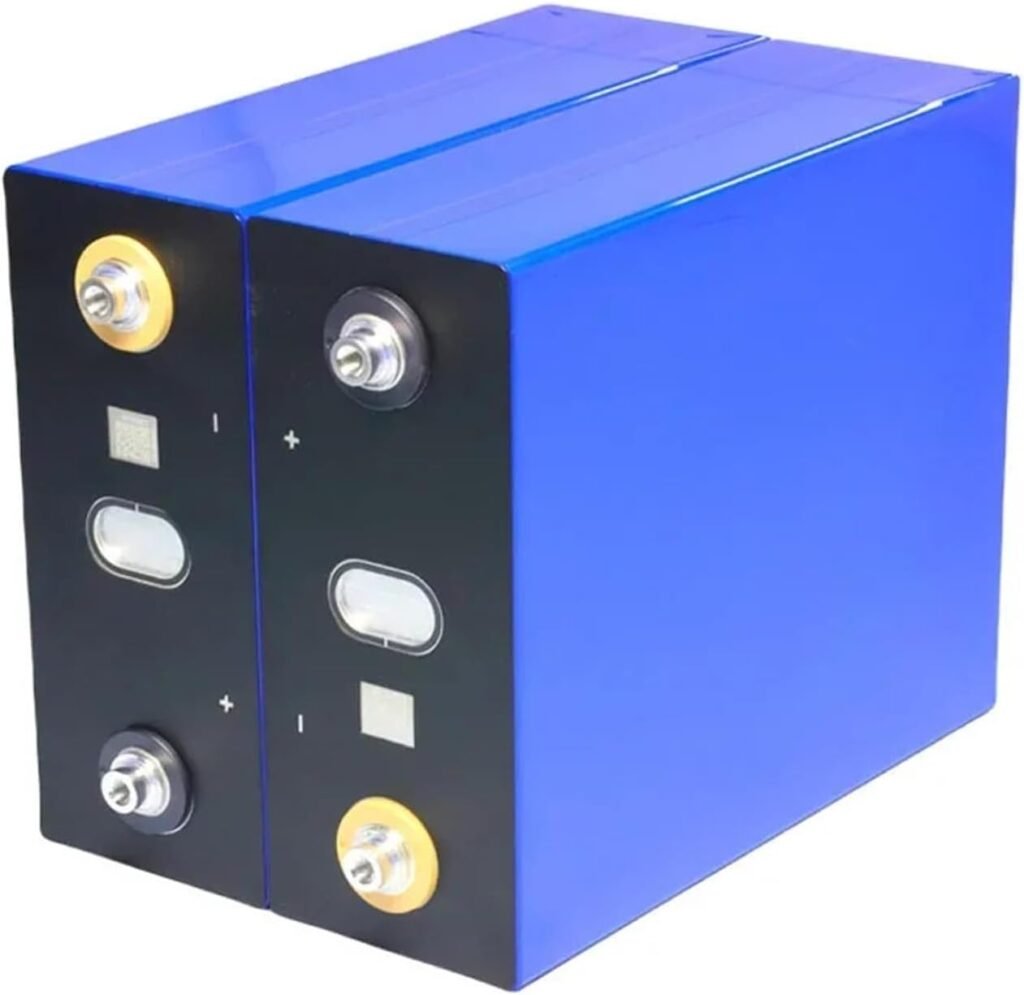
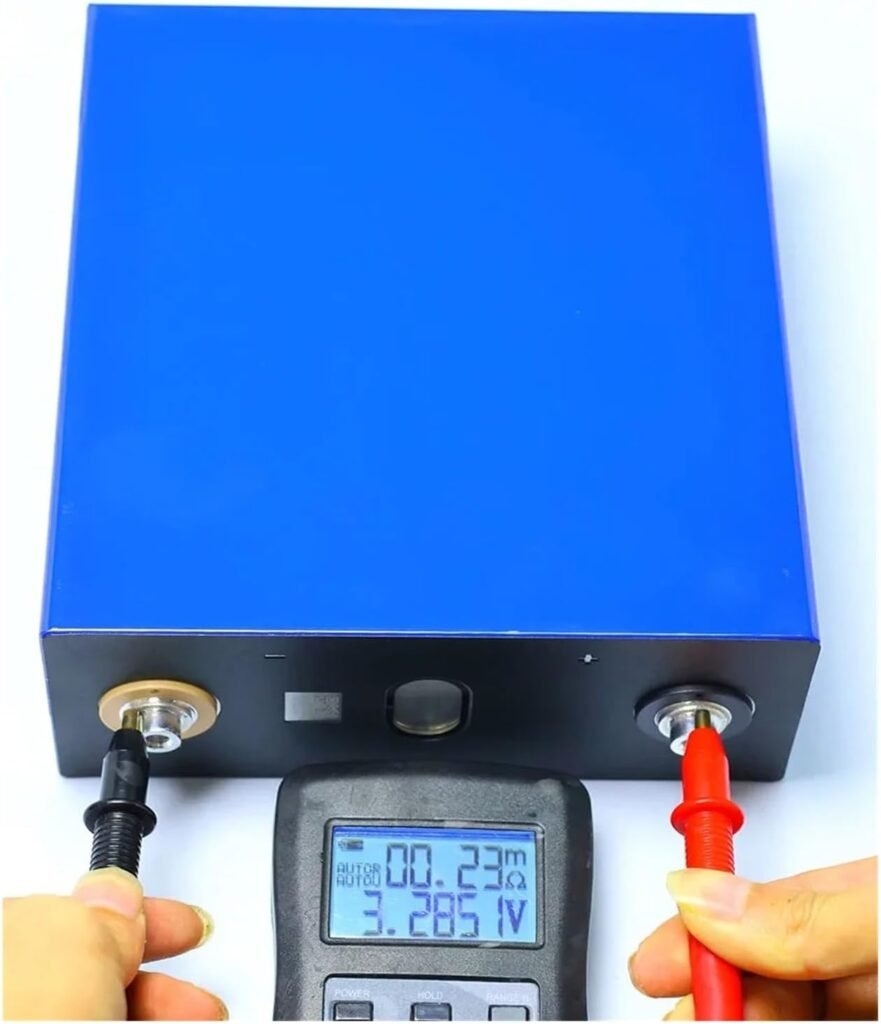
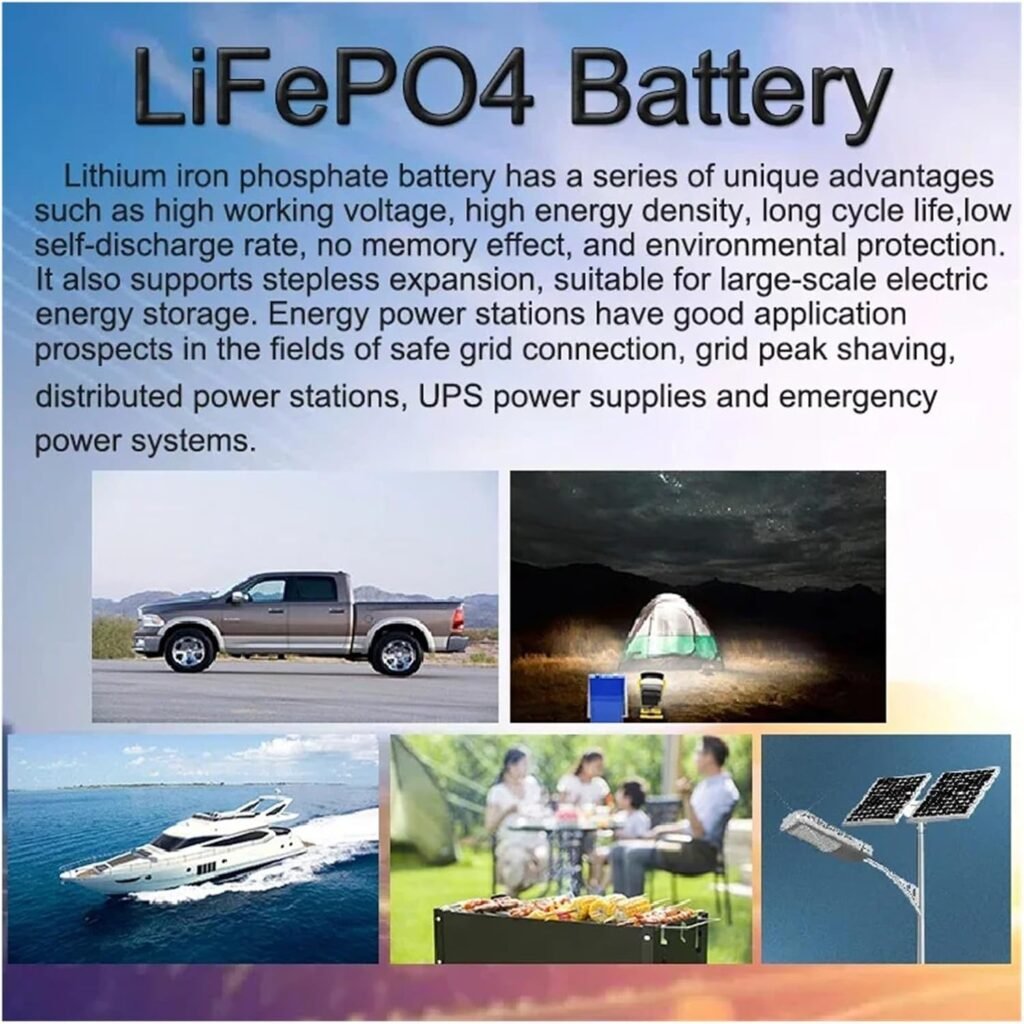
We see this product as a pack of 32 individual LiFePO4 cells, each rated at 3.2V and 340Ah. The manufacturer advertises fast charging support, more than 10,000 charge/discharge cycles under test conditions, and built-in protections such as overcharge, overdischarge, and short-circuit protection. The seller positions these cells for DIY assembly into 12V, 24V, or 48V battery banks suitable for caravans, boats, and solar energy systems.
Key specifications
We like to list the basics up front so we know what we’re working with. Below are the core specifications pulled from the product details and logical calculations based on the cell rating.
- Cell chemistry: LiFePO4 (Lithium Iron Phosphate)
- Nominal voltage per cell: 3.2V
- Capacity per cell: 340Ah
- Rated cycle life: >10,000 cycles (manufacturer claim)
- Safety features (manufacturer claims): overcharge protection, overdischarge protection, short circuit protection
- Quantity: 32 cells (sold as a pack)
- Target use: DIY battery assemblies for 12V / 24V / 48V systems (caravan, marine, solar, off-grid)
Quick spec table
| Item | Value | Notes |
|---|---|---|
| Nominal cell voltage | 3.2 V | Standard LiFePO4 cell nominal |
| Capacity | 340 Ah | Per cell |
| Energy per cell | 1,088 Wh (1.088 kWh) | 3.2 V × 340 Ah |
| Pack quantity | 32 cells | Flexible assembly options |
| Total energy (32 cells) | 34,816 Wh (34.816 kWh) | Fixed total energy regardless of series/parallel arrangement |
| Rated cycle life | >10,000 cycles | Manufacturer testing claim; depends on DoD, temp, charge rates |
| Claimed protections | Overcharge, overdischarge, short circuit | We recommend additional external BMS for full system safety |
| Typical full charge voltage (LiFePO4) | ~3.6 V per cell | Confirm exact cutoff with manufacturer, use LiFePO4 charge profile |

Per-cell and pack energy — what this means for us
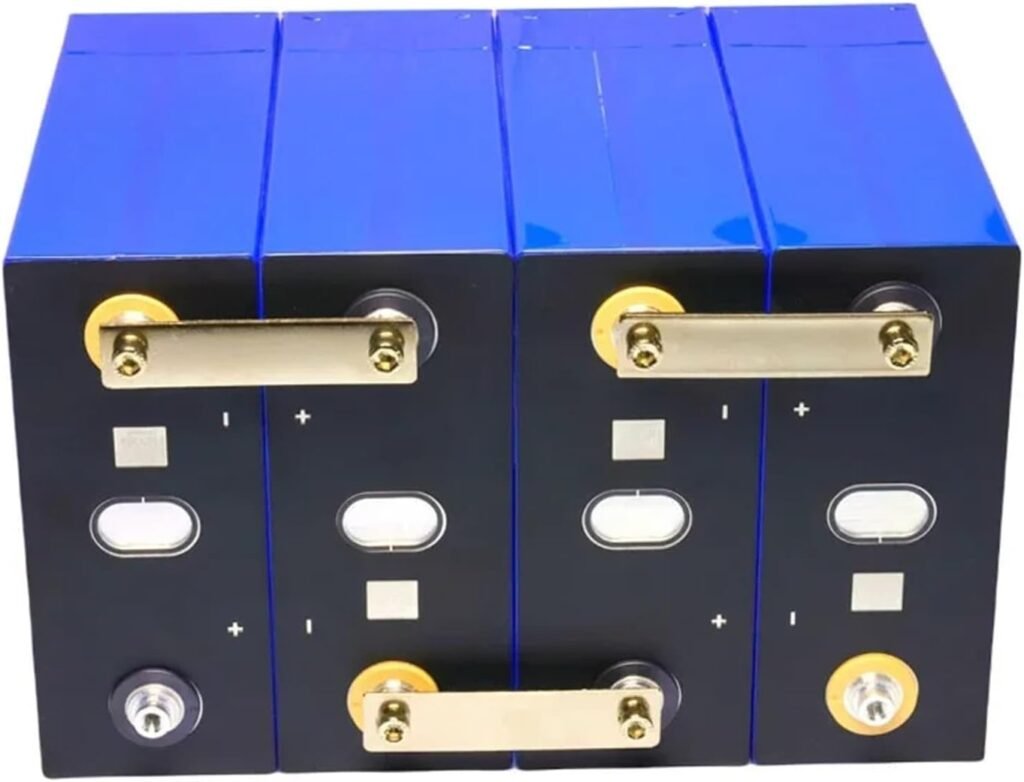
We find it helpful to translate cell numbers into usable energy figures. Each 3.2V 340Ah cell stores about 1.088 kWh of energy. The pack of 32 cells contains about 34.8 kWh total energy. How that energy appears in voltage and capacity depends entirely on how we wire the cells in series and parallel.
- If we build a single 12.8V (4S1P) pack: 12.8V × 340Ah = 4.352 kWh.
- If we build a 25.6V (8S1P) pack: 25.6V × 340Ah = 8.704 kWh.
- If we build a 51.2V (16S1P) pack: 51.2V × 340Ah = 17.408 kWh.
- Using all 32 cells, we can do 16S2P (51.2V × 680Ah = 34.816 kWh), 8S4P (25.6V × 1,360Ah = 34.816 kWh), or 4S8P (12.8V × 2,720Ah = 34.816 kWh). The total energy remains the same; the voltage and usable current/capacity change.
Configurations and wiring examples
We appreciate that DIYers want clear examples. Below we summarize common, practical ways to use 32 cells and the tradeoffs for each configuration.
| Configuration (using 32 cells) | Series (S) × Parallel (P) | Nominal voltage | Nominal capacity | Total energy |
|---|---|---|---|---|
| 12V system (single bank) | 4S8P | 12.8 V | 2,720 Ah | 34.816 kWh |
| 24V system (single bank) | 8S4P | 25.6 V | 1,360 Ah | 34.816 kWh |
| 48V system (single bank) | 16S2P | 51.2 V | 680 Ah | 34.816 kWh |
| 48V system (two independent banks) | 16S1P × 2 | 51.2 V (each) | 340 Ah each (parallelable) | 17.408 kWh each (can be paralleled) |
A few practical notes:
- For most caravan and marine applications we prefer a 12.8V or 25.6V setup for compatibility with existing 12V systems and inverters; for larger inverter / higher-power systems a 51.2V (16S) architecture is common.
- If we want redundancy, building two identical 16S1P packs and paralleling them with a proper pre-charge and balancing system can be safer than combining all cells into massive parallel groups without cell management.
- Paralleling strings increases capacity but requires careful balancing, equal-length wiring, and matched cell voltages before connecting.
Charging: what to set and how fast to charge
We like to be conservative when manufacturer specifics are not exhaustive. Typical LiFePO4 charge behavior and practical charging suggestions:
- Recommended full-charge voltage: often 3.6–3.65V per cell (confirm with the manufacturer). That means:
- 4S (12.8V nominal) > full charge ≈ 14.4–14.6V
- 8S > full charge ≈ 28.8–29.2V
- 16S > full charge ≈ 57.6–58.4V
- Charge profile: Constant Current (CC) until the per-cell voltage reaches the target (e.g., 3.6V), then Constant Voltage (CV) at that voltage until the charge current tapers to a low threshold (commonly C/20–C/50).
- Fast charging: the product claims fast charging support, but the pack details do not list allowable C-rate. We prefer to assume a conservative charging current unless the seller specifies a safe maximum. Reasonable recommendations:
- Conservative: 0.2 C → 68 A for 340 Ah cell
- Moderate: 0.5 C → 170 A
- Aggressive (only if specified by manufacturer): up to 1 C → 340 A
- Solar/Mppt settings: set absorption/charge target per-cell to the LiFePO4 recommended voltage (3.55–3.65V/cell depending on recommended max). Many MPPT controllers have a LiFePO4 setting—use it or program a CC/CV profile where possible.
We strongly recommend using a LiFePO4-specific charge controller and a BMS that supports the series count and peak charge/discharge currents.
Battery Management System (BMS) and protection
We take the manufacturer’s claims about internal protections seriously but do not rely on them as the only safety layer. For a 32-cell DIY setup:
- Use a dedicated BMS sized for the number of series cells (e.g., 4S, 8S, 16S) and capable of handling your expected maximum continuous and peak currents.
- Choose a BMS that provides:
- Cell balancing (active or passive)
- Overcharge, overdischarge, and short-circuit protection
- Temperature monitoring and cutoff
- Communication (CAN/RS485 or Bluetooth) if we want to monitor cell voltages and temperatures remotely
- If we are building parallel strings (e.g., 16S2P), ensure the BMS can balance across all series groups and that parallel strings are matched and equalized before connection.
- Always include fuses or circuit breakers on each series string close to the positive terminal to protect wiring and to provide isolation while servicing.
- For high-current systems (hundreds of amps), use robust busbars, thick cables, and torque to manufacturer specs.
Safety and mechanical installation
We favor safe mechanical design as much as electrical design. Key points for installation:
- Mount cells on a flat, non-conductive surface with secure straps or brackets to minimize vibration for caravan and marine installations.
- Provide ventilation or a thermally conductive path to dissipate heat; LiFePO4 is tolerant of elevated temperatures but performs best when kept within recommended ranges.
- Keep terminals and connections clean and tight; use anti-oxidation paste where appropriate and torque bolts to the recommended spec.
- Use proper cable sizes: match cable cross-section to current, considering both continuous current and short-term surge current (e.g., inverter startup).
- Locate a main fuse or circuit breaker as close as possible to the positive terminal of the battery bank.
- When paralleling strings, ensure all strings are at the same voltage before making final connections to avoid large equalization currents.
- If we intend to mount in confined spaces, check for condensation and provide an appropriate enclosure; LiFePO4 cells are more forgiving than some chemistries but still should be kept dry and free from chemical contaminants.
Thermal and environmental considerations
We pay attention to temperature because it affects performance, charging, and lifetime.
- Standard LiFePO4 operating temperatures are typically:
- Charge: 0°C to 45°C (some recommend not charging below 0°C unless using a heating strategy)
- Discharge: -20°C to 60°C
- Storage: keep cells at ~3.3–3.5V per cell and store in cool, dry conditions
- For caravan and marine use, insulation may help in cold climates. If we expect to charge in freezing conditions, we must either keep the battery warm (insulation/heater) or use a BMS that supports charging at low temps with internal heating.
- Cycle life claims (10,000 cycles) are often based on ideal test conditions (moderate temperature, shallow DoD, controlled charge rates). To achieve long life we should avoid deep discharges every cycle, avoid sustained high charge/discharge rates, and keep cells in a moderate temperature range.
Maintenance and care
We prefer a simple maintenance routine:
- Monitor cell voltages and pack voltage regularly using the BMS or external monitoring tools.
- Keep the battery clean and dry; inspect connections periodically for corrosion or looseness.
- If storing for extended periods, store at ~30–50% SOC (roughly 3.25–3.4V/cell) and check every 3–6 months.
- Avoid leaving the pack at 100% SOC for long durations; storing at maximum voltage increases calendar aging.
- If a cell shows signs of abnormal voltage, temperature, or capacity drift, isolate and test before returning it to service.
Pros and cons (our practical view)
We like to weigh the benefits and limitations objectively.
Pros:
- High capacity per cell (340Ah) gives flexibility to build very large banks with limited cell count.
- LiFePO4 chemistry provides excellent safety and a long cycle life compared with many lithium chemistries.
- Pack of 32 cells offers many configuration choices for 12/24/48V DIY projects.
- Manufacturer claims of >10,000 cycles are attractive if supported by real-world use.
Cons / cautions:
- The manufacturer’s “fast charging” claim lacks a stated safe C-rate; we should confirm allowable charge/discharge currents before pushing high currents.
- Cells intended for DIY require careful selection and installation of a BMS and supporting hardware; the pack is not a ready-to-use factory battery pack unless explicitly sold as such.
- Weight and space: 32 large-format cells take significant physical space and weight—important for caravans and marine installations.
- We must validate whether the claimed protections are internal to each cell or are part of an external module—this matters for system design.
Use cases and suitability
We find these cells particularly attractive for the following scenarios:
- Caravan powerhouses: build a robust 12.8V or 25.6V battery bank to run appliances, heaters, fridges, and electronics over extended trips.
- Marine systems: if mounted securely and combined with proper marine-grade enclosures and BMS, these cells provide long life and good cycle endurance even in heavy-use scenarios.
- Off-grid solar energy: great for building large capacity storage for an off-grid cabin or backup system using 24V or 48V architectures coupled with MPPT controllers and inverters.
- DIY battery projects: electric vehicle conversions, large stationary storage, or high-capacity UPS systems can benefit if we design for appropriate currents and safety.
We would advise less enthusiasm for rapid EV power pack projects without careful current rating checks and professional-level assembly—these cells are powerful but require expertise to assemble into safe, high-power packs.
Practical wiring and balancing tips
We follow clear practices to avoid common DIY pitfalls:
- Pre-match cell voltages: measure and group cells by voltage, and if paralleling, only parallel cells that are closely matched (within a few millivolts).
- Use equal-length cables when paralleling strings to ensure even current sharing.
- Use a pre-charge resistor or soft-start relay when connecting large DC bus capacitors (inverter input) to avoid inrush current.
- Install temperature sensors on the cells or the pack and wire them into the BMS.
- Balance the pack after final assembly and monitor for any imbalanced strings during early cycles.
Frequently asked questions (and our answers)
Q: Can we make a 12V battery pack using these cells? A: Yes — 4 cells in series (4S) make a 12.8V nominal pack. With 32 cells you can build 4S8P (12.8V, 2,720Ah) using all cells, or a single 4S1P (12.8V, 340Ah) if you only need one 12V bank.
Q: Do these cells come with BMS included? A: The product description mentions protections like overcharge/discharge and short circuit protection, but it’s not clear if a full pack-level BMS is provided. We recommend planning for a proper external BMS sized for your series count and current rating unless the seller confirms an integrated BMS.
Q: How long will these batteries last? A: Manufacturer claims >10,000 cycles, but real-world life depends heavily on depth of discharge, charge current, temperature, and how well the pack is managed. With moderate DoD (e.g., 20–60%), controlled charge rates, and good thermal management, we can expect very long service life relative to many other chemistries.
Q: What charger should we use? A: Use a LiFePO4-compatible charger or a programmable CC/CV charger. Set the per-cell charge cutoff to the manufacturer’s recommended voltage (commonly around 3.6–3.65V/cell). Use a charger current appropriate to the cell and pack (conservative: 0.2C; moderate: 0.5C; check manufacturer for higher rates).
Q: Are LiFePO4 cells safe for marine use? A: LiFePO4 is one of the safer lithium chemistries with lower thermal runaway risk. For marine environments we must ensure proper mounting, waterproof enclosures, ventilation, and corrosion-resistant connections.
Troubleshooting common issues
- Uneven voltages between strings after installation: disconnect and charge each string individually, then re-equalize and re-match voltages before paralleling.
- High temperature during charge or discharge: reduce current or add thermal management; check for poor connections that cause resistive heating.
- Unexpected BMS trips: review BMS log (if available), check for voltage or temperature extremes, ensure balancing is functioning and connection polarity is correct.
Cost-effectiveness and alternatives
We weigh total cost per kWh when evaluating big DIY battery builds. LiFePO4 cells like these offer a high upfront cost but excellent long-term value through deep cycle life and safety. Alternatives include:
- Pre-built LiFePO4 battery packs: easier to install, include integrated BMS, but less configurable.
- Lead-acid (AGM/Gel): cheaper initially but heavier, shorter life, and worse cycle performance.
- Other lithium chemistries (NMC, LFP in prismatic modules): some offer higher energy density but may not match LiFePO4 for cycle life and thermal stability.
If we prefer a plug-and-play solution, a factory-built LiFePO4 pack with integrated BMS, enclosure, and terminals may be more appropriate. If we want flexibility, cost savings per kWh, and are comfortable with battery assembly, the 32-cell pack gives excellent options.
Final verdict and practical recommendation
We appreciate that this 3.2V 340Ah LiFePO4 cell pack offers very high capacity per cell and flexibility for DIY system designers. The pack’s headline features—340Ah capacity per cell, 3.2V nominal, and a claimed >10,000 cycle life—make it very attractive for long-term energy storage solutions for caravans, marine setups, and off-grid solar.
Our recommendations:
- Confirm the exact allowable continuous and peak charge/discharge C-rates with the seller before committing to a high-current design.
- Plan for a high-quality BMS that matches the series count we choose (4S, 8S, 16S) and is rated for the peak currents we expect.
- Use proper fusing, cable sizing, busbars, and balancing practices when assembling strings and paralleling.
- For most DIY installers in mobile environments (caravan, boat), consider 4S or 8S architectures for 12V/24V compatibility and avoid extremely large parallel groups unless confident in balancing strategy.
- If we want a higher-voltage system for an efficient inverter (48V), 16S2P using all 32 cells will give us a huge 51.2V, 680Ah bank (about 34.8 kWh). For many off-grid homes that is a strong option — but plan for weight, space, and proper safety systems.
We feel this product can be an excellent foundation for a robust, long-lived DIY battery system if we pair the cells with the right electronics, careful assembly, and disciplined maintenance.
Disclosure: As an Amazon Associate, I earn from qualifying purchases.