We find the TalentCell LF4100 a compact 12.8V LiFePO4 battery pack with 6Ah capacity and 76.8Wh of rated energy, weighing 760g. Its DC5521 output connects to the battery through protection circuitry, so voltage varies from 9–14.6V rather than staying regulated at 12V. It also provides 9V and 5V outputs, each rated for up to 2A. Built-in protections and a claimed 2,000-plus cycle life add value; we’ll examine its limits and best-fit uses next.
Key Takeaways
- The TalentCell LF4100 packs 6Ah (76.8Wh) of LiFePO4 capacity into a 760g battery measuring 16.8 × 8.9 × 4.3cm.
- Its DC5521 output varies from 9–14.6V, supplies up to 5A, and is not regulated at 12V.
- Separate outputs provide 9V at up to 2A through DC4017 and 5V at up to 2A through USB.
- Built-in overcharge, over-discharge, and short-circuit protection accompany a rated cycle life exceeding 2,000 charges.
- It includes a 14.4V, 1.5A LiFePO4 charger; check device voltage and current requirements before connecting.
12.8V LiFePO4 Battery Pack
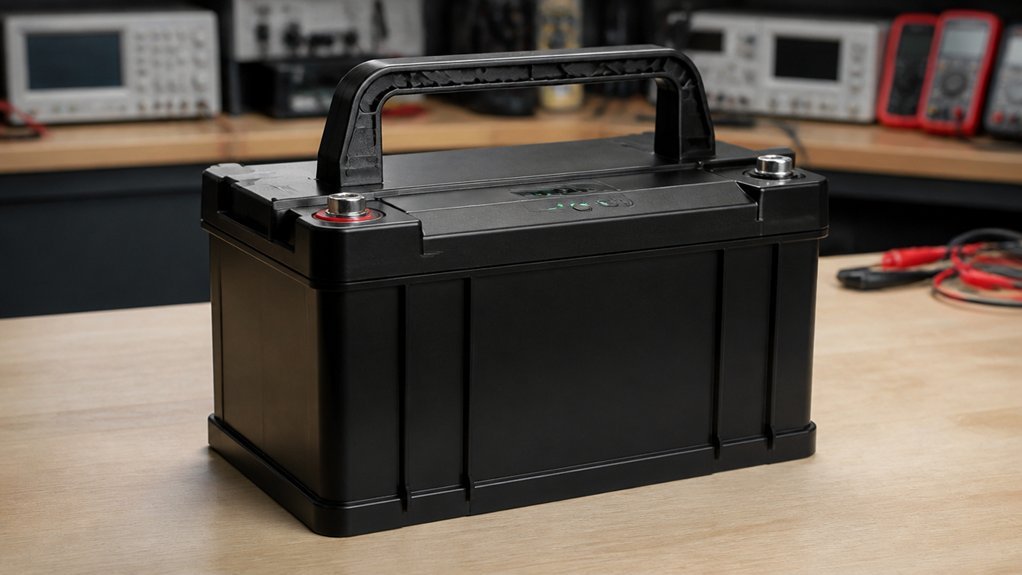
Although its compact size suggests a modest power source, the TalentCell LF4100 delivers 76.8Wh from a 6,000mAh LiFePO4 battery rated at 12.8V nominal. This battery chemistry uses lithium iron phosphate cells, providing the basis for the pack’s stated voltage and energy rating.
We can assess its pack capacity in both amp-hours and watt-hours: 6Ah at 12.8V corresponds to 76.8Wh. At 760g, the unit measures 16.8 × 8.9 × 4.3cm, giving us a compact form factor for a 12.8V battery pack. These specifications help us compare its stored energy and physical size with the requirements of your equipment.
Detailed features
The LF4100’s output design supports several common DC loads, but its connectors provide different voltage and current limits. Its DC5521 port delivers Variable voltage output from 9 to 14.6V, with a 5A maximum; because it connects to the four-cell battery through protection circuitry, voltage isn’t regulated, typically remaining near 12–13V through most discharge.
The DC4017 port supplies 9V at up to 2A, while USB provides 5V at up to 2A. We can match these outputs to compatible cameras, lighting, pumps, or other DC devices. The compact battery design measures 16.8 × 8.9 × 4.3cm and weighs 760g.
Pros and Cons
We’ll weigh the LF4100’s compact 76.8Wh LiFePO4 design, 2,000+ cycle rating, and protected outputs against its variable 9–14.6V DC5521 output.
We’ll also assess its 5A maximum current and the limits of its 9V and USB outputs. This comparison will help you judge whether its strengths and trade-offs fit your devices.
Pros
For compact 12V applications, the TalentCell LF4100 offers a useful balance of capacity, weight, and protection: its 6,000mAh LiFePO4 cells store 76.8Wh in a 760g pack, and built-in safeguards protect against overcharging, over-discharging, and short circuits.
Its lightweight design suits portable setups, while the rated 2,000-plus charge cycles support long cycle life. We can power compatible 12V devices through the DC5521 port, plus 9V equipment through the DC4017 output and 5V devices via USB.
The package includes a charger and power cable, so you can recharge the pack with its specified 14.4V, 1.5A LiFePO4 charger between uses.
Cons
Despite those strengths, the LF4100 has limitations to consider: its DC5521 output connects directly to the 4S battery, so voltage varies from 9 to 14.6V rather than staying regulated at 12V. We should check whether our equipment tolerates this Variable voltage, especially near full charge or depletion.
Although output stays around 12–13V for most of the discharge cycle, sensitive devices may require a regulated supply. Limited DC output also means the pack offers only one variable-voltage DC5521 port, plus fixed 9V and 5V outputs. We must observe each port’s current limits: 5A, 2A, and 2A, respectively.
Concluding thoughts
Overall, the TalentCell LF4100 is a compact 12.8V LiFePO4 pack that balances 76.8Wh of capacity with a 760g weight and protection against overcharge, over-discharge, and short circuits. Its 6,000mAh capacity and included charger suit portable 12V equipment, while 9V and USB outputs broaden compatibility.
We should note that the DC5521 output varies from 9–14.6V rather than providing regulated voltage, so check your device’s input requirements before connecting it. With a stated cycle life exceeding 2,000 charges, the pack offers a practical basis for long term reliability. Its ideal use cases include cameras, lighting, and small electronics where portability matters.
Frequently Asked Questions
Can the LF4100 Power a Device Requiring a Regulated 12V Supply?
Not directly: the LF4100’s output varies from 9–14.6V, rather than providing regulated 12V. For regulated voltage stability, we recommend an external regulator; check your device’s voltage conversion requirements and maximum current before connecting it.
How Can I Check Whether My Device’s Connector Matches the Battery?
Will the plugs match? We can compare your device’s connector type with the battery’s DC5521 plug, checking diameter and fit. Then perform a polarity check against device specifications; the battery’s positive terminal is inside, negative outside.
Can the Battery Be Used While It Is Charging?
We can’t confirm pass through operation: the specifications don’t state whether the LF4100 powers devices while charging. For charging safety, we should avoid simultaneous use unless TalentCell confirms support for that operating mode.
How Long Does Recharging the LF4100 Typically Take?
We can expect roughly 4–5 hours to recharge the 6,000mAh LF4100 fully—a useful pause for a battery rated for 2,000+ cycles. Charging time depends on discharge level; Charger compatibility requires the included 14.4V, 1.5A LiFePO4 charger.
Is the LF4100 Suitable for Powering a Device Outdoors?
Yes, we can power compatible 12V, 9V, or 5V devices outdoors, but the specifications don’t confirm weather resistance or temperature limits. We should protect the battery from moisture and temperature extremes during use.
Conclusion
We see the TalentCell LF4100 as a compact, flexible power source for compatible 12V, 9V, and USB devices. Its 76.8Wh LiFePO4 battery, lightweight design, and built-in protections make it useful for cameras, lighting, and CCTV. However, the main output follows battery voltage rather than holding a constant 12V, so we’d check device tolerances before connecting sensitive equipment. Think of it as a small power reservoir, not a regulated supply: a practical fit when its limits match your setup and runtime needs.