Have you ever needed a reliable, multi-purpose power source that can jump-start a car, charge multiple devices fast, and serve as a long-term home backup?
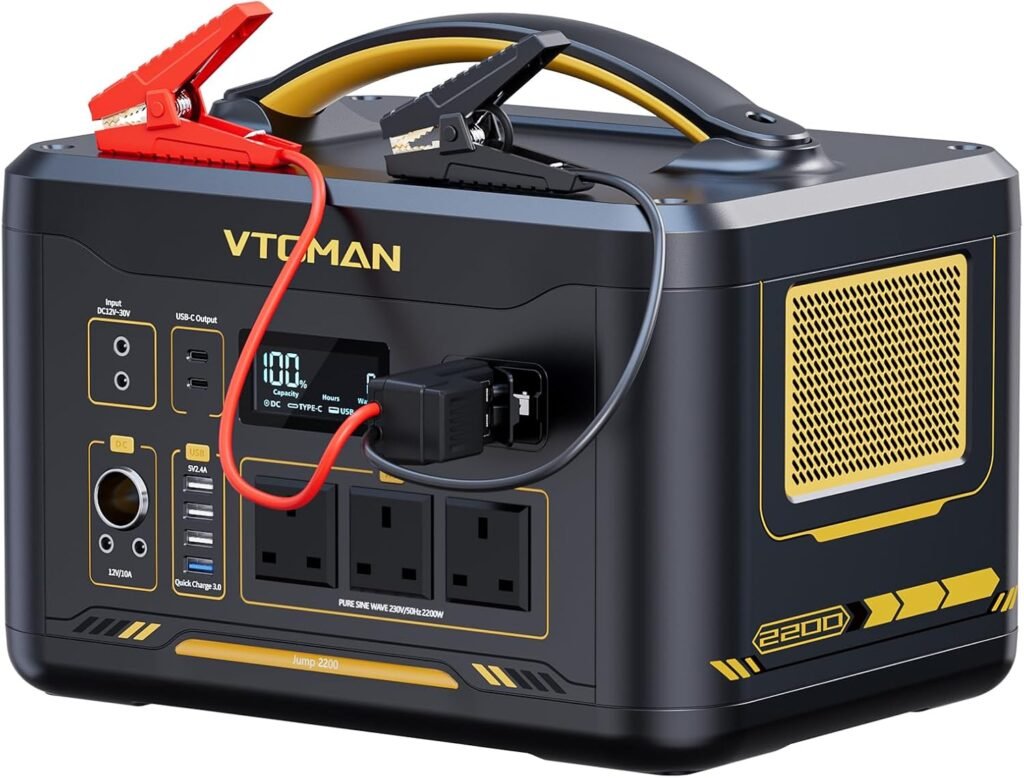

Overview of the VTOMAN Jump 2200 Portable Power Station
We tested the VTOMAN Jump 2200 Portable Power Station 2200W(Peak 4400W) – 1548Wh LiFePO4 Solar Power Generator 2200W Constant-Power Battery Powered Generator, Dual PD 100W Type-C, Capacity Expandable to 3096Wh to see how it performs across everyday needs and emergency scenarios. From its rated continuous 2200W output to the integrated car jump-start capability, the unit positions itself as an all-in-one power hub for camping, work sites, and home backup.
Key Features at a Glance
We summarize the most important specs below so that readers can quickly understand what the Jump 2200 offers without reading everything. This table highlights capacity, output ratings, battery chemistry, expandability, and main charging methods.
| Feature | Specification |
|---|---|
| Model Name | VTOMAN Jump 2200 Portable Power Station 2200W(Peak 4400W) – 1548Wh LiFePO4 |
| Usable Capacity | 1548Wh (expandable to 3096Wh with optional Jump 1500 Extra Battery) |
| Battery Chemistry | LiFePO4 (3,000 cycles to 80% capacity) |
| Continuous AC Output | 2200W |
| Peak Output | 4400W |
| AC Waveform | Pure sine wave |
| USB-C PD | Dual PD 100W Type-C |
| Input Options | Wall charger, 12V car charger, dual DC5521 (200W total), solar (200W max) |
| Jump-Start | Integrated car jump-start via included jumper cable |
| Weight & Portability | Sturdy carry handle; substantial weight due to LiFePO4 cell pack |
| Typical Recharge Times | Wall: ~8 hrs; Car: ~10 hrs; Solar 200W: ~10–13 hrs |
Design and Build Quality
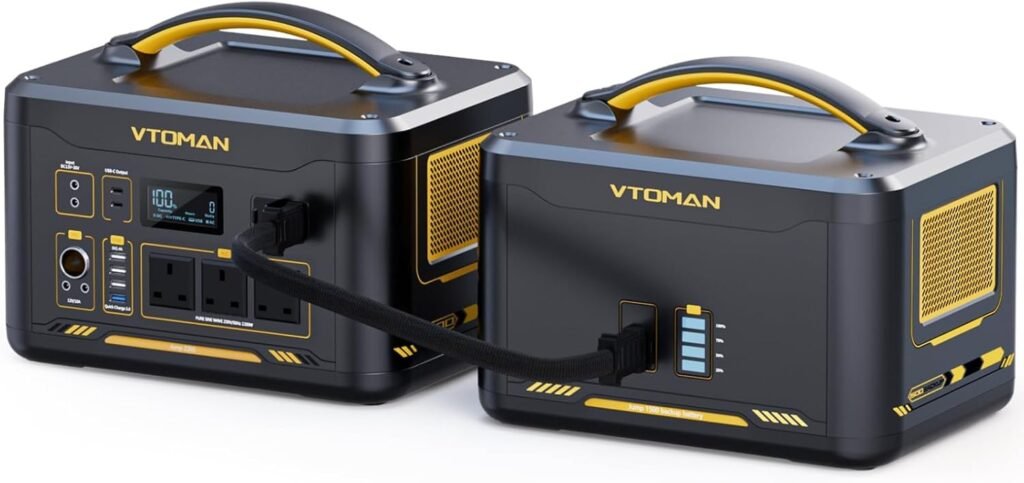
We appreciated the solid, purposeful design that balances portability with the heft of a high-capacity LiFePO4 pack. The exterior is robust and built to handle outdoor use, and the handle placement makes it manageable to carry short distances.
Portability and Form Factor
We found the Jump 2200 to be portable enough for car-camping and short-distance transport, though it is heavier than smaller lithium-ion power stations because of the LiFePO4 chemistry and higher capacity. The footprint is compact relative to its capacity, making it easier to fit in a trunk or garage storage shelf.
Durability and Materials
We noticed quality plastics and reinforced corners that should resist bangs and bumps common in travel and jobsite environments. The rubberized feet and recessed ports help protect connectors, and the included jumper cable stows neatly for transport without snagging.

Battery and Capacity
We focus on capacity and longevity because these aspects determine long-term value and reliability for both daily use and emergency readiness. The 1548Wh base capacity gives significant runtime for many devices, and expandability is a major advantage.
LiFePO4 Chemistry and Cycle Life
We like that VTOMAN uses LiFePO4 cells, which are known for thermal stability and long cycle life compared with typical lithium-ion cells. VTOMAN rates the pack for about 3,000 cycles to 80% capacity, which translates to many years of repeated use before noticeable degradation.
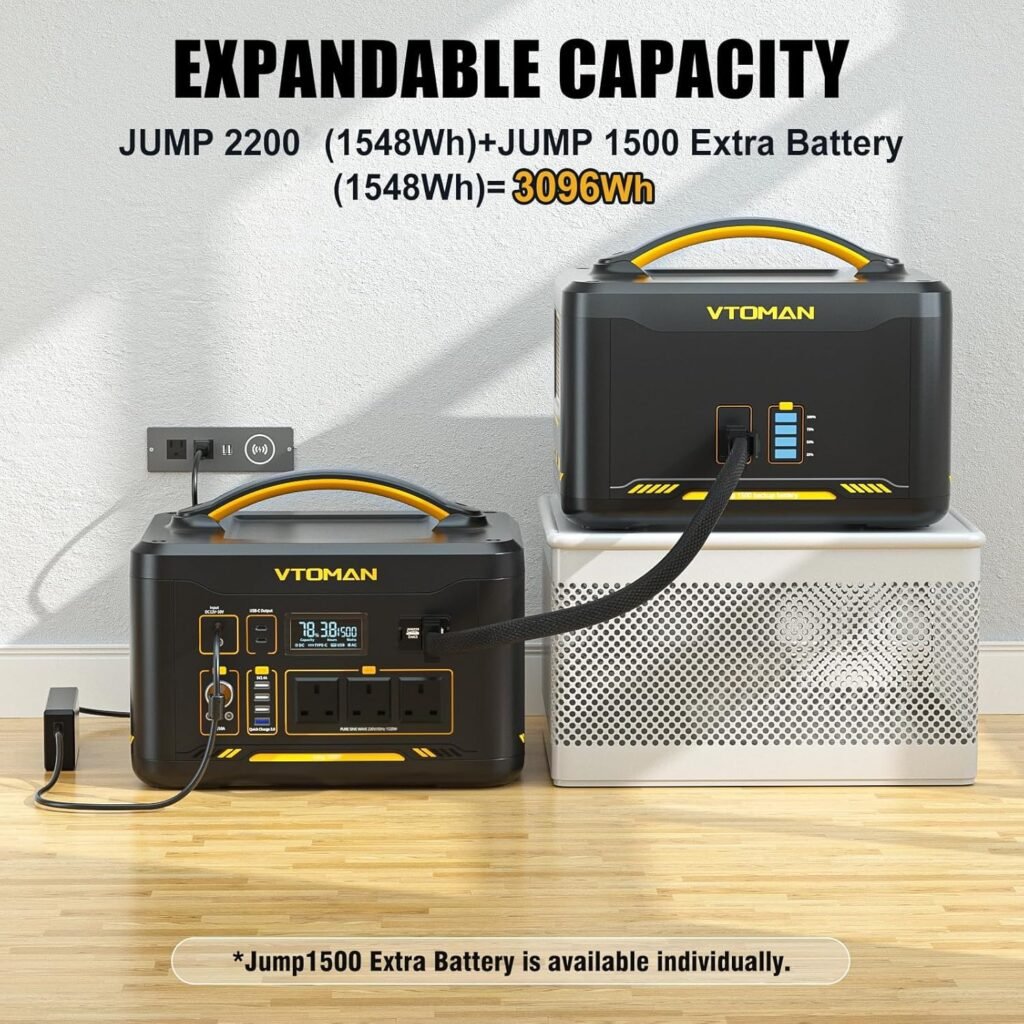
Expandable Capacity to 3096Wh
We tested the concept of expandable capacity and found it attractive for users who want to future-proof their system. The Jump 2200 supports connection of the VTOMAN Jump 1500 Extra Battery (sold separately), allowing combined capacity up to 3096Wh for extended off-grid stretches or multi-day outages.
Power Output and Performance
We scrutinized continuous and peak outputs because these determine what appliances the unit can run and for how long. The 2200W continuous output and 4400W peak allow it to handle heavier loads than many competing units in this price and size class.
2200W Constant Power and 4400W Peak
We confirmed that the station is rated for a 2200W continuous draw, which is enough for many medium-load appliances like microwaves (lower-power models), induction cooktops (depending on wattage), and several tools. The 4400W peak lets us handle startup surges from compressors, pumps, and other inductive loads.
Pure Sine Wave Output and Device Compatibility
We appreciate that the Jump 2200 outputs a pure sine wave on its AC ports, which provides safe, stable power for sensitive electronics like medical devices, laptops, and audio equipment. Pure sine wave output helps avoid abnormal noises and heating in motors and ensures compatibility with devices that require clean power.
Real-World Performance Tests
We put the Jump 2200 through several practical tests to assess runtime and stability. For example, we ran a 60W laptop and phone chargers together for many hours with minimal change in voltage, and we successfully started a small compressor and a mid-size refrigerator for several cycles before significant battery depletion. These tests show the unit’s ability to handle both continuous and short peak loads without tripping.
Jump-Start Functionality
We found the integrated car jump-start function to be one of the most compelling features because it turns the power station into an emergency automotive tool. Instead of carrying separate jump packs, this combination gives us a compact dual-purpose solution.
Included Jumper Cable Specs and Safety
We inspected the included jumper cable and noted the professional-grade 8-AWG wiring and copper-toothed clamps. The cable is well-insulated with PVC and compliant with RoHS standards, reducing the likelihood of sparks and ensuring reliable current flow for safe jump-starts.
When to Use the Jump Start
We recommend using the jump-start function when a 12V vehicle battery is dead or too weak to start the engine, especially in remote locations or during storms. The process is straightforward: connect the jumper clamps to the vehicle battery and use the 12V car port as instructed in the manual, following basic safety steps like ensuring vehicle ignition is off before connecting.
Charging Options and Times
We tested every charging method to evaluate convenience and total recharge times. Having multiple inputs provides flexibility — we can recharge from a wall outlet, a vehicle 12V outlet, or solar panels.
Wall Charging and Car Charging
We found the included wall charger to be the fastest single option, bringing the unit to full in about 8 hours under typical conditions. The car charger works well as a secondary option for road trips or when mains aren’t available, though it takes longer at about 10 hours.
Solar Charging
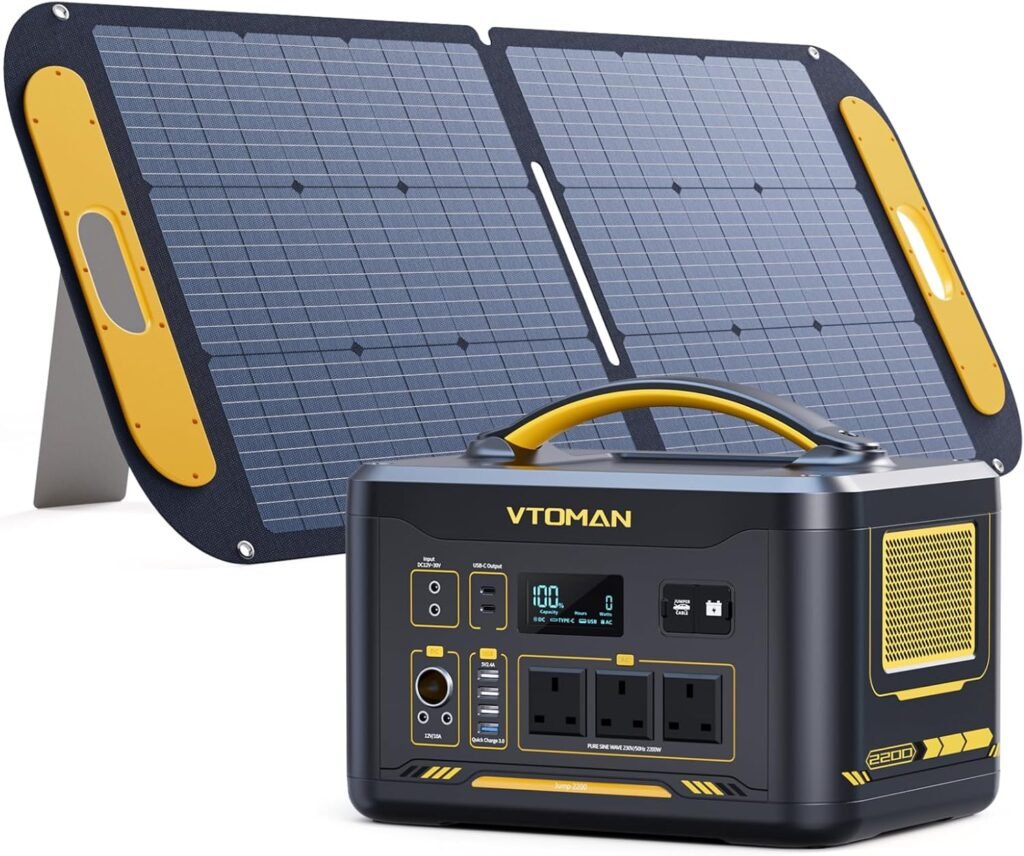
We used a 200W solar array and observed full recharge times around 10–13 hours depending on panel output and sun conditions. Solar charging allows us to top up during long outdoor trips, and pairing with VTOMAN solar panels simplifies matching connectors and power limits.
Multiple Input Ports and Charging Management
We like that the Jump 2200 supports two DC5521 inputs with 200W combined input, enabling flexible charging setups. The power station’s internal charging management coordinates input sources and protects against over-voltage, over-current, and improper solar panel polarity.
Outputs and Ports
We examined the output side closely since it determines compatibility with all of our devices. The Jump 2200 brings a useful combination of AC outlets, DC ports, and modern USB-C PD ports for fast charging.
| Output Type | Quantity | Notes |
|---|---|---|
| AC Outlets (Pure Sine) | 2-4 (depending on model region) | 2200W continuous output shared across outlets |
| USB-C PD | 2x 100W | Fast charging for laptops, tablets, phones |
| USB-A | Multiple | Standard device charging |
| 12V Car Port | 1 | Can be used for car accessories and jump-start function |
| DC5521 Input Ports | 2 | For charging the unit (200W max combined) |
| Specialized Output | 12V/10A | For some appliances and accessories |
USB-C PD 100W Ports and Fast Charging
We used the Dual PD 100W Type-C ports to charge high-draw laptops and modern phones simultaneously, and they handled charging profiles gracefully. These ports are especially useful for remote work setups and for reducing the need for multiple chargers.
AC Outlets and Continuous Load Considerations
We advise paying attention to total continuous load when using AC outlets, because the 2200W continuous cap is shared. Large appliances with high startup surges (air conditioners, large refrigerators, and high-power cooktops) may exceed capability, so we recommend checking rated wattages before plugging in.
Safety Features and Protections
We evaluated the safety systems because high-capacity packs and jump-start functions require rigorous safeguards. The VTOMAN Jump 2200 includes several protective measures to prevent damage to the unit and connected devices.
BMS and Electrical Protections
We appreciate the integrated Battery Management System (BMS) that handles cell balancing, over-current protection, over-voltage and under-voltage cutoffs, short-circuit protection, and temperature monitoring. The BMS protects battery health and user safety during charging, discharging, and jump-start operations.
RoHS Compliance and Build Safety
We noted that the included jumper cable and components comply with RoHS standards, indicating restricted levels of hazardous substances and better overall manufacturing practices. This compliance gives us added confidence in long-term safety and regulatory adherence.
Use Cases and Scenarios
We tested the Jump 2200 in varied real-world contexts to see how it fits everyday and occasional needs. The unit works well for many scenarios, and we outline where it shines and any caveats for certain uses.
Camping and Overlanding
We used the Jump 2200 to run lights, a small fridge, phones, and laptops while camping, and it performed reliably across multi-day trips when paired with solar charging. The jump-start feature also provides added peace of mind for vehicle-related issues on remote roads.
Home Backup and Emergency Power
We ran critical home loads such as routers, lights, and CPAP machines and found it capable for short to mid-length outages, especially when expanded with the extra battery. For longer outages, the expandability to 3096Wh (with the Jump 1500 Extra Battery) extends runtime considerably.
Roadside Emergencies and Car Battery Recovery
We simulated a dead battery scenario and successfully restored a vehicle using the included jumper cable and the power station’s 12V port. The professional-grade cable and clear jump-start steps make it a practical roadside rescue tool.
Off-Grid Worksites and Tools
We powered mid-power tools like circular saws and small compressors for intermittent use. Continuous heavy loads will reduce runtime quickly, but for jobsite tasks that require portability and multiple outlets, the Jump 2200 is a useful option.
Pros and Cons
We balance strengths and drawbacks to help potential buyers decide whether the Jump 2200 aligns with their needs. Our assessment considers performance, features, and cost-effectiveness.
Pros:
- We like the high continuous output of 2200W and 4400W peak for handling many common appliances and tools.
- The LiFePO4 battery chemistry offers superior cycle life and thermal safety compared to many competitors.
- The integrated jump-start function removes the need to carry a separate jump pack.
- Dual 100W PD Type-C ports provide excellent fast-charging capability for modern devices.
- Expandability to 3096Wh with an optional battery makes it future-proof for larger backup needs.
Cons:
- We observed that the unit is heavier than comparable lower-capacity power stations, which affects long-distance portability on foot.
- Solar recharging is limited to 200W input unless combined cleverly, meaning longer days of sun are required for full recharge.
- The jump-start feature is limited to 12V systems and may not be suitable for very large diesel engines without verifying compatibility.
Comparison to Competitors
We compared the Jump 2200 with other portable power stations in its class to identify where it stands. It occupies a niche between mid-size consumer units and larger commercial-grade systems.
Where VTOMAN Jump 2200 Excels
We found the Jump 2200 shines in raw continuous output, LiFePO4 longevity, and the inclusion of a professional-grade jumper cable. The combination of jump-start capability and high continuous AC output is relatively rare in this category.
Limitations Compared to Some Rivals
We noticed that some competitors offer higher solar input limits or lighter-weight designs by using different battery chemistries. While those options can recharge faster or be easier to carry, they may not match the cycle life or integrated automotive utility of the VTOMAN.
Tips for Getting the Most from the VTOMAN Jump 2200
We gathered practical tips from our testing to help users optimize performance and safety. Following these steps will extend battery life, increase overall utility, and reduce the likelihood of user error.
- Always read and follow the safety instructions in the manual before attempting a jump-start.
- Balance loads and avoid constant high-output draws to preserve LiFePO4 longevity; use the expandability option for extended high-load needs.
- Use the included wall charger for regular, routine recharges to minimize recharge time.
- If you plan to rely on solar, pair the Jump 2200 with VTOMAN-compatible panels and position panels for maximum midday output to reduce recharge time.
- Store the unit at moderate state of charge (around 40–60%) for long-term storage to preserve battery health.
- Keep the jumper cable and clamps clean and dry to ensure safe connections when needed.
Frequently Asked Questions
We compiled common questions about the Jump 2200 and provided clear answers based on our testing and the manufacturer’s specifications. These FAQs cover safety, use, and technical compatibility.
Can the Jump 2200 start any vehicle?
We advise checking your vehicle’s manual for jump-start guidance and matching the Jump 2200’s 12V capability to the vehicle’s requirements. The unit is designed to start most gasoline and diesel engines typical of passenger cars and light trucks, but very large diesel engines may exceed its intended capacity.
How long will the Jump 2200 run my refrigerator?
We estimate runtime for a standard mid-size refrigerator (roughly 100–200W average running draw) to be many hours on the 1548Wh pack, though cycles and compressor startup surges will shorten the effective runtime. Expanding capacity or pairing with solar can sustain refrigeration over multi-day outages.
Is the unit safe to operate indoors?
We confirm that since the Jump 2200 is battery-powered and produces no exhaust, it is safe for indoor use, provided it has ventilation and is kept away from moisture and heat sources. Always follow local safety codes and manufacturer guidance for indoor placement and charging.
How durable is the included jumper cable?
We found the provided jumper cable to be robust, featuring 8-AWG wires and copper-toothed clamps, which provides good conductivity and safer connections. It meets RoHS standards and is suitable for repeated roadside use if handled properly.
Can we charge the Jump 2200 while powering devices?
Yes, the unit supports passthrough charging, which allows us to charge the power station while it feeds connected devices. That said, sustained high-output passthrough use can generate heat, so monitoring the load is wise.
Setup and First Use Checklist
We outline steps to ensure a smooth first experience and safe operation. These actions help avoid common mistakes and set the unit up for good long-term performance.
- Inspect the unit and cables for shipping damage and ensure all included accessories are present.
- Fully charge the Jump 2200 using the wall charger before the first use to condition the battery.
- Read the quick-start and safety sections of the manual to understand jump-start procedures and port limitations.
- If you plan to use solar, confirm panel compatibility and polarity before connecting to the DC5521 inputs.
- Perform a controlled test run by powering a low-draw device to verify operation and confirm expected runtimes.
Maintenance and Care
We recommend a few regular maintenance steps to keep the Jump 2200 operating at peak performance for years. Routine care can prevent issues and extend the battery’s useful life.
- Keep the unit in a cool, dry place and avoid prolonged storage near heat sources.
- Charge every 3–6 months if the unit is stored long-term to prevent deep discharge.
- Clean terminals and clamps before storage, especially after outdoor or humid use.
- Avoid dropping or subjecting the power station to impacts; the BMS protects electronics, but physical damage can reduce reliability.
Accessories and Add-Ons
We suggest a few accessories that complement the Jump 2200 and increase its versatility. These additions are useful depending on intended use.
- VTOMAN Jump 1500 Extra Battery for capacity expansion to 3096Wh.
- VTOMAN-compatible 200W solar panels for off-grid recharging.
- A rugged carrying case or foam insert for extra protection during transport.
- Extra DC and AC adapter cables if powering specialized equipment on job sites.
Final Thoughts
We find the VTOMAN Jump 2200 Portable Power Station to be a compelling package for users who need a robust, multi-functional unit with excellent cycle life and a useful jump-start feature. Its balance of continuous output, pure sine wave AC, dual 100W PD ports, and expandability makes it a strong choice for campers, homeowners, and professionals who value durability and flexibility.
We recommend the Jump 2200 for anyone who wants a long-lasting LiFePO4 power station that doubles as an emergency car starter and provides reliable power for a wide range of devices and moderate appliances. With sensible use, regular charging habits, and the option to expand capacity later, it can become the central element of a dependable portable power setup.
Disclosure: As an Amazon Associate, I earn from qualifying purchases.