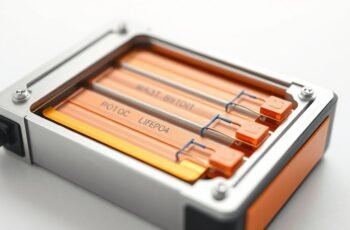
As we explore battery technologies, it’s clear that LiFePO4 offers compelling advantages over traditional lead-acid options. Its longer cycle life, improved safety features, and environmental benefits position it as a more sustainable solution. However, understanding these differences in depth can influence critical decisions in energy storage applications. We invite you to contemplate how these technical distinctions could impact your specific needs and whether LiFePO4 might be the superior choice for your projects.
Key Takeaways
- LiFePO4 batteries offer significantly longer cycle life (over 2,000 cycles) compared to lead-acid’s 300-500 cycles.
- They provide higher safety due to thermal stability and resistance to thermal runaway.
- LiFePO4 batteries are lighter and more compact, enabling space-saving designs.
- They have a lower environmental impact, with easier recycling and less hazardous waste.
- Overall, they deliver better performance, durability, and cost-efficiency over their lifespan.
What Are LiFePO4 Batteries and How Do They Work?
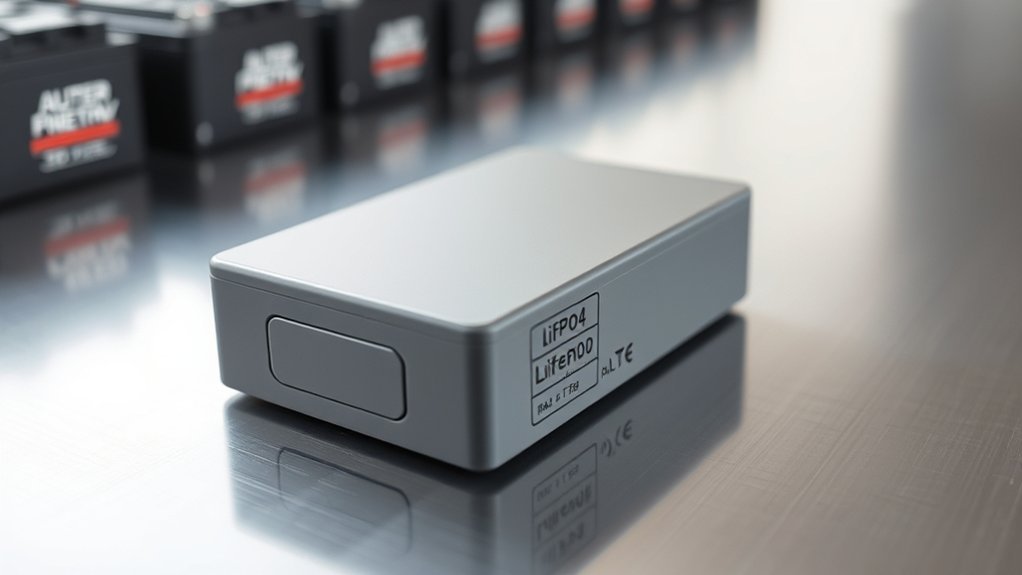
LiFePO4 batteries, also known as lithium iron phosphate batteries, are a type of rechargeable lithium-ion battery distinguished by their cathode material, lithium iron phosphate. Their battery chemistry offers enhanced stability and safety, with a robust molecular structure that resists thermal runaway. While their energy density is generally lower than other lithium-ion chemistries, this trade-off results in improved cycle life and thermal stability. The chemistry allows for efficient ion transfer during charge and discharge cycles, maintaining consistent performance over time. This makes LiFePO4 batteries ideal for applications requiring longevity and safety, even if they store slightly less energy per unit volume. Understanding their battery chemistry is key to appreciating how they deliver reliable, stable power in demanding environments.
Top Safety Benefits of LiFePO4 Compared to Lead Acid
While lead acid batteries have long been the standard for various energy storage needs, they pose significant safety risks that are less pronounced with LiFePO4 technology. LiFePO4 batteries offer superior safety benefits, particularly in areas like charging safety and battery recycling. They are less prone to thermal runaway, reducing the risk of fires or explosions. Their stable chemistry minimizes the chance of leaking harmful acids, making handling safer. Additionally, LiFePO4 batteries are designed with robust thermal management, improving charging safety during rapid or repeated cycles. Finally, their environmentally friendly chemistry simplifies battery recycling processes, lowering health and safety risks associated with disposal. These safety advantages make LiFePO4 a more secure choice for diverse applications.
Why LiFePO4 Batteries Last Longer and Reduce Replacement Costs
Because of their advanced chemistry, LiFePO4 batteries exhibit markedly longer cycle life compared to traditional lead-acid options, directly reducing replacement frequency and ongoing costs. Their stable chemical structure enables over 2,000 charge cycles with minimal capacity loss, unlike lead-acid batteries that typically last 300-500 cycles. This longevity minimizes waste and supports manufacturing sustainability by decreasing the demand for frequent replacements. Additionally, LiFePO4 batteries are more amenable to efficient battery recycling processes, further reducing environmental impact. The extended lifecycle not only lowers total cost of ownership but also promotes resource conservation and reduces the environmental footprint associated with battery production and disposal. Overall, these factors contribute to a more durable, sustainable energy storage solution with significant economic benefits.
How Lightweight and Compact Are LiFePO4 Batteries?
LiFePO4 batteries are considerably lighter than traditional lead-acid options, reducing overall system weight and improving efficiency. Their compact design maximizes space utilization, enabling more flexible application integration. This combination of lightweight and space-saving features offers clear advantages for both portable and stationary energy solutions.
Weight Comparison With Lead Acid
LiFePO4 batteries are considerably more lightweight and compact than traditional lead-acid alternatives due to their advanced chemistry and design. This difference substantially impacts energy storage solutions, making LiFePO4 more efficient in space-constrained applications. When considering weight, a typical 100Ah LiFePO4 battery weighs approximately 10-15% less than a comparable lead-acid battery. Specifically:
- Manufacturing efficiency reduces overall weight due to simplified component design.
- Energy density allows for smaller, lighter batteries with the same capacity.
- Material selection in LiFePO4 improves structural integrity while reducing mass.
- Design optimization in battery manufacturing contributes to more compact dimensions, facilitating easier integration in diverse systems.
This weight advantage enhances mobility and reduces structural load, emphasizing LiFePO4’s superiority in energy storage applications.
Space-Saving Design Benefits
A single LiFePO4 battery can often be half the size of a comparable lead-acid unit, highlighting its significant space-saving advantage. This compactness stems from its advanced battery chemistry, which allows for higher energy density within a smaller form factor. The lighter weight and reduced size enable more flexible system designs, especially in space-constrained applications like RVs or marine setups. Additionally, LiFePO4 batteries offer superior charging efficiency, allowing faster recharge times and more effective utilization of available space without sacrificing performance. Their design minimizes the need for bulky casing or ventilation, further enhancing space savings. Overall, the combination of efficient chemistry and optimized form factor makes LiFePO4 batteries a practical choice for space-conscious installations.
What Makes LiFePO4 Batteries More Environmentally Friendly?
Because of their inherently stable chemical composition, lithium iron phosphate batteries pose fewer environmental hazards during manufacturing, use, and disposal. Their safety profile reduces the need for extensive safety measures, lowering manufacturing emissions. Additionally, LiFePO4 batteries support recycling initiatives due to their chemical stability and lower toxicity. Specifically:
- They generate less hazardous waste, simplifying recycling processes.
- Their materials are more amenable to recovery and reuse.
- Reduced risk of toxic leaks during disposal minimizes environmental contamination.
- The longer lifespan decreases the frequency of replacement, reducing resource consumption and waste.
These factors collectively contribute to a smaller ecological footprint, making LiFePO4 batteries a more sustainable choice compared to alternatives, aligned with environmentally conscious manufacturing and disposal practices.
Cost Comparison: Are LiFePO4 Batteries a Smarter Investment?
When evaluating LiFePO4 batteries, we consider not only the initial purchase price but also the long-term savings potential through extended cycle life. Maintenance and replacement costs further influence their overall economic viability compared to traditional options. Analyzing these factors helps determine if LiFePO4 batteries represent a smarter, more cost-effective investment.
Initial Purchase Price
Although LiFePO4 batteries typically have a higher upfront cost compared to traditional lead-acid options, their long-term financial benefits often justify the initial investment. When evaluating initial purchase price, consider these key points:
- Pricing strategies: LiFePO4 units often employ tiered pricing based on capacity, volume, and supplier relationships.
- Market trends: Rising demand influences economies of scale, gradually reducing costs.
- Initial costs: LiFePO4 batteries generally cost 2-3 times more than lead-acid equivalents.
- Investment analysis: Higher upfront costs are offset by lower maintenance and replacement expenses over time.
Understanding these factors helps clarify that, although initial pricing may seem steep, strategic purchasing aligned with market trends can position LiFePO4 batteries as a smarter, more sustainable investment.
Long-Term Savings Potential
Over the lifespan of a battery system, LiFePO4 batteries demonstrate considerable cost advantages through reduced maintenance, longer cycle life, and decreased replacement frequency. These benefits translate into notable long-term savings, especially as manufacturing innovations continue to lower production costs. Additionally, advanced battery recycling techniques help mitigate environmental impacts and recover valuable materials, further enhancing economic viability. Compared to lead-acid, LiFePO4’s durability minimizes replacement cycles, reducing total ownership costs. As manufacturing processes improve, scalability and efficiency increase, making LiFePO4 a smarter investment over time.
| Aspect | Impact |
|---|---|
| Cycle Life | Extended, reduces replacement frequency |
| Manufacturing Innovations | Lower production costs, wider adoption |
| Battery Recycling | Cost-effective material recovery |
| Maintenance Costs | Markedly reduced |
| Total Cost of Ownership | More economical over lifespan |
Maintenance and Replacement Costs
LiFePO4 batteries offer significant advantages in maintenance and replacement costs, making them a compelling choice for long-term investments. Their durability reduces the frequency of replacements, lowering overall expenses. Additionally, the manufacturing processes for LiFePO4 batteries emphasize sustainability, with easier battery recycling at end-of-life, decreasing environmental impact. Consider these points:
- Longer cycle life minimizes replacement frequency.
- Reduced maintenance needs due to stable chemistry.
- Simplified battery recycling lowers disposal costs.
- Manufacturing advancements enhance sustainability and cost-efficiency.
These factors collectively lead to lower total ownership costs, especially when compared to lead acid batteries. The combination of durable materials and eco-friendly recycling processes underscores the economic and environmental benefits of choosing LiFePO4 technology over traditional alternatives.
How Do LiFePO4 Batteries Perform in High and Low Temperatures?
LiFePO4 batteries exhibit notable stability across a range of temperatures, but their performance can vary markedly in extreme conditions. In high temperatures, thermal management becomes critical, as excessive heat accelerates degradation and reduces lifespan. Conversely, low temperatures impair ion mobility, decreasing capacity and increasing internal resistance. However, LiFePO4 batteries demonstrate superior temperature resilience compared to other chemistries, maintaining more consistent performance with proper thermal management strategies. Their stable chemistry helps mitigate thermal runaway risks at elevated temperatures, while insulating measures or heating elements can optimize operation in cold environments. Overall, understanding these thermal behaviors allows users to better design systems that leverage LiFePO4’s inherent temperature resilience, ensuring reliable performance despite environmental extremes.
Which Applications Benefit Most From Using Lifepo4 Batteries?
Certain applications leverage the unique advantages of LiFePO4 batteries to optimize performance, safety, and lifespan. These batteries excel in areas requiring reliable, high-cycle energy storage and quick rechargeability. Specifically:
LiFePO4 batteries offer reliable, high-cycle energy storage with quick recharge, ensuring safety and longevity across various applications.
- Renewable energy systems benefit from LiFePO4’s deep-cycle capability, ensuring consistent energy supply.
- Electric vehicles utilize their high power density and thermal stability for safer, longer-range operation.
- Off-grid solar setups rely on durability and long lifespan to reduce maintenance costs.
- Emergency backup systems depend on rapid charging and high cycle life for dependable power during outages.
In each case, LiFePO4 batteries’ thermal stability, safety profile, and longevity make them an ideal choice, especially where performance and safety are critical.
Frequently Asked Questions
Can Lifepo4 Batteries Be Recycled Easily?
We find that LiFePO4 batteries are relatively easy to recycle due to their stable chemistry and straightforward recycling process, which minimizes environmental impact. This efficient process helps recover valuable materials, making them a sustainable choice over traditional lead-acid batteries.
How Do Lifepo4 Batteries Handle Frequent Deep Discharges?
We find Lifepo4 batteries excel in deep cycle durability, handling numerous discharge cycles with minimal capacity loss. Their design allows for frequent deep discharges without significant degradation, making them highly reliable for demanding applications requiring consistent performance over time.
Are There Any Special Maintenance Requirements for Lifepo4 Batteries?
Ever wonder if Lifepo4 batteries need special care? They require proper charging protocols and careful storage considerations, such as keeping them at ideal temperature and charge levels, to guarantee longevity and performance without complex maintenance routines.
What Is the Typical Lifespan of a Lifepo4 Battery in Real-World Use?
In real-world use, Lifepo4 batteries typically last 8-10 years, thanks to their deep discharge resilience and efficient battery recycling processes, which minimize degradation and extend lifespan, outperforming traditional lead-acid options in durability and sustainability.
Do Lifepo4 Batteries Have Any Limitations in Extreme Weather Conditions?
We find Lifepo4 batteries have limited temperature resilience and weather adaptability in extreme conditions, especially in very cold or hot environments, which can impact performance and lifespan, highlighting the need for proper thermal management in such scenarios.
Conclusion
In the landscape of energy storage, LiFePO4 batteries stand as resilient sentinels—offering safety, longevity, and eco-friendliness like a well-engineered fortress. Their superior performance and sustainable design illuminate the path toward a cleaner, more reliable future. Investing in LiFePO4 is like planting seeds for lasting innovation, transforming fleeting energy into enduring power. Together, we forge a smarter, greener tomorrow—rooted in technology that’s as steadfast as it is forward-thinking.