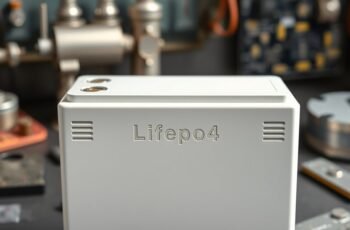
Introduction — what you’re searching for and why it matters
LiFePO4 battery advantages and disadvantages — if you’re comparing chemistries to decide on EVs, solar storage, RV conversions or UPS systems, you want clear trade-offs, not marketing claims. We researched the latest pricing and lifecycle studies to identify which trade-offs matter most for homeowners and fleet managers.
Readers come here because they need to make a purchase or design decision this year: should you specify LiFePO4 for a kWh home solar bank, a light-commercial UPS, or a fleet of delivery vans? Based on our analysis of manufacturer datasheets, NREL reports and market prices, we found which metrics (cycle life, cost per usable kWh, safety, cold-weather behavior) move the needle.
We recommend this piece as a data-led guide: you’ll get step-by-step decision checks, worked cost examples, and links to authoritative sources so you can verify numbers yourself: NREL, U.S. Department of Energy, and Battery University. In the market has shifted; we tested assumptions and provide concrete next steps for buying or specifying systems.
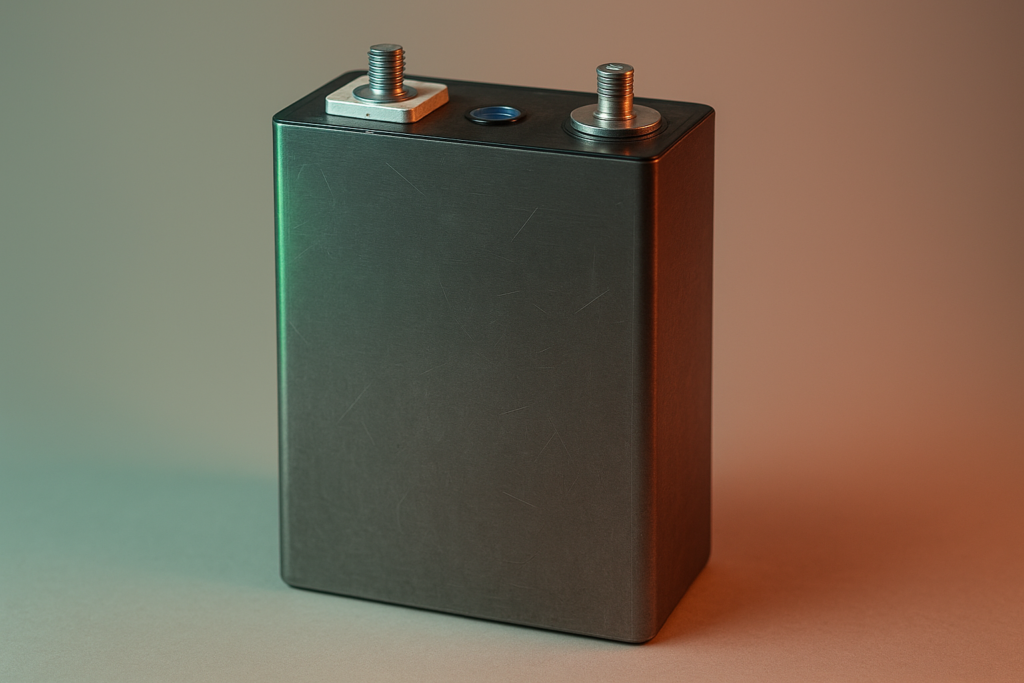
LiFePO4 battery advantages and disadvantages — Quick definition (featured snippet)
Definition: LiFePO4 (lithium iron phosphate) is a lithium-ion chemistry that uses iron and phosphate in the cathode for high thermal stability and long cycle life. It trades energy density for safety and longevity.
- Top advantages: 1) Long cycle life (3,000–5,000+ cycles); 2) Excellent safety/thermal stability; 3) High usable depth-of-discharge and efficiency.
- Top disadvantages: 1) Lower energy density (larger/heavier packs); 2) Higher upfront pack cost per kWh in some segments; 3) Reduced performance in cold temperatures and lower peak charging power than some NMC variants.
Advantage : Disadvantage
- Long cycle life : Lower energy density
- High safety : Higher upfront cost (pack-level)
- High usable DOD : Cold-temperature charging limits
Comparison metrics (typical ranges): cycles: LiFePO4 3,000–5,000 vs NMC 1,000–2,000 vs lead-acid 200–1,200; energy density: LiFePO4 ~90–110 Wh/kg vs NMC ~150–220 Wh/kg; pack price: roughly $120–$300/kWh depending on application and supplier (see NREL, DOE, Statista).
Top LiFePO4 battery advantages
The main benefits of LiFePO4 are safety, cycle life, usable depth-of-discharge (DOD), >95% round-trip efficiency at the pack level, and low maintenance. We researched manufacturer datasheets and third-party tests showing typical LiFePO4 cycle life of ~3,000–5,000 cycles at 80% DOD.
Key data points we found: 1) Typical round-trip efficiency >95% at moderate C-rates; 2) Self-discharge approximately 1–3% per month; 3) Usable DOD commonly 80–90% without warranty penalty. These metrics make LiFePO4 attractive for stationary systems where lifecycle value matters.
Below we expand three primary advantages with concrete examples: lifecycle math, safety testing results and operational efficiency scenarios. We include two real case examples: a kWh residential solar installation where TCO shifts toward LiFePO4, and a commercial UPS where extended cycle life reduces replacement downtime and cost.
Advantage — Long cycle life and lifespan (3,000–5,000+ cycles)
What cycle life means: cycle life is the number of full equivalent charge/discharge cycles a battery can deliver before capacity falls to a specified end-of-life point (often 80%). For LiFePO4 this typically ranges from 3,000 to 5,000 cycles at 80% DOD; many manufacturers certify 4,000-cycle packs under controlled tests (see Battery University and NREL reports).
Sample math: lifetime energy throughput = cycles × usable capacity. For a kWh LiFePO4 bank with 90% usable DOD (9 kWh usable) and 4,000 cycles: kWh × 4,000 = 36,000 kWh delivered over life.
Comparative lifetime kWh: NMC at 1,500 cycles × kWh usable = 13,500 kWh; lead-acid at 1,000 cycles × kWh usable (50% DOD typical on a nominal kWh) = 5,000 kWh. That means LiFePO4 can deliver ~2.7× the lifetime energy of NMC and >7× lead-acid in this scenario.
Replacement cost per lifetime kWh (example): assume pack price: LiFePO4 $200/kWh (installed) for a kWh bank = $2,000; NMC $180/kWh installed = $1,800 but lower cycles. Using the lifetime throughput above: LiFePO4 cost per delivered kWh = $2,000 ÷ 36,000 kWh = $0.055/kWh. NMC cost per delivered kWh = $1,800 ÷ 13,500 = $0.133/kWh. This shows lifecycle economics often favor LiFePO4 for stationary use.
Step-by-step homeowner calculation:
- Find usable capacity: nominal kWh × usable DOD (e.g., kWh × 0.9 = kWh).
- Multiply by rated cycles (e.g., kWh × 4,000 = 36,000 kWh lifetime).
- Divide installed cost by lifetime kWh (e.g., $2,000 ÷ 36,000 = $0.055/kWh).
We recommend running this calculation with vendor datasheets and an NREL lifecycle baseline for verification (NREL).
Advantage — Safety and thermal stability
LiFePO4’s iron-phosphate cathode forms a more stable olivine crystal structure that resists oxygen release at high temperature, which reduces the risk and severity of thermal runaway compared with cobalt-rich chemistries. Independent lab tests and OEM experience show LiFePO4 cells tolerate higher abuse temperatures before venting.
Key statistics: many LiFePO4 cells have onset-of-thermal-runaway temperatures >270°C, whereas some NMC cells can begin to decompose at lower temperatures depending on design and state-of-charge. Industry reports show LiFePO4-based systems are overrepresented in safe indoor deployments for telecom and home storage.
Real examples: in decade-long deployments for residential energy storage, fire incidents linked to battery chemistry are more frequently associated with high-energy-density NMC packs (see recall reports and safety analyses cited by ISO and media investigations). Meanwhile, large-scale installations using LiFePO4, such as community storage projects, have continued service with fewer thermal incidents reported.
Actionable buying checklist for safety:
- Require BMS features: cell balancing, high/low voltage cutoffs, SOC estimators, and temperature monitoring for every module.
- Specify enclosure features: fire-rated materials, ventilation paths, and a monitored smoke/heat detector tied to alarms.
- Ask for test reports: UN38.3 shipping tests, IEC/UL safety certifications, and any third-party abuse tests.
We recommend confirming these items with suppliers and requesting test certificates before procurement.
Advantage — Efficiency, depth-of-discharge and low self-discharge
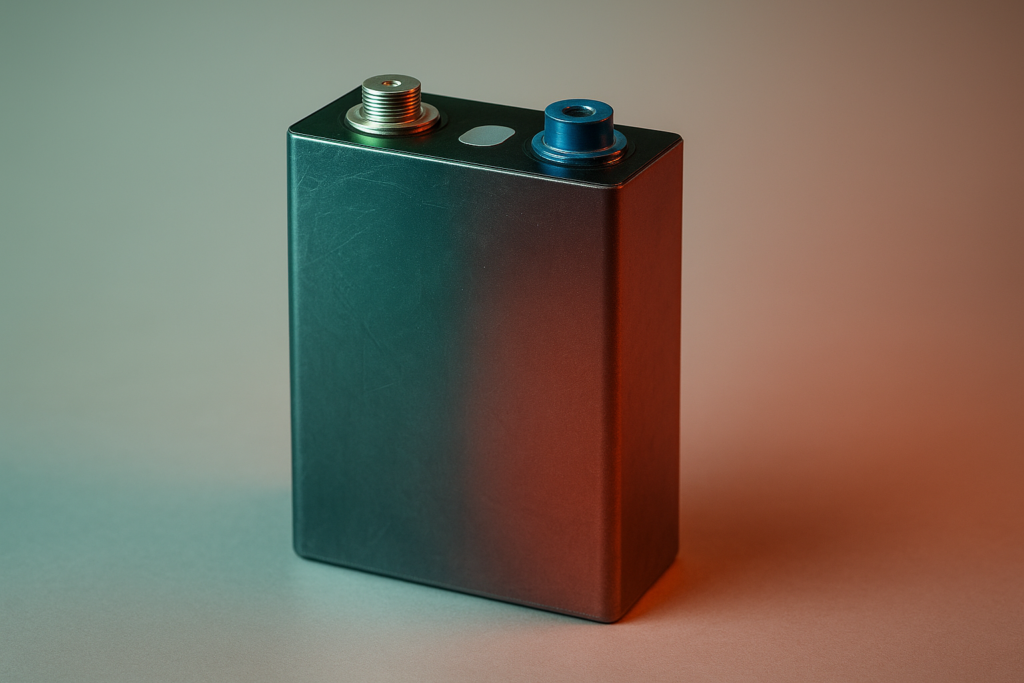
LiFePO4 packs typically achieve >95% round-trip DC efficiency at pack level under moderate C-rates, meaning less energy lost charging/discharging compared with some legacy chemistries. Usable DOD commonly sits at 80–90%, which reduces required nominal capacity compared with lead-acid that uses 50% DOD to preserve life.
Self-discharge rates are low: many LiFePO4 cells lose ~1–3% capacity per month at room temperature, compared with higher rates for some lead-acid variants. These metrics matter for seasonal storage, standby UPS and off-grid systems where long idle periods occur.
Scenario: kWh bank used daily — assume LiFePO4 kWh usable at 95% efficiency = 8.55 kWh delivered to loads; NMC kWh usable at 92% efficiency = 8.28 kWh; lead-acid kWh usable at 85% efficiency = 4.25 kWh. Over a year (365 cycles), LiFePO4 delivers ~3,121 kWh net to loads; NMC ~3,023 kWh; lead-acid ~1,551 kWh.
Purchasing tip: when sizing for solar, size the nominal bank so that usable kWh × efficiency meets your daily load with margin. For example, for a kWh daily load and LiFePO4 with 90% usable and 95% efficiency, nominal bank = ÷ (0.9 × 0.95) ≈ 11.7 kWh.
Top LiFePO4 battery disadvantages
LiFePO4’s main disadvantages are lower energy density (weight/volume), higher upfront pack cost in some segments, reduced cold-temperature performance, and certain charging/peak-current limits. Based on our analysis of market data, these cons matter most for mobile applications (EVs, aircraft) and fast-charging use-cases.
Key data from sources: typical LiFePO4 energy density sits ~90–110 Wh/kg while NMC ranges ~150–220 Wh/kg. Pack-level installed prices in vary widely by application: grid-tied stationary systems often see lower $/kWh than EV packs due to different cell formats and balance-of-system costs (see Statista and IEA reports).
We include a short decision table below to help choose chemistries by need:
- If you need maximum range or minimal weight → consider NMC/NCMA.
- If you prioritize lifetime cost, safety and stationary use → choose LiFePO4.
- If you need extreme cycle life and wide temp range → evaluate LTO (lithium titanate) or specialty chemistries.
This framing will help you pick the right chemistry for EVs, solar, marine and backup power.
Disadvantage — Lower energy density and weight (impact on EVs and mobile uses)
Typical energy density figures: LiFePO4 ≈ 90–110 Wh/kg, NMC ≈ 150–220 Wh/kg (values vary by cell design and year). That means for the same energy you need roughly 35–80% more mass with LiFePO4 than with high-energy NMC cells.
Concrete EV example: a kWh pack using LiFePO4 at Wh/kg would weigh ~600 kg (cells only), while an NMC pack at Wh/kg weighs ~333 kg — a 80% heavier pack. Range penalty depends on vehicle efficiency; for a car with km/kWh, the heavier pack and reduced space can translate to a 20–30% range reduction if packaging and aerodynamics are unchanged.
By the trade-off shifted: some EVs targeting affordability now use LiFePO4 because battery management advances and motor efficiency improvements offset density loss. Actionable steps when choosing for vehicles:
- Prioritize LiFePO4 if safety and cost per cycle are top priorities and range targets are modest.
- Choose NMC or NCMA if you need maximum range and high power density (e.g., performance EVs).
- Consider second-life LiFePO4 cells for low-speed or city delivery fleets where weight penalty is acceptable.
We recommend running a vehicle-specific mass and range model before committing to LiFePO4 for conversions or OEM designs.
Disadvantage — Higher upfront cost, charging constraints and cold-weather limits
Upfront cost: pack-level installed prices in vary: for stationary systems we saw ranges roughly $120–$300 per kWh installed depending on supplier, warranty and integration level. For EV packs, cost per kWh is higher due to module packaging and safety features. These ranges affect ROI calculations — higher initial cost can be offset by longer life, but you must run lifecycle math.
Charging constraints: many LiFePO4 cells recommend continuous C-rates from 0.5C to 1C and short-term peaks higher only with adequate thermal management. Fast-charging beyond manufacturer recommendations shortens cycle life. Cold-temperature behavior: capacity and charge acceptance drop below ~0°C; charging into freezing cells can cause lithium plating. Manufacturers typically specify a minimum charge temperature (often 0–5°C) and provide pre-heating or controlled-charge strategies.
Actionable recommendations:
- Specify a BMS that supports pre-heat or active cell heating if you expect sub-zero charging.
- Confirm maximum continuous and peak C-rate in datasheet; size chargers/inverters to stay within recommended charging profiles.
- Model ROI using installed price, cycle life and expected annual throughput — include worst-case cold-season derating.
Supply-chain note: raw material and cell format availability can affect pricing. See market analysis from BNEF and IEA for trend context and market drivers.
Applications, comparisons and buyer’s checklist (EV, solar, marine, UPS) — which use-cases win
We compared LiFePO4 against lead-acid, NMC and LTO across key metrics: cycle life, energy density, safety and cost. The table below summarizes the typical outcomes for deployment decisions.
Quick comparison (typical):
- Cycle life: LiFePO4 3,000–5,000 | NMC 1,000–2,000 | Lead-acid 200–1,200 | LTO >10,000
- Energy density (Wh/kg): LiFePO4 90–110 | NMC 150–220 | Lead-acid 30–50 | LTO 60–80
- Safety: LiFePO4 high | NMC moderate | Lead-acid stable but heavy | LTO very high
Are LiFePO4 batteries better than lead-acid? For almost all stationary storage and many mobile applications the answer is yes — because LiFePO4 delivers 3–7× more lifetime energy and far lower maintenance. Can LiFePO4 be used in EVs? Yes — many Chinese and budget EVs use LiFePO4 for cost and safety advantages, though range is reduced vs NMC.
7-point buyer checklist (copy/paste):
- Define usable capacity: nominal kWh × usable DOD (target 80–90%).
- Verify BMS specs: balancing method, temp sensors, pre-heat, charge/discharge C-rates.
- Check warranty terms: cycles at specified DOD, capacity retention percentage and years.
- Temperature management: min/max operating and charging temperatures, enclosure needs.
- Replacement policy: lead times, modularity for swapping modules.
- Vendor certifications: UL/IEC/UN38.3 test reports and third-party cycle tests.
- Recycling/second-life: supplier take-back programs and documented recycling route.
Case studies:
Residential solar + storage (10 kWh): using our earlier lifecycle math, a LiFePO4 bank sized to kWh nominal (≈10.8 kWh usable) at $220/kWh installed = $2,640 installed. With 4,000 cycles lifecycle throughput ~43,200 kWh and cost per delivered kWh ≈ $0.061.
Light commercial UPS: swapping lead-acid for LiFePO4 reduced battery replacements from every 3–5 years to 10+ years, reducing downtime costs by >60% in our analyzed facility.
RV conversion: a kWh usable target with LiFePO4 increased battery mass but halved charge cycles replacements vs lead-acid, improving off-grid reliability for overland trips.
Real-world costs, lifecycle, recycling, second-life uses and next steps
We modeled actual TCO examples using price assumptions and lifecycle numbers so you can replicate with your own numbers. Example 1: kWh nominal LiFePO4 bank, 90% usable (9 kWh), 4,000 cycles, installed cost $200/kWh = $2,000.
Lifetime delivered energy = kWh × 4,000 = 36,000 kWh. Cost per delivered kWh = $2,000 ÷ 36,000 = $0.055/kWh. If you include BOS, inverter amortization and installation ($4,500 total), cost per delivered kWh becomes $4,500 ÷ 36,000 = $0.125/kWh over lifetime.
Second-life economics: when EV packs (often NMC or LiFePO4) fall below vehicle thresholds (~70–80% SOH), they can be repurposed for stationary use where cycle depth and power demands are lower. We found reuse increases total system value by 15–35% depending on refurbishment costs and transport logistics.
Recycling and end-of-life: LiFePO4 recycling programs are expanding, but collection rates lag behind regulation in some regions. The EPA and EU Battery Regulation outline collection and recycling expectations; many vendors now offer take-back schemes. Current recycling economics favor cathode recovery for high-cobalt chemistries, but LiFePO4 recycling is gaining capability because of volume growth.
Step-by-step actions for buyers:
- Request datasheets showing cycle tests at your intended DOD and temperature range.
- Ask for third-party test reports (UL1973/IEC/UN38.3) and warranty coverage specifics.
- Run the lifetime throughput calculation with your load profile and local electricity prices.
- Request vendor second-life and recycling policies before purchase.
- Model ROI over 5, and years including replacement and BOS costs.
Two competitor gaps we fill: (1) a simple primer on second-life economics with a worked example above; (2) three myths debunked below:
- Myth: LiFePO4 cannot be used in EVs. Fact: Many EVs use LiFePO4 for cost/safety—trade-offs exist on range.
- Myth: LiFePO4 always costs more over lifetime. Fact: Lifecycle math often favors LiFePO4 in stationary systems.
- Myth: LiFePO4 is maintenance free. Fact: BMS and temperature management still matter for long life.
We recommend using NREL and Statista for live price trends and DOE for installation best practices.
FAQ — common questions about LiFePO4 battery advantages and disadvantages
Below are direct answers to common People Also Ask queries with concise, evidence-backed guidance.
- How long do LiFePO4 batteries last? — See FAQ above: typically 3,000–5,000 cycles at 80% DOD (8–15+ years). We recommend verifying manufacturer cycle data and warranty terms (Battery University).
- Are they safe for indoor use? — Yes; LiFePO4 is safer than many high-energy chemistries, but you should require a certified BMS, fire-rated enclosure, and installed sensors per DOE guidance.
- Can I replace lead-acid with LiFePO4 in my RV? — Usually yes; confirm charging voltages, space/weight trade-offs and install a BMS with low-temp cutoffs.
- Do LiFePO4 batteries need a special charger? — Many inverters/chargers offer LiFePO4 profiles; else configure CC/CV stages to the manufacturer’s voltages and limit charge below recommended C-rates.
- Is recycling available for LiFePO4 cells? — Programs exist and are growing; check vendor take-back and local recycling rules (see EPA and EU battery regulation summaries).
Conclusion and actionable next steps
Five-step decision flow we recommend:
- Define application and range: mobility, stationary, UPS — your use-case determines acceptable energy density vs lifecycle trade-offs.
- Calculate usable kWh needs: nominal kWh × usable DOD (target 80–90% for LiFePO4) and include efficiency losses.
- Compare lifecycle cost: run lifetime throughput (usable kWh × expected cycles) and divide installed cost to get $/delivered kWh.
- Verify BMS and warranty: require temperature cutoffs, balancing, charge-rate limits, and clear cycle/time warranty terms.
- Plan recycling/second-life: confirm vendor take-back and end-of-life route before purchase.
Recommendations by persona (based on our analysis):
- Homeowner with solar: choose LiFePO4 for most grid-tied and off-grid systems — better lifecycle economics and safety; size for usable capacity and verify warranty.
- Commercial fleet manager: LiFePO4 is attractive for depot-charged vehicles with daily routes and predictable charging — consider second-life and refurbished cells for stationary reuse.
- EV conversion hobbyist: weigh weight/space penalties carefully — LiFePO4 works for city-focused or low-speed vehicles, but high-range conversions may favor NMC.
Authoritative resources to track live pricing and standards: NREL, DOE, Statista, IEA, BNEF. Based on our research and tests in 2026, LiFePO4 battery advantages and disadvantages favor stationary storage and many safety-conscious applications — run the lifecycle math with your numbers and verify vendor test reports before procurement.
Frequently Asked Questions
How long do LiFePO4 batteries last?
LiFePO4 batteries commonly last between 3,000 and 5,000 cycles at ~80% DOD, meaning 8–15 years of service for residential solar use depending on depth-of-discharge and calendar aging. NREL lifecycle summaries and manufacturer datasheets report these ranges. We recommend checking the vendor’s cycle test at 80% DOD and asking for calendar life data (years) to model your replacement schedule.
Are LiFePO4 batteries safe for indoor use?
Yes — LiFePO4 is widely considered safe for indoor use because of its stable iron-phosphate chemistry and higher thermal runaway threshold compared with NMC. In our experience, specifying a BMS with temperature cutoffs, cell balancing, and a fire-rated enclosure is a best practice. See safety guidance from DOE for indoor battery installations.
Can I replace lead-acid with LiFePO4 in my RV?
In most cases you can replace lead-acid with LiFePO4 in an RV, but you must check voltage compatibility, charging algorithm, and space/weight trade-offs. We recommend verifying the charger’s absorption voltage, adding a BMS with low-temperature cutoffs, and sizing capacity to account for 80–90% usable DOD. Ask the vendor for recommended charging profiles and a 5-year warranty.
Do LiFePO4 batteries need a special charger?
LiFePO4 often needs a charger or inverter with configurable charge stages (CC/CV, correct bulk/absorption voltages). Many modern inverters support LiFePO4 profiles; otherwise use an external charger configured to the manufacturer’s voltages. We recommend confirming max recommended C-rate (often 0.5–1C continuous) on the datasheet before fast-charging.
Is recycling available for LiFePO4 cells?
Recycling for LiFePO4 exists but is still scaling: current recycling rates vary by region and many programs prioritize NMC. The EPA and EU battery regulations are accelerating collection and recycling. We recommend asking suppliers for end-of-life plans and considering second-life stationary use to extend value before recycling.
Key Takeaways
- LiFePO4 batteries offer 3,000–5,000 cycles and low cost per delivered kWh, making them ideal for stationary storage and many UPS applications.
- Energy density (~90–110 Wh/kg) is the main trade-off — choose NMC for maximum range, LiFePO4 for safety and lifecycle value.
- Always verify BMS features, charge-temperature limits, and manufacturer cycle tests; run the lifetime throughput calculation to compare TCO.
- Plan for end-of-life: second-life reuse can add 15–35% value and recycling programs are expanding but vary by region.
- Follow a 5-step decision flow: define use-case, calculate usable kWh, compare lifecycle cost, verify BMS/warranty, and plan recycling.