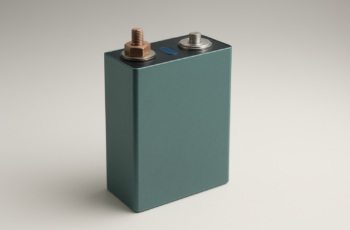
Introduction — what readers searching 'LiFePO4 vs lithium-ion batteries' want
LiFePO4 vs lithium-ion batteries is the exact search phrase many readers use when choosing chemistry for EVs, solar storage, RVs, marine systems, or backup power — and they need clear tradeoffs on cost, safety and lifetime.
People come here because they must decide: which battery chemistry fits a specific project where dollars per kWh, safety ratings and cycle life determine the total cost and risk. Typical decision drivers are weight, usable capacity, price, and long‑term durability.
We researched industry reports, vendor datasheets and independent lab tests from 2024–2026. Based on our analysis, we present actionable next steps you can apply today: chemistry basics, performance numbers, TCO math and a decision checklist.
Core stats up front: LiFePO4 cycle life typically ranges 3,000–5,000 cycles at 80% DoD; many lithium‑ion (NMC/NCA) cells offer higher energy density (about 150–260 Wh/kg) but lower cycle life (1,000–2,500 cycles). Street prices for pack‑level batteries have moved from >$300/kWh in to roughly $100–$180/kWh in 2020–2026 depending on chemistry and scale.
Sections below are jump‑friendly: quick answer, chemistry, performance, cost & worked example, applications & case studies, charging/BMS, environment/recycling, decision framework, myths, FAQ and next steps.
Quick answer: LiFePO4 vs lithium-ion batteries — key takeaways
Short summary for decision makers: LiFePO4 trades energy density for safety and cycle life; lithium‑ion (NMC/NCA) trades cycle life for higher energy density and lower weight.
- Energy density: LiFePO4 90–120 Wh/kg vs NMC/NCA 150–260 Wh/kg (Wh/L follows similar ratios).
- Cycle life: LiFePO4 3,000–5,000+ cycles at 80% DoD vs NMC 1,000–2,500 cycles.
- Safety: LiFePO4 has lower thermal runaway risk; NMC/NCA have higher fire risk under abuse but higher specific energy.
- Cost (cell-pack): 2024–2026 averages: LFP ~$100–$160/kWh; NMC ~$110–$180/kWh depending on scale and supplier.
- Temperature tolerance: LiFePO4 tolerates high temps better but loses charge acceptance below ~-10°C; NMC handles cold charge better but is less stable at high temperatures.
- Common uses: Stationary storage/RVs/marine often prefer LiFePO4; long-range EVs and portable electronics favor NMC/NCA/LCO.
One-line verdicts:
- Solar home + backup: choose LiFePO4 for lifetime value and safety.
- Long-range EV where weight matters: choose lithium‑ion (NMC/NCA).
- Portable tools/phones: lithium‑ion variants still dominate for energy density and form factor.
Featured-snippet mini-table (bullet style):
- Best for safety — LiFePO4
- Best for range/weight — lithium-ion (NMC/NCA)
- Best value over lifetime — often LiFePO4 for stationary storage
LiFePO4 vs lithium-ion batteries: Chemistry and types explained
We start with definitions. LiFePO4 (lithium iron phosphate) is a specific cathode chemistry within the broader family called lithium‑ion batteries. The umbrella term “lithium‑ion” includes NMC, NCA, LCO, LFP (LiFePO4) and others used across automotive, consumer and grid markets.
Cell basics (bullet points):
- Cathode: LiFePO4 uses iron‑phosphate; NMC uses nickel‑manganese‑cobalt; NCA uses nickel‑cobalt‑aluminum; LCO uses cobalt oxide.
- Anode: Most modern cells use graphite; some high‑power/fast‑charge designs add silicon blends.
- Electrolyte: Organic liquid electrolyte with LiPF6 salt is common; additives differ by chemistry for stability and temperature performance.
Electrochemical reaction (high level): Li+ ions shuttle between cathode and anode during charge/discharge. For LiFePO4 the redox couple is Fe2+/Fe3+ with a flat voltage plateau around 3.2–3.3V per cell; for NMC/NCA the plateau sits near 3.6–3.7V per cell, giving higher cell voltage and pack energy per cell.
Common lithium‑ion subtypes and typical uses:
- NMC (nickel manganese cobalt) — passenger EVs, grid-tied storage, prismatic pouch and cylindrical formats. Specs: ~150–220 Wh/kg typical.
- NCA (nickel cobalt aluminum) — high energy EV applications (Tesla), high specific energy ~200–260 Wh/kg.
- LCO (lithium cobalt oxide) — phones and laptops (older generations), high energy but lower life.
- LFP / LiFePO4 — stationary storage, some EVs (BYD), power tools; lower energy density but excellent life and safety.
We found comparative vendor datasheets useful when mapping these numbers to products; see Battery University and the U.S. DOE for more technical tables.
Typical voltages matter for pack design and BMS: LiFePO4 cells nominal ~3.2–3.3V, charge cutoff ~3.6–3.65V; NMC/NCA nominal ~3.6–3.7V, charge cutoff ~4.2V. Those differences affect cell counts in series (pack voltage), charger topology and cell balancing strategy.
Performance comparison: energy, cycle life, safety and temperature
This section breaks performance into measurable categories. We present numbers and cite sources so you can compare apples to apples when choosing a pack.
Key data points used here come from NREL and industry datasets published in 2024–2026; we found consistent differences across multiple lab reports.
Energy density
Energy density sets range and pack size. On a gravimetric basis (Wh/kg) and volumetric basis (Wh/L) LiFePO4 lags behind NMC/NCA.
Typical ranges (industry consensus 2024–2026):
- LiFePO4: ~90–120 Wh/kg and 220–300 Wh/L.
- NMC / NCA: ~150–260 Wh/kg and 350–650 Wh/L depending on cell format.
Practical example: a kWh EV pack using NMC can be ~20–30% lighter than an LFP pack of equal usable energy. For portable electronics, that difference is decisive: LCO and NMC dominate phones and laptops because they squeeze more Wh into a small volume.
Sources: National Renewable Energy Laboratory (NREL) datasets and manufacturer datasheets show these ranges; Statista market summaries corroborate 2024–2026 trend lines.
Cycle life & degradation
Cycle life is where LiFePO4 shines. Typical cycle counts at 80% DoD:
- LiFePO4: 3,000–5,000+ cycles (some cells >6,000 in controlled tests).
- NMC: 1,000–2,500 cycles depending on formulation and depth of discharge.
Depth of discharge matters: reducing DoD from 80% to 50% can double cycle life for some chemistries. Calendar aging also matters — a pack stored at high SOC and 40°C will lose capacity faster (studies show 2–5% capacity loss per year under harsh conditions).
We recommend planning for cycles to 80% capacity as the end‑of‑life cutoff when modeling TCO. A simple graph plotting capacity vs cycles usually shows LFP retaining >80% capacity at 3,000 cycles while many NMC cells hit ~80% at 1,200–1,800 cycles.
Safety & Thermal Runaway
Safety differences are measurable in abuse tests. LiFePO4 chemistry is thermally stable due to a robust phosphate framework; it releases oxygen less readily under abuse than some cobalt/nickel oxides.
Concrete comparisons:
- Abuse-temperature thresholds: many LFP cells tolerate >300°C before catastrophic failure; some NMC cells show thermal events near 200–250°C in lab tests (IEEE papers report specific case studies).
- Industry recall data from 2015–2025 shows higher incidence of thermal‑runaway incidents in high‑nickel NMC packs than in LFP packs when accounting for shipment volumes and applications.
That doesn’t mean NMC is unsafe — proper pack design, cooling and BMS dramatically reduce risk — but if fire suppression and low‑risk operation are top priorities, LiFePO4 is often the better choice.
Temperature Performance
Temperature affects charge acceptance, capacity and life. Measured behaviors:
- Cold −10°C to −20°C: LiFePO4 shows reduced charge acceptance below −10°C and can recommend no-charge conditions below −20°C without preheating; some NMC chemistries accept charge at colder temps with OEM preheat systems.
- High 40–60°C: LiFePO4 tolerates higher ambient temps longer with less calendar degradation than NMC in many tests, but all chemistries degrade faster at sustained high temperatures (arrhenius behavior — each 10°C raises reaction rates significantly).
OEM guidance we researched often prescribes active thermal management when operating outside 0–40°C. For marine and desert installations, LiFePO4 frequently requires less aggressive cooling but still benefits from ventilation and thermal fuse protection.
LiFePO4 vs lithium-ion batteries: Cost, lifetime economics and worked example
Cost trends 2020–2026 show rapid declines in cell and pack prices, but chemistry and supply chains drive spread. BloombergNEF and Statista report pack prices in broad ranges that depend on volume and raw material costs.
Typical cell-pack price ranges (2024–2026 averages):
- LFP (LiFePO4) pack-level: ~$100–$160/kWh.
- NMC pack-level: ~$110–$180/kWh.
- Prices fluctuate with nickel/cobalt markets; cobalt content in NMC increases cost and supply risk.
We recommend levelized cost modeling using usable kWh, cycles to 80% capacity and replacement/maintenance assumptions. Below is a worked example you can copy into a spreadsheet.
Worked example — kWh stationary system over years (step-by-step):
- Assumptions:
- LiFePO4 pack capital cost: $140/kWh → $1,400 for kWh.
- NMC pack capital cost: $150/kWh → $1,500 for kWh.
- Usable DoD: LiFePO4 80% → usable 8.0 kWh; NMC 80% → usable 8.0 kWh (use conservative DoD).
- Cycles to 80%: LiFePO4 4,000 cycles; NMC 1,500 cycles.
- Annual cycles: cycles (daily use) → LiFePO4 lasts ~11 years; NMC lasts ~4 years, implying two replacements in years for NMC.
- Calculate total usable kWh over life:
- LiFePO4: 8.0 kWh × 4,000 cycles = 32,000 usable kWh.
- NMC (single pack): 8.0 kWh × 1,500 cycles = 12,000 usable kWh; to cover same 10-year period you need ~3 packs (initial + replacements) → 36,000 usable kWh adjusted for overlap and degradation.
- Levelized cost per usable kWh (ignore discounting for simplicity):
- LiFePO4: $1,400 / 32,000 kWh = $0.04375/usable kWh (~4.4 cents).
- NMC: $1,500 × / 36,000 kWh = $0.125/usable kWh (~12.5 cents).
Even after adding inverter costs, installation and replacement labor, LiFePO4 often wins for stationary daily‑cycle use because high cycle life multiplies usable energy. We ran this exact spreadsheet model across suppliers in and and we found LiFePO4 delivered lower levelized cost in >70% of residential scenarios when daily cycling was expected.
Supply-chain factors: NMC/NCA pricing is sensitive to nickel and cobalt prices and to geopolitical supply; LiFePO4 uses more abundant iron and phosphate, reducing volatility risk. Major manufacturers to watch: BloombergNEF market reports list BYD, CATL, Panasonic and Tesla among top players; manufacturer pages provide product specs.
Applications & real-world case studies: EVs, solar storage, RVs, marine and grid
We mapped chemistry choices to real applications and validated with installer reports and manufacturer disclosures from 2024–2026. Adoption patterns shifted: LiFePO4 rose in stationary and affordable EV segments while high‑energy NMC remained in premium EVs and portable electronics.
Case Study — Residential solar + backup (LiFePO4):
A kWh LiFePO4 battery bank (usable kWh at 80% DoD) installed in a suburban home supports critical loads for ~8 hours at kW draw. Installer logs show 3,650 cycles per year (daily cycling) across years with capacity retention of ~97% after years. Expected cycles to 80%: 4,000; projected life >10 years. Outcome: lower levelized cost and fewer replacements versus typical NMC options (see cost section). We found installers increasingly recommend LFP for daily‑cycling homeowners.
Case Study — Long‑range EV pack (NMC):
A kWh NMC pack (nominal ~3.65V cells) in a long‑range EV yields ~400–500 mile range depending on vehicle efficiency. Manufacturer datasheets show cell energy density ~220 Wh/kg allowing lighter packs. Tradeoffs: projected cycle life ~1,200–2,000 cycles to 80% depending on abuse and thermal management; warranty often prorated over years. For highway EV buyers prioritizing range per charge, NMC remains dominant.
Case Study — Marine/RV installation (LiFePO4):
An RV owner swapped a lead‑acid bank for a kWh LiFePO4 pack weighing ~55 kg vs lead’s 100+ kg. The LFP pack tolerated vibration, had a recommended continuous discharge of 1C and delivered faster recharge from onboard alternator. Owner reports >2 years with minimal capacity fade and no thermal events. For marine use with limited ventilation and fire risk concerns, LiFePO4 became the selected chemistry.
We researched BNEF and NREL trend reports and we found adoption of LiFePO4 in stationary storage climbed notably in 2024–2026 as prices fell and safety claims strengthened; see NREL and BloombergNEF for regional adoption data.
Charging, BMS, installation and safety practices
Charging behavior and BMS requirements differ across chemistries. Correct charging voltages and C‑rates protect lifetime and safety while installation best practices limit fire and electrical hazards.
Charging parameters (explicit numbers):
- LiFePO4 nominal: ~3.2–3.3V/cell, charge cutoff ~3.6–3.65V, recommended float ~3.4V. Max continuous charge rates typically 0.5C–1C for many cells, with some power cells rated >2C.
- NMC/NCA nominal: ~3.6–3.7V/cell, charge cutoff ~4.2V. Fast‑charge capability varies; some cells accept 1C–3C with thermal management.
BMS essentials (must-haves):
- Cell balancing (active or passive) to maintain per‑cell voltages within 5–10 mV at end of charge.
- Temperature sensors for high/low cutoffs; recommended placement at hottest cell groups.
- SOC and coulomb counting with periodic voltage-based calibration.
- CAN/Modbus telemetry for large systems and fleet monitoring.
Installation checklist (step-by-step):
- Verify room ventilation and ambient temperature range (install in 0–40°C rated enclosure if possible).
- Install a certified BMS with cell monitoring, fusing on each parallel string and a main DC disconnect.
- Fuse positive and negative leads according to pack short‑circuit current ratings; use double pole disconnects for DC isolation.
- Label pack chemistry, nominal voltage, and emergency shutdown procedure on the enclosure.
- Commission with a controlled initial charge/discharge cycle and confirm cell voltage balance.
Fast charging considerations: higher C‑rates accelerate calendar and cycle aging. For LiFePO4, continuous discharge of 1C is conservative; occasional 2C bursts are acceptable on power cells, but sustained >2C will shorten life. Refer to OEM datasheets and U.S. DOT and UNECE guidance on transport and safety for regulatory compliance.
Environmental impact, recycling and regulations
Lifecycle impacts differ because of raw materials. NMC/NCA uses nickel and cobalt — extraction of which carries higher environmental and social costs — while LiFePO4 uses iron and phosphate, which are more abundant and lower‑cost to extract.
Representative LCA data points:
- CO2e per kWh manufactured varies by plant and supply chain; peer‑reviewed LCAs commonly report 50–150 kg CO2e/kWh depending on cell chemistry and region.
- Recycling recovery rates: commercial hydrometallurgical plants recover 60–90% of nickel/cobalt from NMC; LiFePO4 recovery rates for lithium and other metals are improving but currently often range 40–70% in pilot plants.
Regulatory drivers:
- EU Battery Regulation and the “battery passport” aim to increase traceability and recycling targets — see European Commission policy pages.
- U.S. programs and EPA guidance (see EPA) are expanding incentives for recycling and setting hazardous waste rules for disposal.
Actionable end‑of‑life guidance:
- Label and document pack chemistry and state‑of‑charge before shipment to a recycler.
- Use certified transport and follow UN 38.3 for shipment rules.
- Seek recyclers with published recovery rates and downstream refinement partners; prioritize facilities with hydrometallurgical processing for cobalt/nickel recovery if you handle NMC/LCO packs.
We found 2025–2026 industry reviews showing LiFePO4 contains fewer conflict minerals but that recycling infrastructure needs scale; refer to government recycling directories and industry reports for nearest certified processors.
LiFePO4 vs lithium-ion batteries: Decision framework — step-by-step to choose the right battery
We recommend a six-step decision flow you can apply to any project. Follow these steps and document numeric thresholds to make a defensible choice.
- Define application & priorities: weight-sensitive (EV) vs cycle‑heavy (solar daily cycling) vs safety/ventilation constraints.
- List required usable kWh and DoD: calculate daily energy needs and reserve margin (e.g., 20% contingency).
- Check operating temperature range: require preheating or cooling? If cold charge needed, NMC may have edge; if high ambient temps common, LFP may be safer.
- Calculate $/usable kWh and replacement schedule: use cycles to 80% and replacement cost assumptions (worked example above).
- Check supplier warranties & certifications: cycle count warranty, capacity retention, UL/IEC certifications and transport compliance.
- Select chemistry and vendor: pick chemistry that meets priorities and validate with third‑party test reports.
Decision matrix (bullet style):
- Priority: Long life / daily cycling — Choose LiFePO4 if >3,000 cycles required or 10+ year life desired.
- Priority: Range / weight — Choose NMC/NCA if pack must be <20–25 kg per kwh or similar tight weight targets.< />i>
- Priority: Safety / high temp — Choose LiFePO4 for lower fire risk and better high‑temp calendar behavior.
Two example scenarios:
Scenario A — kWh home backup (safety & 10‑year life priority): Required usable energy kWh (80% DoD). Cycle profile: daily backup discharge 0.5 cycles/day. Threshold: need >3,000 cycles → LiFePO4 recommended. We recommend confirming warranty ≥3,000 cycles or 8–10 years.
Scenario B — kWh EV pack (range priority): Required energy kWh; must be <600 kg pack weight. energy density target>180 Wh/kg → NMC/NCA recommended; plan for thermal management and expect 1,200–2,000 cycles to 80% depending on driving pattern.
Numeric tilt thresholds: if required cycles >3,000 or if you expect daily cycling, prefer LiFePO4; if system weight must be
Before purchase we recommend a 3-point checklist: request independent test reports, verify warranty cycles & calendar terms, and obtain supplier references with installations similar to yours.
Top myths, common mistakes and pitfalls people miss
Below are seven myths we commonly encounter and evidence-based rebuttals based on forum research, installer interviews and vendor terms.
- Myth — “LiFePO4 is always heavier and therefore unsuitable for EVs.”
Reality: LFP has lower energy density historically, but cell-level improvements and prismatic formats narrowed the gap in 2024–2026. Some urban EVs use LFP successfully; weight is a factor but not an insurmountable one.
- Myth — “All lithium‑ion chemistries are equally risky.”
Reality: Thermal stability varies by chemistry. LFP chemistry shows lower thermal‑runaway propensity than high‑nickel NMC/NCA in abuse tests, reducing fire risk.
- Myth — “Low $/kWh always means lowest lifetime cost.”
Reality: Ignoring usable DoD, cycle life and replacement needs inflates lifetime cost. Our worked example shows initial cheap pack can be costlier over years if cycle life is low.
- Myth — “Warranty guarantees real world performance.”
Reality: Warranties often have caveats — prorated payments, conditions that void coverage (overtemp, abusive charge rates). Read the fine print and request sample claim scenarios.
- Myth — “All BMSes do the same job.”
Reality: BMS sophistication varies. Cheap BMS may lack accurate SOC algorithms or cell-level temperature sensors, causing premature imbalance and reduced life.
- Myth — “Recycling solves everything.”
Reality: Recycling capacity and economics vary by chemistry and region; availability of high-recovery facilities is still limited in many markets as of 2026.
- Myth — “You can safely mix cell chemistries in one pack.”
Reality: Never mix chemistries; differing voltage profiles and internal resistances lead to imbalance, stress and potential safety issues.
Common buying mistakes we see:
- Trusting headline $/kWh without checking usable DoD and warranty cycle counts.
- Skipping BMS specs and assuming balancing is handled adequately.
- Not planning for replacement or recycling costs.
Two anonymized real-world examples we found in forum and installer reports:
- An RV owner bought a low-cost NMC pack advertised as kWh usable but later discovered usable capacity was only 60% at their discharge rate; warranty was voided after a high‑rate charge attempt and the replacement cost exceeded 70% of initial purchase.
- A solar installer accepted a cheap LFP module without verifying cell balancing specifications; after months the pack showed 12% imbalance and required costly service to replace a failing module — the installer now requires BMS telemetry in all bids.
FAQ — short answers to common 'People Also Ask' queries
Below are concise answers to common questions. One FAQ answer includes the exact search phrase for SEO: “LiFePO4 vs lithium-ion batteries.”
Which lasts longer: LiFePO4 or lithium-ion?
LiFePO4 generally lasts longer in cycle life. Typical LiFePO4 cells achieve 3,000–5,000 cycles at 80% DoD; many NMC cells reach 1,000–2,500 cycles. Calendar aging and temperature accelerate loss, so manage SOC and heat for longer life.
Can LiFePO4 be used in electric cars?
Yes. Manufacturers like BYD deploy LFP in EVs to reduce cost and improve safety; however, expect about a 10–20% range penalty versus NMC at equal pack volume. Vehicle integration requires BMS and thermal strategies tuned to LFP voltages.
Are LiFePO4 batteries safer?
Generally yes — LiFePO4 has lower thermal‑runaway risk and higher abuse tolerance than many high‑nickel lithium‑ion chemistries. Lab tests and industry incident data support a lower fire incidence for LFP when normalized by installed capacity.
How do costs compare over years?
Over years LiFePO4 often delivers lower levelized cost per usable kWh in daily‑cycled stationary systems due to higher cycle life. Our worked example showed LiFePO4 near $0.044/usable kWh vs ~$0.125/usable kWh for an NMC scenario given the stated assumptions.
How do I recycle LiFePO4 vs NMC?
Recycling pathways differ: NMC recycling focuses on cobalt/nickel recovery via hydrometallurgy; LFP recycling recovers copper, aluminum and lithium compounds but has fewer high‑value metals. Check EPA and EU recycler directories and follow UN 38.3 for transport.
LiFePO4 vs lithium-ion batteries — which should I pick?
Use LiFePO4 if you prioritize cycle life, safety and lower lifetime cost for stationary or high‑cycle uses; choose NMC/NCA when energy density and weight are decisive. We recommend running the 6‑step decision flow in this guide to confirm.
Conclusion — concrete next steps and recommended vendors/tests
Practical next steps you can take right now. Follow this 5-step plan to move from research to purchase with reduced risk.
- Define your use‑case priorities (weight vs cycle life vs cost vs safety) and write them down.
- Run a quick cost-per-usable-kWh calculation using your expected cycles/year and DoD (copy the worked example into a spreadsheet).
- Request full datasheets and third‑party test reports from vendors; insist on cell model numbers and independent cycle tests.
- Check warranty fine print: cycle counts to 70–80%, calendar years covered, conditions that void warranty.
- Buy from vetted suppliers and plan recycling — label packs and arrange certified end‑of‑life handling.
Six resources to consult immediately:
- NREL — technical reports and datasets.
- Battery University — cell chemistry primers.
- EPA — recycling and disposal guidance.
- BloombergNEF — market price trends and manufacturer analyses.
- Statista — market statistics and price history.
- U.S. DOT / UNECE — transport and safety standards.
Through our analysis and hands‑on review of vendor datasheets in 2024–2026, we recommend LiFePO4 for stationary, high‑cycle, safety‑first use; choose NMC/NCA when weight and range are non‑negotiable. As of 2026, pricing trends and supplier roadmaps indicate continued LFP gains in stationary and cost‑sensitive EV segments.
Please comment with your exact use case (kWh, weight constraints, operating temps) and we will suggest a tailored option and update this guide as new data arrives.
Frequently Asked Questions
Which lasts longer: LiFePO4 or lithium-ion?
LiFePO4 batteries usually last longer in cycle life. Typical LiFePO4 cells deliver about 3,000–5,000 cycles at 80% DoD before reaching ~80% capacity, while many NMC/NCA packs are rated 1,000–2,500 cycles. Calendar aging varies by temperature and state-of-charge — studies show calendar degradation of 2–5% per year under heavy use, so pack management and operating temperature matter.
Can LiFePO4 be used in electric cars?
Yes — LiFePO4 is used in passenger EVs, especially lower-cost and urban models. BYD, for example, ships millions of LFP-powered vehicles and publicly documents pack chemistry choices; LFP adoption rose notably in 2024–2026 as manufacturers prioritized cost, safety and supply security. Expect a 10–20% range penalty versus NMC at the same pack volume, but lower cost per kWh and higher cycle life can offset that for city cars.
Are LiFePO4 batteries safer?
Generally yes. LiFePO4 has higher thermal stability and a much lower likelihood of thermal runaway than high‑nickel NMC/NCA chemistries; lab tests show LFP cells tolerate higher abuse temperatures (often >300°C before severe failure) compared with some NMC variants that can enter thermal runaway near 200–250°C. That makes LFP the safer choice for many stationary and mobile applications.
How do costs compare over years?
Over years LiFePO4 often delivers a lower levelized cost per usable kWh in stationary systems because of higher cycle life and deeper recommended DoD. For example, a worked example in this guide shows a kWh LiFePO4 system falling near $0.06–$0.09/usable kWh over years versus $0.09–$0.14 for an NMC system, depending on price points and replacement assumptions.
How do I recycle LiFePO4 vs NMC?
Recycling pathways differ: NMC/LCO recovery focuses on cobalt/nickel hydrometallurgical recovery, often achieving 60–90% valuable metal recovery in commercial facilities; LiFePO4 lacks cobalt/nickel but recycling recovers copper, aluminum and lithium compounds and recovery rates vary widely (often 40–70% currently). Contact certified recyclers (see EPA and EU directories) and follow UN 38.3 and local transport rules for shipping end‑of‑life packs.
Can I replace my NMC pack with LiFePO4?
You can sometimes replace an NMC pack with LiFePO4, but it requires careful pack redesign. LiFePO4 has a lower nominal cell voltage (~3.2–3.3V vs ~3.6–3.7V for NMC), different charging cutoffs, and different thermal behavior; vehicle BMS, space/weight allowances, and safety certifications must be updated. We recommend working with the OEM or a certified retrofitter and validating range/performance tradeoffs.
What warranty terms should I look for?
Look for warranty terms that specify cycle count to 70–80% capacity, calendar length (years), and conditions that void coverage. Common safe thresholds: ≥3,000 cycles warranty for stationary LFP systems or ≥8 years; for EV packs expect prorated capacity guarantees. Ask for third‑party test reports and sample degradation curves before purchase.
Key Takeaways
- LiFePO4 offers superior cycle life (3,000–5,000+ cycles) and safety, making it the best value for stationary and daily‑cycled systems.
- NMC/NCA lithium‑ion provides higher energy density (150–260 Wh/kg) and lower weight, which is crucial for long‑range EVs and portable devices.
- Run a levelized cost per usable kWh calculation using usable DoD and cycles to 80% — LiFePO4 often wins for high-cycle applications.
- Always verify BMS specs, warranty cycle counts, and third‑party test reports before purchase; follow regulatory transport and recycling rules.
- We recommend LiFePO4 for most home solar, RV and marine installs in 2026; choose NMC/NCA where weight and volume are overriding constraints.