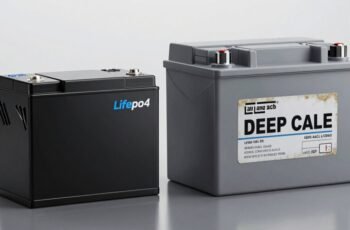
Imagine two batteries sitting side by side, one glowing with promise and the other showing its age. As we examine their core differences—performance, safety, and cost—we realize that choosing the right type hinges on more than initial price. Each offers distinct advantages and limitations that influence longevity and environmental impact. Understanding these nuances is essential, especially when durability and sustainability become critical factors in our decision-making process.
Key Takeaways
- LiFePO4 batteries have a much longer lifespan (2,000-5,000 cycles) compared to lead acid (500-1,000 cycles).
- They offer higher energy density and better efficiency, making them suitable for advanced applications like EVs and renewable energy storage.
- LiFePO4 is safer with lower fire risk and has a reduced environmental impact due to less toxic materials and easier recycling.
- Initial costs are higher for LiFePO4, but long-term savings are achieved through lower maintenance and longer durability.
- Lead acid batteries are more affordable upfront but pose environmental hazards, require more maintenance, and have a shorter operational life.
Understanding the Key Differences Between LiFePO4 and Lead Acid Batteries
While both LiFePO4 and lead acid batteries serve as reliable energy storage solutions, they differ markedly in their chemistry, performance, and applications. LiFePO4 batteries use lithium iron phosphate, offering higher energy density and more efficient charge cycles. Lead acid batteries rely on lead plates and sulfuric acid, making them heavier and less durable over time. From an environmental standpoint, LiFePO4 batteries present a lower environmental impact due to reduced toxic materials and easier battery recycling processes. Lead acid batteries contain hazardous lead, posing environmental and health risks during disposal. These distinctions influence not only their performance and lifespan but also the sustainability of their use, with LiFePO4 batteries offering a more eco-friendly profile through cleaner manufacturing and recycling options.
Battery Performance and Lifespan: Which Lasts Longer?
When comparing battery longevity, cycle life durability and degradation rate are critical factors. LiFePO4 batteries typically sustain more charge cycles before capacity loss, indicating longer operational lifespans. Analyzing these parameters helps determine which battery type maintains performance over time more effectively.
Cycle Life Durability
Understanding the cycle life durability of batteries is essential for evaluating their long-term performance and cost-effectiveness. Lifepo4 batteries typically offer a markedly higher cycle count—often 2,000 to 5,000 cycles—compared to lead acid batteries, which average around 500 to 1,000 cycles. This increased cycle lifespan results in better durability, reducing replacement frequency. Additionally, Lifepo4’s extended life positively impacts battery recycling efforts, as fewer units need disposal, lowering environmental impact. In contrast, lead acid batteries produce more waste over time, raising concerns about environmental sustainability. The longer cycle life of Lifepo4 batteries not only enhances durability but also offers a more sustainable option, emphasizing the importance of considering both performance longevity and environmental factors when evaluating energy storage solutions.
Battery Degradation Rate
Battery degradation rate substantially influences both the performance consistency and overall lifespan of energy storage systems. Lifepo4 batteries typically degrade more slowly than lead acid variants due to their stable chemistry, resulting in longer lifespan and consistent performance over time. This slower degradation reduces the frequency of replacements, positively impacting environmental impact by decreasing waste and demand for raw material extraction. Additionally, Lifepo4 batteries benefit from more sustainable recycling processes, which further mitigate environmental concerns. In contrast, lead acid batteries degrade faster and pose greater challenges during recycling, often involving hazardous materials. Consequently, the degradation rate directly affects not only operational longevity but also environmental sustainability, making Lifepo4 batteries a more durable and eco-friendly choice in the long term.
Cost Comparison: LiFePO4 vs. Lead Acid Batteries
Although LiFePO4 batteries typically have a higher upfront cost than lead acid batteries, a detailed cost analysis reveals significant long-term savings. Their durability reduces replacement frequency, lowering overall expenditure. When evaluating total costs, consider:
- Extended cycle life, decreasing replacement costs
- Lower maintenance requirements
- Improved efficiency, reducing energy losses
- Enhanced safety, minimizing risks and associated costs
- Better environmental impact due to easier battery recycling
While initial investment is higher, LiFePO4 batteries offset this through reduced operational expenses and less frequent replacements. Additionally, their environmentally friendly design supports sustainable battery recycling practices, further lowering lifecycle costs. Overall, a thorough assessment demonstrates that LiFePO4 batteries offer a more economical and environmentally responsible solution over time compared to lead acid options.
Safety Features and Risks of Lithium Iron Phosphate and Lead Acid Batteries
When comparing the safety profiles of LiFePO4 and lead acid batteries, it’s important to take into account their inherent design features and associated risks. LiFePO4 batteries offer enhanced thermal stability, reducing the risk of thermal runaway and fires. Conversely, lead acid batteries contain corrosive sulfuric acid, posing risks of leaks, acid burns, and explosion under improper handling. Manufacturing safety protocols are critical for both, but LiFePO4 production involves stricter controls due to the sensitivity of lithium components. Regarding battery recycling, LiFePO4 batteries are generally safer and less hazardous, simplifying disposal processes. Lead acid batteries, with their toxic acid and heavy metals, require careful handling during recycling to prevent environmental contamination. These safety considerations influence their suitability for various applications and long-term sustainability.
How to Maintain and Properly Charge Your Batteries
Proper maintenance and charging practices are essential to guarantee the longevity and safety of both LiFePO4 and lead acid batteries. Consistent monitoring of voltage and temperature prevents overcharging or deep discharges, which can damage cells. Use high-quality charging stations compatible with each battery type, ensuring correct voltage and current settings. Regularly inspect connections and keep terminals clean to minimize resistance. To enhance sustainability, prioritize battery recycling at end-of-life, reducing environmental impact. For ideal performance:
- Avoid overcharging or undercharging
- Use manufacturer-recommended chargers
- Keep batteries in a cool, dry environment
- Schedule periodic capacity checks
- Implement proper disposal and recycling protocols
Adhering to these practices ensures safety, efficiency, and extends the lifespan of your batteries.
Best Applications for LiFePO4 and Lead Acid Batteries
LiFePO4 and lead acid batteries each excel in specific applications due to their distinct performance characteristics and operational advantages. LiFePO4 batteries are ideal for applications requiring high cycle life, lightweight design, and fast charging, such as electric vehicles and renewable energy storage. They also offer a lower environmental impact, as their chemistry facilitates safer battery recycling and reduces hazardous waste. Conversely, lead acid batteries are well-suited for stationary, high-capacity uses like backup power systems and traditional automotive starters, where cost efficiency and proven reliability matter most. However, their environmental impact is higher due to lead toxicity and more complex battery recycling processes. Understanding these applications helps optimize performance while considering sustainability and environmental considerations.
Factors to Consider When Choosing Your Battery Type
Selecting the appropriate battery type requires a thorough assessment of your specific power needs, operational environment, and long-term goals. Key factors include battery manufacturing quality, environmental impact, cycle life, maintenance requirements, and efficiency. Battery manufacturing influences durability and reliability, with higher-quality processes yielding safer, longer-lasting cells. Environmental impact considers resource extraction, recyclability, and emissions during production and disposal.
- Cycle life and longevity
- Initial cost vs. long-term value
- Environmental sustainability
- Maintenance and operational complexity
- Weight and size constraints
Evaluating these factors helps determine the most suitable option, balancing performance with environmental considerations. Understanding the nuances of battery manufacturing and environmental impact guarantees an informed choice aligned with your operational goals and sustainability commitments.
Which Battery Offers Better Value for Your Needs?
When evaluating the overall value of a battery for your application, it’s essential to take into account both upfront costs and long-term performance benefits. Lifepo4 batteries often present a higher initial investment but deliver superior cycle life, lower maintenance, and enhanced efficiency, translating into better long-term value. Lead acid batteries, while cheaper upfront, tend to require more frequent replacements and maintenance, increasing total ownership costs. Environmental impact also plays a role; Lifepo4 batteries are more environmentally friendly due to their safer chemistry and easier battery recycling processes, reducing harmful waste. In contrast, lead acid batteries contain toxic materials that pose recycling challenges and environmental hazards. Ultimately, Lifepo4 batteries provide greater value when considering lifecycle costs and environmental sustainability.
Conclusion
Choosing between LiFePO4 and lead acid batteries is like selecting the right tool for a job—each has its strengths. With up to 5,000 charge cycles, LiFePO4 batteries outlast lead acid by a wide margin, much like a reliable, long-lasting engine compared to a worn-out one. While the upfront cost is higher, their durability, safety, and eco-friendliness make them an investment in reliability and sustainability—key factors for informed decision-making in energy storage.