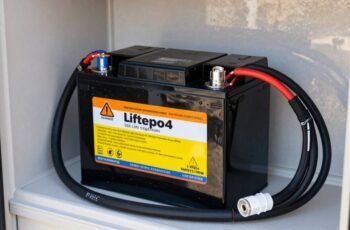
When it comes to Lifepo4 batteries, overheating presents a significant safety and performance concern that demands precise management. We recognize that thermal issues can lead to capacity loss, safety hazards, and even catastrophic failure if not properly addressed. Effective protection involves a combination of advanced circuitry and thermal strategies, but the specifics of these mechanisms and how they interconnect are complex. Exploring these details reveals critical insights into ensuring long-term, safe operation—something every user should consider carefully.
Key Takeaways
- Incorporate thermal sensors to monitor and detect rising temperatures in real-time.
- Use protective circuitry that reduces current or disconnects the battery during overheating.
- Enhance airflow and consider active cooling methods like fans or liquid cooling systems.
- Maintain proper battery installation and perform regular maintenance to ensure effective heat dissipation.
- Inspect and verify cooling components and connections to prevent internal resistance and heat buildup.
What Causes Overheating in Lifepo4 Batteries?
Overheating in LiFePO4 batteries primarily results from internal and external factors that disrupt thermal stability. Internally, compromised chemical stability can accelerate side reactions, generating excess heat. External influences like high ambient temperatures or inadequate thermal management exacerbate heat accumulation. Poor thermal management impairs heat dissipation, causing temperature rise beyond safe limits. Variations in charge and discharge rates also influence temperature, especially if the battery’s chemistry becomes unstable under stress. When chemical stability weakens, the battery’s ability to regulate heat diminishes, increasing overheating risk. Effective thermal management strategies are essential to maintain consistent temperature levels and prevent thermal runaway. Understanding these factors helps us develop robust protection systems, ensuring safer operation and prolonging battery lifespan.
How Does Overheating Impact Battery Safety and Performance?
When a LiFePO4 battery experiences elevated temperatures, its safety and performance are immediately compromised. Overheating disrupts battery thermal management, increasing the risk of thermal runaway. This can cause internal damage and safety hazards such as fires or explosions. Performance degradation also occurs through:
- Reduced capacity due to accelerated chemical breakdown
- Increased internal resistance, impacting power output
- Shortened cycle life from thermal stress
- Potential for overcurrent protection failure, heightening safety risks
Effective thermal management systems are essential to control temperature spikes. Overcurrent protection mechanisms act as safeguards, preventing excessive current flow that worsens overheating. Together, these measures ensure reliable operation and maintain the integrity of LiFePO4 batteries under thermal stress.
How Protective Circuitry Prevents Overheating in Lifepo4 Systems
Protective circuitry plays a critical role in preventing overheating within LiFePO4 battery systems by actively monitoring and controlling electrical parameters. Through advanced circuit design, these systems incorporate thermal management features that detect temperature rises beyond safe thresholds. When overheating is imminent, circuitry dynamically reduces current flow or disconnects the battery, preventing thermal runaway. Precise sensors relay real-time data to control modules, enabling rapid responses to temperature fluctuations. Effective circuit design ensures minimal latency and reliable operation under varying conditions, maintaining ideal battery performance. By integrating thermal management directly into the circuitry, these protective systems safeguard against heat buildup, prolonging battery lifespan and guaranteeing safe operation even during demanding cycles.
Practical Strategies to Protect Your Lifepo4 Battery From Overheating
Implementing practical strategies to prevent your LiFePO4 battery from overheating requires a combination of proper installation, diligent monitoring, and proactive maintenance. Effective thermal management focuses on optimizing battery cooling to maintain temperature within safe limits. Key measures include:
- Enhancing airflow around the battery pack to facilitate heat dissipation.
- Integrating active cooling systems, such as fans or liquid cooling, for high-performance applications.
- Using temperature sensors to continuously monitor battery temperature and trigger alerts.
- Applying thermal interface materials to improve heat transfer between cells and cooling elements.
These strategies guarantee efficient battery cooling, reduce thermal stress, and prolong battery life. Proper thermal management is essential for preventing overheating and safeguarding your LiFePO4 system’s reliability.
Troubleshooting Tips for Overheating Issues in Lifepo4 Batteries
Overheating in LiFePO4 batteries often indicates underlying issues that require systematic troubleshooting. The battery chemistry’s stability makes overheating less common, but thermal management failures can lead to localized heat buildup. First, assess the charge and discharge rates; excessive current can stress the chemistry and generate heat. Next, verify that cooling systems, such as fans or heat sinks, are functioning correctly, as inadequate thermal management exacerbates temperature rises. Inspect for physical damage or swelling, which can impair heat dissipation. Additionally, confirm that the battery’s internal connections are secure, as poor contacts increase resistance and heat. By analyzing these factors, we can identify whether the root cause stems from improper thermal management, faulty components, or operational overload, enabling targeted corrective actions to prevent overheating recurrence.
Conclusion
By understanding the causes of overheating and implementing robust protective measures, we safeguard both the longevity and safety of our LiFePO4 batteries. Think of these systems as the vigilant guardians of your energy storage—preventing thermal runaway before it begins. Through diligent maintenance, advanced circuitry, and proper cooling, we not only enhance performance but also protect what powers our future. Ultimately, proactive care transforms potential hazards into reliable, enduring energy solutions.