Lifepo4 batteries have become a focal point in energy storage due to their unique balance of safety, longevity, and environmental benefits. While their advantages are well documented, understanding their limitations and how they compare to other chemistries is essential for making informed decisions. As we examine their strengths and weaknesses, we’ll uncover which applications truly benefit from Lifepo4 technology—and where potential pitfalls might lie. This exploration could influence how you approach your energy storage solutions.
Key Takeaways
- Lifepo4 batteries offer long cycle life and safety, making them reliable for various applications like solar and electric vehicles.
- They have higher initial costs and lower energy density compared to other lithium-ion chemistries.
- These batteries are environmentally friendly and easier to recycle, supporting sustainable practices.
- Limited high-temperature performance may restrict use in extreme heat conditions.
- Proper maintenance and storage are essential to maximize lifespan and ensure safe, efficient operation.
What Are Lifepo4 Batteries and How Do They Work?
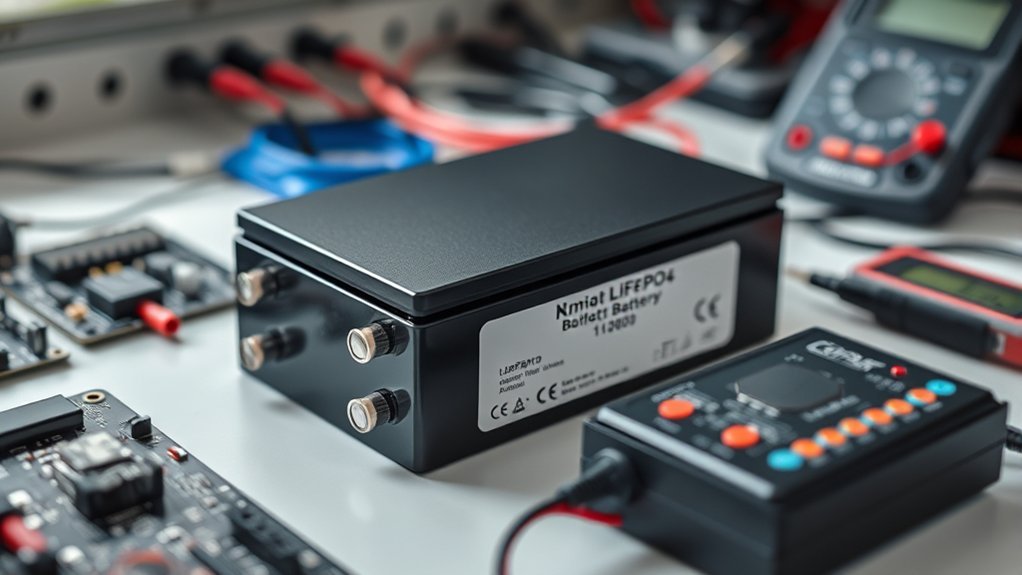
Lifepo4 batteries, a type of lithium-ion technology, are distinguished by their use of lithium iron phosphate as the cathode material, which contributes to their stability and safety. Their battery chemistry offers a unique balance between safety and performance, with a stable chemical structure that resists thermal runaway. While their energy density is lower compared to other lithium-ion chemistries, typically around 90-160 Wh/kg, Lifepo4 batteries compensate with enhanced cycle life and thermal stability. This chemistry results in a consistent power output and reduces risks associated with overheating. By understanding the interplay between battery chemistry and energy density, we see that Lifepo4 batteries prioritize safety, longevity, and reliable performance, making them suitable for various energy storage applications despite their comparatively lower energy density.
Advantages of Using Lifepo4 Batteries for Your Energy System
One of the primary advantages of Lifepo4 batteries in energy systems is their exceptional cycle life, often exceeding 2,000 charge-discharge cycles with minimal capacity loss. This longevity enhances system reliability and reduces replacement frequency. Additionally, Lifepo4 batteries benefit from environmentally conscious manufacturing processes and easier battery recycling, making them more sustainable. Their stable chemistry minimizes thermal runaway risks, boosting safety. Ultimately, their high charge efficiency and consistent performance across temperature ranges optimize energy management. The manufacturing processes emphasize material stability and standardization, facilitating scalable production. These advantages collectively improve long-term operational costs, environmental impact, and safety profiles, making Lifepo4 batteries a technically superior choice for sustainable energy systems.
Potential Drawbacks of Lifepo4 Batteries You Should Know
Despite their many advantages, Lifepo4 batteries do present certain limitations that users should consider. One key issue is the complexity of battery recycling; while Lifepo4 cells are more environmentally friendly than some chemistries, they still require specialized processes to properly handle and recycle components, impacting overall sustainability. Additionally, the initial cost comparison reveals that Lifepo4 batteries tend to be more expensive upfront than traditional lead-acid options, which can be a barrier for some applications. Although their longer lifespan offsets this expense over time, the higher initial investment may deter budget-conscious users. These drawbacks highlight the importance of evaluating both environmental considerations and immediate financial outlay when choosing Lifepo4 batteries for energy systems.
How Lifepo4 Batteries Compare to Other Battery Technologies
How do Lifepo4 batteries stack up against other popular energy storage options? They offer distinct advantages in safety, longevity, and environmental impact. Compared to lithium-ion variants, Lifepo4 batteries have a more stable chemical structure, reducing thermal runaway risks. Regarding manufacturing processes, Lifepo4 cells involve less hazardous materials, facilitating safer, more sustainable production. When considering battery recycling, Lifepo4’s chemistry allows for easier, more efficient recycling, minimizing waste. Conversely, traditional lithium-ion batteries often face complex disposal issues due to toxic components. To summarize:
- Safety: Lower risk of thermal runaway.
- Durability: Longer cycle life.
- Manufacturing: Less hazardous processes.
- Recycling: Easier, more environmentally friendly disposal.
Best Use Cases for Lifepo4 Batteries in Solar and EV Applications
Lifepo4 batteries are particularly well-suited for solar energy storage due to their high cycle life and stability, enabling efficient, long-term power management. They also excel in EV applications, providing reliable, lightweight energy sources that support high discharge rates and safety. Understanding these core strengths helps identify ideal use cases where Lifepo4 batteries can deliver maximum performance.
Optimal for Solar Storage
Lifepo4 batteries are particularly well-suited for solar energy storage due to their high cycle life, thermal stability, and deep discharge capabilities. These attributes enable efficient, long-term energy management in solar systems. Their durability reduces the frequency of replacements, positively impacting battery recycling efforts and lowering environmental impact. Specifically:
- They sustain over 2,000 charge cycles, ensuring longevity.
- Thermal stability minimizes overheating risks, enhancing safety and system reliability.
- Deep discharge capacity allows for maximum utilization of stored energy.
- Their stable chemistry supports environmentally responsible disposal and recycling processes, reducing ecological footprint.
These features make Lifepo4 batteries an ideal choice for solar storage, balancing performance with environmental considerations and sustainable lifecycle management.
Ideal for EV Power
Although traditional lead-acid batteries dominate many electric vehicle (EV) applications, lithium iron phosphate (LiFePO4) batteries are increasingly favored for their superior safety, longevity, and thermal stability. Their stable chemistry minimizes thermal runaway risks, making them ideal for EV power systems. Additionally, LiFePO4 batteries support sustainable practices through more efficient battery recycling processes, reducing environmental impact over their lifespan. Their extended cycle life and high energy density enhance overall vehicle performance and durability. Furthermore, their environmentally friendly composition facilitates safer disposal and recycling, further lowering ecological footprints. As EV adoption grows, LiFePO4 batteries’ combination of safety, sustainability, and technical resilience positions them as a practical choice for powertrains, aligning with global efforts to reduce environmental impact and promote responsible resource management.
Factors to Consider When Choosing a Lifepo4 Battery
When selecting a Lifepo4 battery, several critical factors must be carefully evaluated to guarantee ideal performance and longevity. First, we consider battery installation, ensuring compatibility with existing systems and proper thermal management to prevent overheating. Second, a thorough cost analysis helps determine long-term value, accounting for initial investment versus lifespan savings. Third, assess the cycle life and discharge rates, which impact overall durability and efficiency. Fourth, examine manufacturer reliability and warranty terms to mitigate risks of defects or early failure. These factors collectively influence operational stability and economic viability, guiding us toward a choice that balances technical specifications with financial considerations. Proper evaluation ensures suitable integration and maximizes the battery’s lifespan and performance potential.
Maintenance Tips to Maximize Lifepo4 Battery Lifespan
Maintaining ideal charging routines is essential to prevent capacity loss and guarantee consistent performance. Proper storage conditions, such as keeping the battery at a stable voltage and in a controlled environment, further reduce degradation risks. By adhering to these practices, we can effectively extend the lifespan and reliability of Lifepo4 batteries over time.
Regular Charging Practices
To maximize the lifespan of a Lifepo4 battery, adhering to proper charging practices is essential. Effective management of charging speed and awareness of battery recycling impacts can considerably extend operational life.
- Limit charging speed to moderate levels to reduce thermal stress and degradation.
- Maintain voltage within recommended ranges, avoiding overcharging and deep discharges.
- Implement consistent charging routines to prevent capacity fade.
- Prioritize recycling protocols when batteries reach end-of-life to minimize environmental impact and preserve resources.
Proper Storage Methods
Have you considered how proper storage techniques can profoundly influence the longevity of a Lifepo4 battery? Maintaining ideal storage conditions minimizes capacity loss and degradation over time. We recommend storing batteries in a cool, dry environment with stable temperatures, as thermal management is essential to prevent overheating or freezing, both of which accelerate degradation. Additionally, storing batteries at a partial state of charge—around 50%—helps preserve capacity and lifespan. Proper storage also supports responsible battery recycling practices, guaranteeing materials are reclaimed efficiently at end-of-life. Regularly inspecting stored batteries for signs of swelling or corrosion is critical. By adhering to these storage protocols, we can maximize lifespan, reduce environmental impact, and guarantee safe, sustainable battery recycling when the time comes.
Common Misconceptions About Lifepo4 Battery Safety and Performance
Are common beliefs about Lifepo4 batteries sometimes misleading? Many assume they’re inherently unsafe or environmentally hazardous, but this isn’t always accurate. Misconceptions often stem from a lack of understanding of their manufacturing safety standards and environmental impact. For example:
- Lifepo4 batteries are less prone to thermal runaway due to stable chemistry, reducing fire risk.
- Proper recycling processes mitigate concerns about battery disposal, emphasizing the importance of battery recycling programs.
- Manufacturing safety protocols ensure consistent quality, minimizing defect-related failures.
- Their long lifespan reduces environmental footprint, countering misconceptions about waste and toxicity.
Is a Lifepo4 Battery Right for Your Energy Needs?
Determining whether a Lifepo4 battery suits your energy needs requires a clear understanding of its technical characteristics and application scope. Lifepo4 batteries excel in longevity with approximately 2,000 charge cycles, supporting sustainable battery recycling efforts. They deliver stable voltage and high energy density, making them ideal for solar systems, electric vehicles, and backup power. However, their performance diminishes if used beyond recommended charge cycles or neglected during maintenance. To visualize, consider the following:
| Application Type | Benefits | Limitations |
|---|---|---|
| Solar Storage | Long lifespan, safety | Requires proper recycling |
| Electric Vehicles | Stable discharge, durability | Limited high-temperature performance |
| Backup Power | Reliable, reusable | Initial cost can be high |
Choosing Lifepo4 hinges on matching these traits with your specific energy demands.
Frequently Asked Questions
What Is the Typical Lifespan of a Lifepo4 Battery?
We find Lifepo4 batteries typically last 8-10 years, maintaining about 80-90% capacity; their lifespan hinges on consistent charging efficiency and battery capacity management, which helps mitigate capacity fade over numerous charge cycles.
Are Lifepo4 Batteries Environmentally Friendly?
We believe LiFePO4 batteries are eco-friendly, with eco-friendly manufacturing reducing environmental impact. While recycling challenges exist, their longer lifespan decreases waste, making them a more sustainable choice compared to traditional batteries.
How Do Temperature Extremes Affect Lifepo4 Battery Performance?
Temperature extremes impact Lifepo4 batteries by challenging their thermal stability and temperature resilience, causing capacity loss and potential safety issues. We observe ideal performance within specific temperature ranges, emphasizing the importance of thermal management for reliable, long-term operation.
Can Lifepo4 Batteries Be Recycled Easily?
We believe Lifepo4 batteries are surprisingly recyclable, despite recycling challenges and disposal regulations that complicate the process; their chemical stability and modular design make recovery feasible, but strict regulations demand careful handling to guarantee environmental safety.
What Are the Safety Risks Associated With Lifepo4 Batteries?
We recognize that Lifepo4 batteries pose safety risks mainly during manufacturing and use, including potential thermal runaway and fire hazards. Proper attention to battery manufacturing processes and fire safety measures is essential to minimize these risks effectively.
Conclusion
In steering the landscape of energy storage, Lifepo4 batteries present a compelling blend of stability and longevity, though not without their nuances. While they may demand careful consideration of initial costs and operational conditions, their resilient chemistry and environmental benefits often outweigh these factors. Ultimately, selecting a Lifepo4 system means aligning your energy needs with a solution that, when managed thoughtfully, can deliver sustained performance and quiet assurance amidst evolving technological demands.