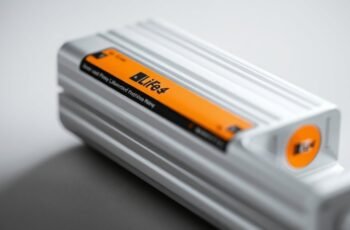
We recognize that LiFePO4 batteries are often praised for their safety and longevity, but they also come with limitations that warrant careful consideration. Their performance characteristics make them attractive for many applications, yet factors like energy density and cost influence their overall suitability. To make an informed judgment, it’s essential to analyze both their advantages and drawbacks thoroughly. Let’s explore how these factors shape the overall assessment of LiFePO4 technology.
Key Takeaways
- LiFePO4 batteries offer excellent safety and thermal stability, reducing the risk of fires and thermal runaway.
- They have a long cycle life, often exceeding 2,000 charge-discharge cycles, making them durable.
- The lower energy density means they are bulkier and heavier compared to other lithium-ion batteries.
- Higher initial costs can be offset by their longevity and lower maintenance needs.
- They are environmentally friendly, with safer recycling processes and fewer toxic materials.
What Are LiFePO4 Batteries and How Do They Work?
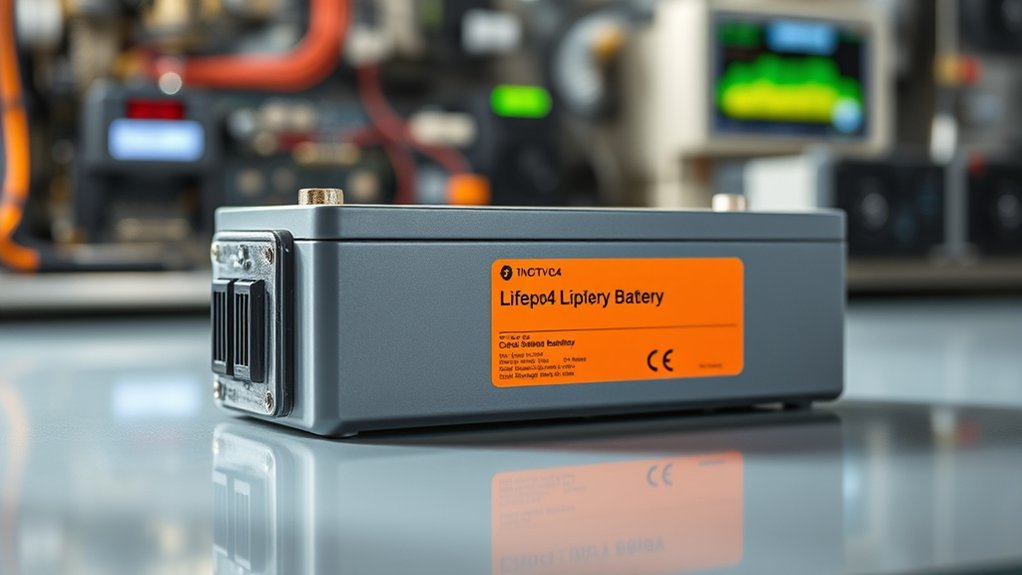
LiFePO4 batteries, also known as lithium iron phosphate batteries, are a type of rechargeable lithium-ion battery characterized by their cathode material, lithium iron phosphate. Their unique battery chemistry provides enhanced thermal stability and safety compared to other lithium-ion chemistries. This stability allows for higher current discharge rates and longer cycle life. Regarding energy efficiency, LiFePO4 batteries exhibit minimal voltage sag and low self-discharge, making them highly effective for energy storage applications. Their chemistry ensures consistent performance over numerous charge-discharge cycles, reducing energy losses and improving overall efficiency. By understanding their specific battery chemistry, users can appreciate how LiFePO4 batteries offer reliable, safe, and energy-efficient solutions for various energy storage needs.
Advantages of Using LiFePO4 Batteries for Your Energy Storage
The advantages of LiFePO4 batteries primarily stem from their long cycle life and enhanced safety features, making them a reliable choice for energy storage. Their ability to withstand repeated charge and discharge cycles without significant capacity loss guarantees durability over time. Additionally, their inherent stability reduces risks associated with thermal runaway, providing a safer energy solution.
Long Cycle Life
Because of their chemical stability, LiFePO4 batteries typically deliver especially longer cycle lives compared to other lithium-ion chemistries. This durability results from their robust cathode material, which resists capacity fade over extensive charge-discharge cycles. As a consequence, these batteries often surpass 2,000 cycles, making them ideal for long-term energy storage applications. Their prolonged lifespan reduces the frequency of battery recycling, thereby minimizing environmental impact and resource consumption. Additionally, the stable chemistry lowers risks of thermal runaway, contributing to safer operation and easing disposal concerns. Overall, the long cycle life of LiFePO4 batteries enhances sustainability by supporting efficient use and easier recycling processes, aligning with environmentally responsible energy storage solutions.
Enhanced Safety Features
Ever wondered why safety is a critical consideration in energy storage systems? LiFePO4 batteries inherently offer enhanced safety features due to their thermal stability and chemical composition, reducing risks like thermal runaway. This stability minimizes the chance of fires or explosions, a key advantage in large-scale applications. Additionally, their design facilitates safer battery recycling, lowering environmental impact by preventing hazardous waste.
| Safety Aspect | Technical Impact |
|---|---|
| Thermal stability | Prevents overheating and fires |
| Chemical stability | Reduces toxic leaks and hazards |
| Mechanical robustness | Minimizes damage-related failures |
| Battery recycling | Environmentally friendly disposal |
| Environmental impact | Lower ecological footprint compared to alternatives |
These features make LiFePO4 batteries a safer, more sustainable choice for energy storage.
Common Drawbacks and Limitations of LiFePO4 Batteries
While LiFePO4 batteries offer significant advantages, their limitations warrant careful consideration. Their lower energy density can restrict application scope, and the higher upfront costs may impact budget planning. Additionally, temperature sensitivity affects performance and lifespan, especially in extreme conditions.
Limited Energy Density
LiFePO4 batteries are often praised for their safety and longevity, but their limited energy density remains a significant drawback. Compared to other lithium-ion chemistries, their energy density is lower, meaning they store less energy per unit volume or weight. This limitation impacts applications requiring high energy capacity, as it results in increased weight and size for equivalent power output. Weight considerations become critical in portable or space-constrained systems, where heavier batteries can reduce efficiency and usability. The lower energy density constrains the range and runtime of devices relying on LiFePO4 cells, especially in high-demand scenarios. Consequently, despite their safety benefits, the trade-off in energy density can be a decisive factor in selecting battery technology for energy-intensive applications.
Higher Cost Investment
The higher upfront cost of LiFePO4 batteries presents a significant economic barrier for many applications. From a cost considerations perspective, their initial purchase price is particularly higher than traditional lead-acid or other lithium-ion chemistries, which can deter adoption despite long-term benefits. Market availability also influences this challenge; while LiFePO4 batteries are increasingly accessible, limited suppliers and regional disparities can inflate prices and complicate procurement. This cost premium stems from advanced manufacturing processes, higher-quality materials, and stricter safety standards. Consequently, organizations must evaluate whether the improved cycle life, safety profile, and longevity offset the initial investment. Overall, the elevated cost remains a critical factor in decision-making, potentially limiting widespread deployment despite the technical advantages LiFePO4 offers.
Temperature Sensitivity
Temperature fluctuations profoundly impact the performance and lifespan of LiFePO4 batteries. Extreme heat or cold can induce thermal expansion or contraction, stressing internal components and degrading battery resilience. Specifically, high temperatures accelerate chemical reactions, increasing capacity fade and risking thermal runaway, while cold conditions hinder ion mobility, reducing efficiency.
- Elevated temperatures cause thermal expansion, risking structural damage.
- Cold environments slow down ion movement, impairing performance.
- Repeated temperature cycling accelerates capacity loss.
- Excessive heat diminishes battery resilience, shortening lifespan.
Effective thermal management is essential to mitigate these effects, ensuring consistent operation and prolonging battery life. Understanding these temperature sensitivities helps optimize LiFePO4 usage in various environments, highlighting both their limitations and the importance of robust thermal controls.
How Do LiFePO4 Batteries Compare to Other Battery Types?
Compared to other common battery chemistries, LiFePO4 batteries offer a compelling balance of safety, longevity, and stability. They outperform lead-acid and lithium-ion batteries in cycle life and thermal stability, reducing risks of thermal runaway. However, their environmental impact warrants consideration. LiFePO4 cells contain fewer toxic materials, making them more eco-friendly during use. Still, recycling challenges persist; their chemical composition complicates disposal processes, and infrastructure for recycling remains limited. This can lead to environmental concerns over improper disposal. Despite these challenges, their long lifespan and relatively lower toxicity provide a significant advantage. Overall, LiFePO4 batteries present a technically solid and environmentally conscious choice, especially when considering lifecycle impacts and sustainable practices.
Are LiFePO4 Batteries Safe for Home and Commercial Use?
LiFePO4 batteries are generally considered safe for both residential and commercial applications due to their stable chemical composition and thermal properties. Their safety profile is reinforced by:
- Reduced risk of thermal runaway compared to other lithium-ion chemistries.
- Stability at high temperatures, minimizing fire hazards.
- Long cycle life, decreasing the frequency of replacements.
- Environmentally conscious design, supporting battery recycling and reducing environmental impact.
However, safety also depends on proper management, including secure installation and monitoring systems. From an environmental perspective, LiFePO4 batteries facilitate safer battery recycling processes, lowering ecological risks associated with disposal. Overall, their robustness and eco-friendly aspects make them a reliable choice for various applications, provided standard safety protocols are observed.
What Factors Affect the Cost and Performance of LiFePO4 Batteries?
The cost and performance of LiFePO4 batteries are influenced by a combination of manufacturing factors, material quality, and design choices. Market trends, such as increasing demand for energy storage solutions, drive production scale and influence costs. Supply chain stability critically impacts material availability, affecting both price and quality control. High-quality raw materials, like pure lithium iron phosphate, enhance battery longevity and efficiency, but can also raise costs if supply is limited. Design choices, including cell architecture and thermal management systems, directly impact performance metrics like cycle life and charging rates. As market dynamics evolve, manufacturers optimize these factors to balance performance and cost, but variability in supply chain reliability remains a key determinant in the overall economics and capabilities of LiFePO4 batteries.
Is a LiFePO4 Battery the Right Choice for Your Needs?
Determining whether a LiFePO4 battery is suitable for your needs depends on understanding its specific advantages and limitations in relation to your application. These batteries offer notable benefits, but also pose considerations.
- Environmental impact: LiFePO4 batteries have a lower environmental footprint due to their stability and longer lifespan, reducing waste and facilitating easier battery recycling.
- Cycle life and safety: They typically provide more charge cycles, making them them ideal for long-term use, but require proper management to avoid safety risks.
- Cost-effectiveness: Although initial costs are higher, the durability can offset this over time.
- Application suitability: They excel in stationary energy storage and electric vehicles but may be less suitable for high-drain devices requiring rapid charging. Evaluating these factors helps determine if LiFePO4 aligns with your specific needs.
Frequently Asked Questions
How Long Do Lifepo4 Batteries Typically Last in Real-World Applications?
We find Lifepo4 batteries typically last 8-10 years in real-world use, with proper management minimizing wear and tear, consequently extending battery lifespan. Regular maintenance and avoiding deep discharges are essential for peak performance and longevity.
Can Lifepo4 Batteries Be Recycled Easily and Sustainably?
While Lifepo4 batteries are recyclable, recycling challenges and sustainability concerns persist due to complex material recovery processes; however, their longer lifespan and lower environmental impact make them a more sustainable choice despite these hurdles.
Are There Specific Maintenance Requirements for Lifepo4 Batteries?
We find that Lifepo4 batteries require minimal maintenance protocols; regular monitoring of voltage and temperature helps extend battery lifespan. Proper management guarantees ideal performance and safety, making them a reliable choice with straightforward upkeep.
How Do Temperature Extremes Affect Lifepo4 Battery Performance?
Temperature extremes can compromise Lifepo4 battery performance, as thermal stability and temperature resilience decline outside ideal ranges. We observe reduced capacity, faster degradation, and safety risks, emphasizing the importance of maintaining proper thermal conditions for optimal battery longevity.
What Are the Environmental Impacts of Manufacturing Lifepo4 Batteries?
We recognize manufacturing lifepo4 batteries involves resource depletion and emissions, impacting the environment. However, their longer lifecycle and safety benefits can offset initial ecological costs, encouraging responsible sourcing and sustainable production practices to minimize environmental impact.
Conclusion
In summary, LiFePO4 batteries stand out as a reliable, safe, and long-lasting energy storage solution, especially suited for applications where safety and durability matter most. While their lower energy density and higher initial costs pose challenges, their performance and eco-friendliness often outweigh these drawbacks. As the saying goes, “You get what you pay for,” and with LiFePO4, investing upfront can lead to long-term savings and peace of mind in your energy system.