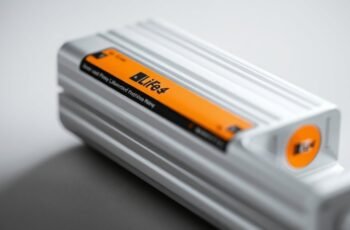
Studies show that LiFePO4 batteries can last up to 10 times longer than traditional lead-acid options, yet they also carry higher upfront costs—an important consideration for many applications. While their safety and durability are significant advantages, understanding their limitations, such as lower energy density and specific charging requirements, is essential. Exploring the detailed pros and cons can help determine whether they meet your long-term energy needs and project goals.
Key Takeaways
- Lifepo4 batteries offer superior thermal stability and safety, reducing overheating and fire risks.
- They have a longer cycle life, making them cost-effective over time despite higher upfront costs.
- Their lower energy density can limit use in space- or weight-sensitive applications.
- Proper maintenance and specialized chargers are necessary to optimize lifespan and performance.
- They are environmentally friendly with better recyclability and less hazardous disposal compared to traditional lithium-ion batteries.
What Are Lifepo4 Batteries and How Do They Work?
LiFePo4 batteries, also known as lithium iron phosphate batteries, are a type of rechargeable lithium-ion battery distinguished by their cathode chemistry. This chemistry offers enhanced thermal stability and safety compared to other lithium batteries. The cathode utilizes lithium iron phosphate, which contributes to a stable voltage profile and longer cycle life. Their battery chemistry enables efficient energy storage and release, making them suitable for various applications. Charging methods for LiFePo4 batteries typically involve CC/CV (constant current/constant voltage) protocols, ensuring safe and ideal charging without damaging the cell chemistry. The stability of the chemistry allows for higher charge and discharge rates, while also reducing risks of thermal runaway. Understanding these core aspects clarifies how LiFePo4 batteries operate and why they are increasingly favored in energy storage systems.
Advantages of Lifepo4 Batteries for Safety and Longevity
Lifepo4 batteries offer notable safety advantages through enhanced thermal stability, reducing the risk of overheating and thermal runaway. Their longer cycle life stems from stable chemical properties that minimize capacity loss over time, ensuring durability. Additionally, their reduced fire risk makes them a safer choice for diverse applications, especially where safety is paramount.
Enhanced Thermal Stability
Because of their inherent chemical stability, these batteries exhibit considerably enhanced thermal stability, which directly contributes to their safety and durability. Lifepo4’s stable chemistry minimizes risk of thermal runaway, even under high-stress conditions. Effective thermal management is achieved through efficient heat dissipation, preventing localized overheating that could compromise battery integrity. This inherent thermal stability allows Lifepo4 batteries to operate safely across a wide temperature range, reducing the need for complex cooling systems. The improved heat dissipation characteristics enhance reliability and longevity, as consistent temperature control limits material degradation over time. Consequently, Lifepo4 batteries are less prone to thermal-related failures, making them particularly suitable for applications demanding high safety standards and long service life.
Longer Cycle Life
A longer cycle life substantially enhances the overall durability and reliability of these batteries, making them ideal for applications requiring frequent charging and discharging. This extended lifespan results from the stable chemistry of Lifepo4 cells, which resist degradation over multiple cycles. Consequently, they support better long-term performance, reducing the need for frequent replacements. Additionally, the durability influences manufacturing costs positively, as fewer batteries need replacing, and it facilitates more efficient battery recycling at end-of-life.
- Increased number of charge/discharge cycles
- Reduced degradation over time
- Lower long-term replacement costs
- Improved sustainability via battery recycling
- Minimized performance loss, maintaining capacity
This combination of longevity and recyclability underscores Lifepo4 batteries’ value in demanding, sustainable energy solutions.
Reduced Fire Risk
The inherent chemical stability of Lifepo4 batteries considerably reduces the risk of fire compared to other lithium-ion chemistries, making them a safer choice for various applications. This stability minimizes thermal runaway incidents, a primary concern in fire safety and risk mitigation. Lifepo4’s robust chemistry resists overcharging and high temperatures, markedly decreasing the likelihood of catastrophic failures. Consequently, these batteries provide enhanced safety margins, especially in high-demand or confined environments. Their lower propensity for thermal instability translates into a reduced fire risk, offering peace of mind for users and operators. Overall, the intrinsic safety features of Lifepo4 batteries make them an attractive option where fire safety and risk mitigation are paramount, ensuring more reliable and secure energy storage solutions.
Environmental Benefits of Choosing Lifepo4 Technology
Choosing LiFePO4 (lithium iron phosphate) batteries offers significant environmental advantages due to their inherently safer chemistry and longer lifespan compared to traditional lithium-ion alternatives. Their durability reduces the frequency of replacements, thereby minimizing waste. Additionally, LiFePO4 batteries support recycling initiatives by utilizing less toxic materials, easing disposal concerns. They also contribute to lower manufacturing pollution because of their scalable, cleaner production processes.
- Reduced waste through extended service life
- Safer chemical composition limits environmental hazards
- Enhanced recyclability due to non-toxic materials
- Lower emissions during manufacturing processes
- Decreased resource consumption over lifecycle
These factors collectively enhance sustainability, making LiFePO4 a more environmentally responsible choice.
Common Drawbacks and Limitations of Lifepo4 Cells
Despite their many advantages, LiFePO4 cells present certain limitations that can impact their suitability for specific applications. Cost considerations are significant, as these batteries often have higher upfront prices compared to traditional lithium-ion chemistries, which can hinder large-scale adoption. Additionally, charging challenges exist; LiFePO4 batteries require specialized chargers to prevent overvoltage and guarantee maximum performance. Their relatively low energy density means they store less energy per volume, limiting applications where space or weight is critical. Moreover, their voltage profile remains relatively flat, complicating state-of-charge estimation without dedicated monitoring systems. These drawbacks necessitate careful planning and technical adjustments, especially in systems demanding high energy density or simplified charging procedures, thereby affecting their overall versatility in certain use cases.
How Lifepo4 Batteries Compare to Traditional Lithium-Ion Batteries
While both LiFePO4 and traditional lithium-ion batteries are widely used energy storage solutions, they exhibit distinct characteristics that influence their suitability for various applications. LiFePO4 batteries generally offer longer cycle life and enhanced thermal stability, making them safer and more durable over time. In regard to battery recycling, LiFePO4’s stable chemistry simplifies recycling processes, potentially reducing environmental impact. When considering cost comparison, LiFePO4 batteries tend to have higher upfront costs but lower long-term maintenance expenses due to their lifespan. Conversely, traditional lithium-ion batteries often have a lower initial price but may require more frequent replacements. These differences impact overall lifecycle economics and environmental considerations, guiding users toward more sustainable and cost-effective choices depending on their specific needs.
Factors to Consider Before Buying a Lifepo4 Battery
When evaluating LiFePO4 batteries for specific applications, several key factors influence the decision-making process. Chief among these are battery capacity and price comparison. Battery capacity determines how much energy the battery can store, directly impacting runtime and system performance; selecting the appropriate capacity guarantees efficiency without overspending. Price comparison is equally critical, as LiFePO4 batteries vary considerably in cost based on quality, brand, and features. It’s essential to balance upfront investment against long-term benefits, such as lifespan and safety. Additionally, consider voltage compatibility, discharge rates, and warranty terms to make sure the battery aligns with your project requirements. By thoroughly appraising these factors, you optimize both performance and value, making a well-informed purchase decision.
Maintenance Tips to Maximize Lifepo4 Battery Performance
Ever wondered how to guarantee your LiFePO4 batteries perform at their best over their lifespan? Proper maintenance is essential for optimizing durability and efficiency. Adhering to correct charging etiquette prevents overcharging and deep discharges that reduce lifespan. Regularly monitoring voltage and temperature helps identify potential issues early. Implementing a consistent charge cycle minimizes capacity loss, while practicing responsible battery recycling ensures environmental sustainability. Keep terminals clean to prevent corrosion, and avoid exposing batteries to extreme temperatures. Additionally, maintaining proper storage conditions when unused preserves cell integrity. By following these measures, you can maximize performance, extend service life, and uphold safety standards, assure your investment yields reliable power over time.
Typical Use Cases and Best Applications for Lifepo4 Batteries
LiFePO4 batteries are particularly well-suited for applications requiring high safety, long cycle life, and reliable performance across various environments. They excel in renewable energy storage, electric vehicles, and backup power systems due to their stability and durability. When considering cost considerations, these batteries often have higher upfront costs but tend to reduce long-term expenses thanks to their extended lifespan and minimal maintenance needs. Their performance stability across temperature ranges makes them ideal for remote or challenging environments. However, supply chain factors can influence availability and pricing, especially as demand increases. Overall, their robustness and safety profile make them a preferred choice in critical applications where reliability outweighs initial investment, ensuring consistent operation over many years.
Is a Lifepo4 Battery Right for Your Energy Needs?
Determining whether a LiFePO4 battery aligns with your energy requirements involves examining its core advantages and limitations in relation to your specific application. Its high cycle life and thermal stability make it suitable for renewable energy storage and off-grid systems, but initial costs and weight may be drawbacks. Conducting a thorough cost comparison with other battery types helps determine economic feasibility, especially considering long-term savings from fewer replacements. Additionally, LiFePO4 batteries are easier to recycle, supporting sustainable practices through effective battery recycling. However, evaluating your energy demands requires understanding power needs, charging cycles, and environmental conditions. If your application demands longevity, safety, and eco-friendliness, a LiFePO4 battery might be an ideal choice. Otherwise, alternative options could better fit your budget or weight constraints.
Frequently Asked Questions
How Does Temperature Affect Lifepo4 Battery Performance?
Temperature profoundly influences Lifepo4 battery performance; thermal regulation is vital to sustain ideal function, as high temperatures diminish lifespan, while cold lowers capacity. Their temperature resilience differs, necessitating careful management for consistent, dependable operation in various environments.
Are Lifepo4 Batteries Prone to Capacity Fading Over Time?
Did you know Lifepo4 batteries typically retain over 80% capacity after 2,000 cycles? While they experience some capacity degradation over time, proper battery recycling and maintenance can considerably minimize capacity fading and extend their lifespan.
What Are the Recycling Options for Lifepo4 Batteries?
We analyze recycling programs for LiFePO4 batteries, emphasizing their environmentally friendly disposal. Effective recycling reduces environmental impact by reclaiming valuable materials like lithium, iron, and phosphate, ensuring sustainable battery lifecycle management and minimizing ecological harm.
Can Lifepo4 Batteries Be Used in High-Drain Applications?
We confirm that LiFePO4 batteries are suitable for high-drain applications, demonstrating excellent high drain compatibility and efficiently meeting demanding power requirements, making them ideal for devices or systems with significant power demands due to their stable chemical properties.
How Long Do Lifepo4 Batteries Typically Last in Real-World Use?
Sure, Lifepo4 batteries often last 8-10 years, yet their lifespan hinges on usage factors like depth of discharge and temperature. Ironically, proper care extends their longevity, making them a reliable, long-term power solution in demanding applications.
Conclusion
In sum, choosing a LiFePO4 battery isn’t just a smart decision—it’s a revolutionary leap toward unstoppable, sustainable energy mastery. While their initial investment might seem steep, their unparalleled safety, longevity, and eco-friendly credentials guarantee they’ll outperform any conventional system, transforming your energy landscape into a fortress of reliability. For those committed to pushing the boundaries of efficiency and environmental responsibility, LiFePO4 batteries are not just an option—they’re the definitive future of energy storage, period.