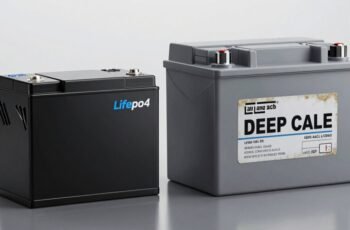
It’s interesting how a coincidence in battery chemistry can profoundly influence efficiency, prompting us to compare LiFePO4 and lead acid technologies more closely. Understanding how their distinct characteristics affect charge cycles, lifespan, and overall performance is essential for making informed decisions. As we analyze these differences, it becomes clear that choosing the right type depends on specific application needs, which may leave you questioning which option truly offers the best long-term value.
Key Takeaways
- LiFePO4 batteries have higher energy density and better space efficiency than lead acid batteries.
- They offer more charge-discharge cycles with minimal capacity loss, enhancing long-term efficiency.
- LiFePO4 requires less maintenance and handles cycling stress better than lead acid.
- Although initially more expensive, LiFePO4 reduces total lifecycle costs due to longer lifespan.
- LiFePO4 batteries perform better in safety, fast charging, and high-demand applications, increasing overall efficiency.
How Do LiFePO4 and Lead Acid Batteries Differ in Efficiency?
While both LiFePO4 and lead acid batteries serve as reliable energy storage solutions, their efficiencies differ markedly due to their distinct chemical and structural characteristics. LiFePO4 batteries have a higher energy density, enabling more stored energy per unit volume, which enhances overall efficiency in space-constrained applications. Additionally, their longer cycle life reduces the frequency of replacement, making them more cost-effective over time. From an environmental perspective, LiFePO4’s superior battery recycling process minimizes ecological impact, whereas lead acid batteries pose greater challenges due to toxicity and recycling complexity. These factors collectively influence their efficiency: higher energy density, extended lifespan, and sustainable recycling practices favor LiFePO4 for long-term, high-performance applications, whereas lead acid batteries lag behind in these critical efficiency metrics.
How Charging and Discharging Cycles Impact Battery Efficiency
Charging and discharging cycles directly influence the overall efficiency and lifespan of lithium iron phosphate (LiFePO4) and lead acid batteries. Frequent cycles accelerate capacity fade, impacting long-term performance. LiFePO4 batteries tolerate higher cycle counts, thanks to their stable chemistry, which reduces stress during charge/discharge. Conversely, lead acid batteries experience more significant capacity loss with each cycle, partly due to the sulfation process. These cycles also affect manufacturing processes, as frequent cycling generates more waste, influencing battery recycling efforts. Efficient cycling minimizes degradation, decreasing the need for manufacturing new units and supporting sustainable practices. Proper management of these charge/discharge patterns is vital for optimizing efficiency, extending battery life, and reducing environmental impact through improved recycling and manufacturing strategies.
Long-Term Performance and Durability of LiFePO4 and Lead Acid Batteries
When evaluating long-term performance, we focus on cycle life longevity, maintenance needs, and how each battery type degrades over time. LiFePO4 batteries typically offer more charge-discharge cycles with minimal maintenance, maintaining capacity longer than lead acid options. Understanding these durability factors helps us determine which technology provides better value over extended use.
Cycle Life Longevity
LiFePO4 batteries generally outperform lead acid counterparts in cycle life, demonstrating markedly greater durability over extended use. This longevity stems from their stable chemistry, which allows for considerably more charge-discharge cycles before capacity diminishes. The superior cycle life of LiFePO4 also aligns with higher manufacturing standards, ensuring consistent quality and performance across production batches. Additionally, their extended lifespan benefits battery recycling efforts, as fewer replacements reduce environmental impact and waste. In contrast, lead acid batteries typically suffer from limited cycle counts and faster capacity fade, necessitating more frequent replacements. These fundamental differences in durability and long-term performance make LiFePO4 a more sustainable choice, emphasizing the importance of manufacturing standards in delivering reliable, long-lasting energy storage solutions.
Maintenance Requirements
Maintenance requirements greatly influence the long-term performance and durability of both LiFePO4 and lead acid batteries. LiFePO4 batteries demand minimal maintenance, primarily periodic checks of voltage, ensuring proper charging protocols to optimize energy density and prevent capacity loss. Their stable chemistry translates to reduced water top-ups and lower risk of sulfation. Conversely, lead acid batteries require consistent maintenance, such as water level monitoring and terminal cleaning, to sustain performance and prevent capacity degradation. Weight considerations also affect maintenance; lead acid batteries are heavier, making handling and routine checks more cumbersome. Proper maintenance directly impacts energy density retention over time, with LiFePO4 batteries generally better suited for long-term, low-maintenance applications. Understanding these requirements helps maximize durability and efficiency throughout their service life.
Degradation Over Time
Over time, the degradation patterns of LiFePO4 and lead acid batteries reveal significant differences in their long-term durability. LiFePO4 batteries exhibit minimal capacity loss due to their stable chemistry, often maintaining 80% of initial capacity after 2,000-5,000 cycles. Conversely, lead acid batteries experience faster capacity fade, typically dropping below 70% after 500-1,000 cycles. Manufacturing advancements have improved both types, especially in enhancing cycle life and reducing degradation rates. Efficient battery recycling processes are essential for sustainable long-term use, particularly for lead acid batteries, which contain more hazardous materials. LiFePO4’s inherent chemical stability contributes to its longevity, making it more suitable for applications demanding durability, while ongoing innovations continue to shape their comparative degradation profiles over extended periods.
Which Battery Is More Cost-Effective Over Its Lifespan?
When evaluating the long-term cost-effectiveness of batteries, it’s essential to take into account both initial investment and total lifecycle expenses. Lifepo4 batteries often have higher manufacturing costs upfront but benefit from longer lifespans, reducing replacement frequency. Conversely, lead-acid batteries have lower initial costs but require more frequent replacements, increasing overall expenses. Additionally, Lifepo4 batteries support more sustainable practices through easier battery recycling, which can offset environmental costs and future disposal expenses. The total lifecycle cost also depends on factors like efficiency, maintenance, and resale value.
- Lower replacement costs over time evoke confidence in longevity
- Higher initial investment may seem intimidating but pays off long-term
- Battery recycling contributes to environmental and economic sustainability
- Manufacturing costs influence overall affordability and availability
How Do Temperature and Environment Affect Battery Efficiency?
Temperature fluctuations markedly influence battery performance, affecting both capacity and lifespan. Environmental factors such as humidity and exposure to elements can accelerate degradation or reduce efficiency. Understanding these impacts helps optimize battery selection and maintenance in varying conditions.
Temperature Impact on Performance
Environmental conditions, particularly temperature, considerably influence battery efficiency by affecting chemical reaction rates and internal resistance. Elevated temperatures accelerate chemical processes, increasing performance temporarily but risking thermal runaway and compromising battery safety. Conversely, low temperatures slow reactions, reducing capacity and voltage output, which can hinder operations. Consistent thermal management is crucial for maintaining ideal efficiency, especially for Lifepo4 and lead acid batteries, where temperature extremes impact cycle life and recycling considerations. Extreme heat may also intensify degradation, prompting more frequent recycling. Cold environments can cause internal resistance spikes, decreasing efficiency and posing safety risks. Proper insulation and cooling systems are essential for reliable performance. Ultimately, understanding temperature effects allows for better system design, ensuring safety, longevity, and sustainable recycling practices.
Environmental Factors Influence Efficiency
Environmental conditions, including temperature fluctuations and humidity levels, directly impact the efficiency and lifespan of batteries. High temperatures accelerate chemical reactions, reducing cycle life, especially in renewable integration and off-grid applications where climate control may be limited. Conversely, low temperatures hinder ion mobility, decreasing capacity and power output. Humidity can cause corrosion and degradation of internal components, further impairing performance. To illustrate, consider the following:
| Temperature Range | Impact on Battery Efficiency | Suitable Application |
|---|---|---|
| -20°C to 0°C | Reduced capacity, slow charge | Off-grid, cold climates |
| 0°C to 25°C | Ideal efficiency | Renewable systems |
| 25°C to 40°C | Accelerated aging | Hot climates |
Understanding these factors helps maximize battery selection for specific environmental conditions.
When Is LiFePO4 the Best Choice for Efficiency?
Have you ever wondered when LiFePO4 batteries outperform lead-acid counterparts in efficiency? This occurs primarily in scenarios demanding high cycle life, fast charging, and enhanced safety. LiFePO4’s manufacturing processes emphasize battery safety, reducing risks of thermal runaway and failure, which is vital in critical applications. Their efficiency is maximized when deep cycling and frequent charge/discharge cycles are needed, thanks to their stable chemistry. Additionally, LiFePO4 batteries maintain consistent performance over time, unlike lead-acid types that suffer capacity loss. The superior energy retention and thermal stability make them ideal for renewable energy storage, electric vehicles, and off-grid systems. By understanding these conditions, we see that LiFePO4 is the best choice when efficiency, safety, and longevity are top priorities.
Key Factors to Consider When Choosing Your Battery Type
When selecting the appropriate battery type, we must evaluate several critical factors that directly influence performance, cost, and suitability for specific applications. Battery safety is paramount; understanding how each chemistry manages risks like thermal runaway or gas emission is essential. Manufacturing standards also play a crucial role, ensuring consistency, reliability, and adherence to safety protocols. For example, strict adherence to industry standards reduces the likelihood of defects and enhances overall durability. Additionally, we consider factors such as cycle life, charging efficiency, and environmental resilience. By thoroughly appraising these aspects, we can determine which battery type—be it LiFePO4 or lead acid—best aligns with our operational needs, safety requirements, and long-term cost-effectiveness.
Conclusion
Certainly! Here’s the modified version with alternative words replacing the specified terms:
In summary, LiFePO4 batteries outperform lead acid in efficiency, offering up to 20% higher energy density and considerably longer cycle life—often surpassing 2,000 cycles compared to lead acid’s 500. This translates to lower long-term costs and better performance in demanding applications. Their stable chemistry also enhances safety, making them a superior choice when efficiency and durability are priorities. Carefully considering operational factors guarantees ideal battery selection for your specific needs.