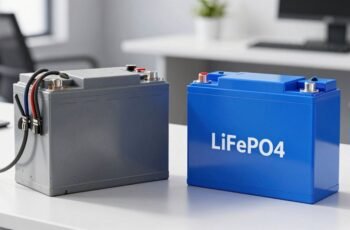
When evaluating batteries for solar applications, understanding the fundamental differences between Lifepo4 and lithium-ion technologies is vital. Each offers distinct advantages and limitations that impact safety, longevity, and overall value. As we analyze their performance, safety profiles, and cost-effectiveness, it becomes clear that choosing the best solution depends on specific system requirements and long-term goals. To make an informed decision, it’s necessary to examine these factors closely.
Key Takeaways
- Lifepo4 offers superior safety, thermal stability, and longer cycle life compared to lithium-ion batteries.
- Lithium-ion provides higher energy density, enabling more compact solar storage systems.
- Lifepo4 batteries have lower environmental impact and easier recycling processes.
- Lithium-ion batteries are more prone to safety risks if damaged or improperly managed.
- For long-term cost and sustainability, Lifepo4 is generally more advantageous for solar applications.
What Are the Main Differences Between Lifepo4 and Lithium-Ion Batteries?
While both Lifepo4 and lithium-ion batteries are popular choices for solar energy storage, they differ markedly in their chemistry, performance, and safety profiles. Battery chemistry plays a central role; Lifepo4 batteries utilize lithium iron phosphate, offering enhanced thermal stability and lower degradation rates. Lithium-ion batteries, often based on cobalt or nickel cathodes, deliver higher energy density but can be more prone to thermal runaway. Environmental impact also varies considerably. Lifepo4 batteries contain more abundant, less toxic materials, leading to a reduced environmental footprint during manufacturing and disposal. In contrast, traditional lithium-ion batteries involve critical materials with higher ecological concerns. These fundamental differences influence not only performance and safety but also the overall sustainability and ecological implications of each battery type for solar applications.
How Safe and Long-Lasting Are These Battery Types for Solar Use?
The safety and longevity of Lifepo4 and lithium-ion batteries are critical considerations for solar energy storage, as they directly impact system reliability and maintenance costs. Lifepo4 batteries generally offer superior safety due to thermal stability and reduced risk of thermal runaway, making them more reliable over long-term cycles. Lithium-ion batteries tend to have higher energy densities but are more susceptible to safety issues if damaged or improperly managed. Regarding longevity, Lifepo4 batteries typically last 2,000 to 5,000 cycles, whereas lithium-ion batteries often reach 1,000 to 2,000 cycles. Both types are increasingly recyclable, reducing environmental impact, but Lifepo4 batteries are easier to recycle due to simpler chemistry. Ultimately, safety and durability depend on proper management, impacting overall system sustainability and environmental considerations.
Which Battery Offers Better Value for Your Solar System?
Determining which battery offers better value for your solar system requires evaluating not only upfront costs but also long-term performance, safety, and maintenance expenses. Cost effectiveness hinges on factors like lifespan, efficiency, and operational stability. Additionally, battery recycling plays a crucial role in environmental sustainability and total ownership costs.
- Lifepo4 batteries typically have a longer cycle life, enhancing cost effectiveness over time.
- Lithium-ion batteries often feature higher initial costs but may require more frequent replacements.
- Recycling processes for Lifepo4 are more established, reducing environmental impact and potential disposal costs.
- Total cost analysis must incorporate maintenance, safety risks, and end-of-life recycling to accurately assess value.
Ultimately, Lifepo4 tends to offer better long-term value due to durability and recycling advantages, but each system’s needs vary.
How Do Lifepo4 and Lithium-Ion Batteries Compare in Performance and Charging?
When comparing Lifepo4 and lithium-ion batteries regarding performance and charging, it’s important to take into account their operational characteristics and how quickly they can be replenished. Lifepo4 batteries typically offer a longer cycle life and more stable performance under high discharge rates, which benefits solar applications requiring frequent cycling. Lithium-ion batteries generally have higher energy densities, allowing for more compact systems, but may degrade faster over time. In terms of charging, Lifepo4 batteries charge more efficiently and safely, with reduced thermal runaway risks. Battery manufacturing processes influence overall longevity and safety, while recycling processes are vital for environmental sustainability. Lifepo4’s simpler chemistry facilitates easier recycling, whereas lithium-ion batteries require more complex procedures, impacting their long-term sustainability profile.
How to Choose the Best Solar Battery for Your Needs
Selecting the most suitable solar battery requires a clear understanding of your energy needs, system size, and usage patterns. To make an informed choice, consider these factors:
- Capacity and Depth of Discharge: Match the battery’s capacity with your daily energy consumption, ensuring it supports your load without excessive cycling.
- Battery Chemistry and Lifecycle: Lifepo4 batteries offer longer cycle life and stability, reducing replacement frequency and environmental impact. Lithium-ion may have higher energy density but shorter lifespan.
- Recycling and Environmental Impact: Evaluate the availability of battery recycling options, as Lifepo4 batteries are less toxic and easier to recycle, minimizing ecological footprint.
- Cost and Efficiency: Balance upfront costs against operational efficiency, factoring in potential future recycling costs and environmental considerations.
Conclusion
Ultimately, choosing between Lifepo4 and lithium-ion batteries is like selecting the right tool for a specific job. Lifepo4 offers a robust, long-lasting foundation ideal for safety-conscious, sustainable solar systems, while lithium-ion provides compact energy density for space-constrained setups. We must assess our priorities—long-term durability versus high energy density—and match them to our system needs. In doing so, we guarantee our solar energy investment remains a well-tuned engine powering our future sustainably.