While some might assume all rechargeable batteries are interchangeable, understanding the distinct advantages and limitations of LiFePO4 versus Li-ion technologies is vital for ideal application. Each offers unique benefits—safety, longevity, energy density—that align differently with specific needs. As we analyze their characteristics, you’ll see that choosing the right battery involves more than just capacity; it requires a nuanced understanding of their trade-offs and long-term implications.
Key Takeaways
- LiFePO4 offers enhanced safety, thermal stability, and longer cycle life, while Li-ion provides higher energy density for portable use.
- LiFePO4 batteries are more environmentally friendly and easier to recycle due to less toxic materials.
- Li-ion batteries have higher energy density, making them suitable for compact, lightweight devices and electric vehicles.
- LiFePO4 has lower manufacturing costs but generally provides less energy storage capacity than Li-ion.
- Both chemistries face safety risks like thermal runaway, but LiFePO4 is inherently more stable.
How Do LiFePO4 and Li-Ion Batteries Differ?
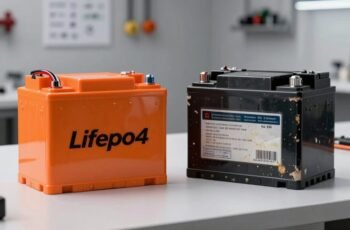
How do LiFePO4 and Li-Ion batteries differ in their fundamental chemistry and performance characteristics? LiFePO4 batteries utilize lithium iron phosphate cathodes, resulting in a more stable chemical structure compared to the cobalt-based cathodes in Li-Ion batteries. This stability enhances thermal safety and reduces degradation, impacting battery manufacturing processes by requiring specific design considerations. Performance-wise, LiFePO4 offers a longer cycle life and better thermal stability, but typically lower energy density than Li-Ion. Recycling challenges also differ; LiFePO4’s less toxic materials simplify disposal but demand specialized processes for recoverable materials, whereas Li-Ion batteries contain valuable but hazardous substances complicating recycling efforts. These fundamental chemistry distinctions influence not only performance but also manufacturing and end-of-life management strategies.
Benefits of LiFePO4 Batteries: Safety and Longevity
The distinct chemical composition of LiFePO4 batteries directly contributes to their notable safety and durability advantages. Their stable cathode material resists thermal runaway, reducing fire risks and making them safer for various applications. Additionally, LiFePO4 batteries demonstrate extended cycle life, often exceeding 2000 cycles, which enhances longevity and reduces replacement frequency. This durability positively impacts battery recycling efforts, minimizing environmental impact by decreasing waste. The table below summarizes these benefits:
| Aspect | Safety Features | Longevity and Sustainability | Environmental Impact |
|---|---|---|---|
| Chemical Stability | Thermal stability, low risk of fire | Long cycle life, reduced replacements | Less waste, easier recycling |
| Thermal Behavior | Resistance to overheating | Maintains capacity over time | Lower environmental footprint |
| Reusability | Safe in various conditions | Cost-effective due to longevity | Supports sustainable practices |
Why Choose Li-Ion Batteries for Higher Energy Density
Li-ion batteries are often chosen for applications requiring higher energy density because they can store markedly more energy in a compact volume or lightweight form compared to other chemistries. This efficiency makes them ideal for portable electronics and electric vehicles, where space and weight are critical. Their high energy density stems from advanced electrode materials that enable increased capacity. While their performance is advantageous, the environmental impact of battery recycling remains a concern, as lithium-ion cells contain materials that require careful disposal and recycling processes. Proper recycling minimizes environmental harm and recovers valuable materials. Choosing Li-ion batteries involves balancing their superior energy density with sustainable practices, ensuring that we maximize their benefits while addressing environmental considerations through effective battery recycling strategies.
Drawbacks of LiFePO4 and Li-Ion Batteries
While Li-ion batteries offer impressive energy density, they are not without significant drawbacks. One major concern is their environmental impact; the extraction of materials like cobalt and lithium raises sustainability issues and complicates recycling efforts. Additionally, the manufacturing costs of Li-ion batteries tend to be high due to the complex, resource-intensive processes involved. These costs can influence product pricing and overall adoption, especially in cost-sensitive applications. In contrast, LiFePO4 batteries generally have a lower environmental footprint and simpler manufacturing processes, but they trade off some energy density. Both types of batteries also face challenges related to long-term degradation and safety risks, such as thermal runaway in Li-ion cells, which require rigorous safety measures.
Which Battery Is Best for Your Needs? A Quick Guide
Choosing the right battery depends heavily on your specific application and priorities. For instance, if longevity and safety are paramount, Lifepo4 batteries excel due to their thermal stability and longer cycle life, supporting sustainable practices like battery recycling. Conversely, Li-ion batteries typically offer higher energy density, making them suitable for compact devices but with shorter lifespans. Cost comparison is also vital; Li-ion batteries generally have a lower upfront cost but may incur higher long-term maintenance and recycling expenses. When evaluating options, consider the environmental impact, especially regarding battery recycling, which affects overall sustainability. Ultimately, the decision hinges on balancing initial investment, operational needs, safety, and environmental considerations to select the most appropriate technology for your specific use case.
Conclusion
In the end, choosing between LiFePO4 and Li-ion batteries is all about balancing safety and longevity against energy density and size. Ironically, the safer, more durable LiFePO4 isn’t always the best for portable devices, while the high-energy Li-ion’s risks and shorter lifespan might be acceptable for sleek electronics. Ultimately, your specific needs determine the winner—sometimes, the safest option isn’t the most convenient.