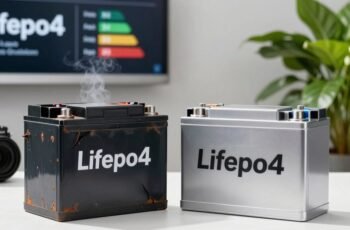
When comparing Lifepo4 batteries to traditional lithium-ion types, we recognize differences rooted in chemistry and safety features that could influence their reliability. While Lifepo4 batteries are often considered safer due to their stability and thermal resistance, it is crucial to examine how these qualities translate into real-world performance and risk reduction. Understanding these distinctions can help us make more informed choices, but the full picture involves considering multiple safety factors that warrant closer inspection.
Key Takeaways
- Lifepo4 batteries have higher thermal stability, reducing the risk of thermal runaway and fire compared to traditional lithium-ion batteries.
- They exhibit greater chemical stability, making them less prone to decomposition, overheating, and hazardous reactions.
- Lifepo4 batteries are more resistant to puncture, impact, and mechanical shocks, enhancing safety during physical damage.
- Their inherent safety features result in lower risks of fire, explosion, and hazardous waste during disposal.
- Proper management and manufacturing standards further improve the safety and reliability of Lifepo4 batteries over conventional lithium-ion types.
What Are the Main Chemical Differences Between Lifepo4 and Lithium-Ion Batteries?
While both Lifepo4 and traditional lithium-ion batteries rely on lithium-based chemistries, their core chemical structures differ markedly, affecting performance and safety. Lifepo4 batteries utilize lithium iron phosphate as the cathode material, offering greater thermal stability and reduced risk of thermal runaway. In contrast, typical lithium-ion batteries often contain cobalt or nickel-based cathodes, which are more prone to overheating. These chemical distinctions influence the environmental impact and battery recycling processes. Lifepo4’s stable chemistry simplifies recycling efforts and minimizes hazardous waste, lowering environmental concerns. Additionally, their inherent safety reduces the risk of fires during disposal. Understanding these chemical differences is essential for evaluating long-term sustainability and safety in battery applications, emphasizing the importance of careful material selection and responsible battery recycling practices.
How Do Safety Features in Lifepo4 Batteries Compare to Traditional Lithium-Ion?
Lifepo4 batteries incorporate several safety features that generally make them safer than traditional lithium-ion batteries. Their stable chemical composition reduces the risk of thermal runaway, which can cause fires or explosions. This stability extends battery lifespan and minimizes environmental impact by reducing the likelihood of hazardous leaks or failures.
| Feature | Lifepo4 Batteries | Traditional Lithium-Ion Batteries |
|---|---|---|
| Thermal stability | High, less prone to overheating | Moderate, risk of thermal runaway |
| Chemical stability | Very stable, less decomposition risk | Less stable, more prone to degradation |
| Safety during abuse | Better resistance to puncture, overcharge | Higher risk of hazards under stress |
| Environmental impact | Lower, fewer toxic byproducts | Higher, potential toxic leaks |
How Do These Batteries Perform in Real-World Safety Tests?
We examine how Lifepo4 and lithium-ion batteries respond under real-world safety tests, including fire resistance, impact, and thermal stability. These assessments provide critical insights into their behavior during extreme conditions. Understanding these results helps us evaluate their overall safety performance more accurately.
Fire Resistance Tests
How do Lifepo4 batteries perform under rigorous fire resistance tests compared to traditional lithium-ion batteries? Generally, Lifepo4 batteries demonstrate superior fire resistance due to their stable chemistry and robust manufacturing standards. During controlled fire tests, they tend to resist thermal runaway, reducing the risk of ignition or explosion. This stability is vital for safety-critical applications and aligns with best practices for battery recycling, minimizing hazardous waste. However, testing conditions vary, and real-world scenarios demand cautious interpretation. While Lifepo4 batteries often outperform lithium-ion in fire resistance, ongoing research emphasizes the importance of strict manufacturing standards to guarantee safety. Understanding these differences helps consumers and industries make informed choices about battery safety and the significance of adhering to safety protocols during production and disposal.
Impact and Drop Resistance
Though specific impact and drop tests vary across manufacturers, Lifepo4 batteries generally exhibit strong resilience to mechanical shocks and drops, owing to their rigid cell design and stable chemistry. Their robust construction often results in less deformation or internal damage during accidental impacts, reducing risk of short circuits or thermal events. This durability can contribute to safer handling and longer lifespan, which also benefits manufacturing processes by minimizing damage-related waste. Additionally, the safer profile of Lifepo4 batteries influences battery recycling practices, as they are less prone to hazardous failures during disassembly. However, it’s crucial to acknowledge that real-world performance depends on quality control, testing standards, and consistent manufacturing practices. While promising, thorough impact testing remains essential to fully evaluate their resilience under various conditions.
Thermal Stability Performance
When evaluating the thermal stability of Lifepo4 batteries in real-world safety tests, evidence indicates they tend to outperform traditional lithium-ion chemistries. Their inherently stable chemistry minimizes the risk of thermal runaway, even under extreme conditions. This stability is further enhanced by manufacturing processes that emphasize consistent quality and safety protocols. Additionally, Lifepo4 batteries generate less heat during operation, reducing the likelihood of overheating. From a safety perspective, their resilience supports safer battery recycling practices, as they are less prone to fire or explosion during disposal. However, ongoing research continues to examine how different manufacturing processes impact overall thermal stability, especially in large-scale applications. Overall, Lifepo4 batteries demonstrate promising safety advantages in real-world thermal stability testing.
Are Lifepo4 Batteries Less Prone to Overheating and Fires?
Lifepo4 batteries are known for their superior thermal stability, which reduces the likelihood of overheating under stress. This stability translates into lower fire risks, even when subjected to overcharge conditions, where they exhibit higher tolerance levels. Understanding these safety features is essential when evaluating their overall resistance to thermal events and fires.
Thermal Stability Advantages
Because of their chemical composition, Lifepo4 batteries inherently exhibit greater thermal stability compared to traditional lithium-ion batteries. This stability stems from their robust chemical structure, which resists thermal runaway and minimizes overheating risks. Their voltage consistency ensures reliable performance across charge cycles, reducing stress on internal components. These factors combined contribute to a lower likelihood of overheating and fires.
Key thermal stability advantages include:
- Enhanced chemical stability reduces degradation under high temperatures
- Consistent voltage output maintains system safety and efficiency
- Lower risk of thermal runaway due to stable electrode chemistry
- Greater resistance to overheating during rapid charging or heavy loads
Reduced Fire Risks
While all lithium-ion batteries carry some risk of overheating, Lifepo4 chemistries inherently present a lower likelihood of thermal runaway and fires. This safety advantage stems from their stable chemical structure and robust manufacturing processes. Lifepo4’s thermal stability reduces the chance of internal short circuits that could lead to fires. Additionally, the use of safer materials facilitates more environmentally friendly battery recycling, minimizing fire hazards during disposal. The manufacturing processes for Lifepo4 batteries prioritize safety standards and rigorous quality control, further decreasing risks.
| Feature | Impact on Fire Risk |
|---|---|
| Chemical stability | Reduces thermal runaway potential |
| Manufacturing quality | Limits internal defects |
| Battery recycling | Safer disposal, less fire risk |
| Thermal stability | Maintains safe operation under stress |
| Material safety | Minimizes flammable reactions |
Overcharge Tolerance Levels
Overcharge conditions pose a significant risk for many lithium-ion battery chemistries, often leading to overheating and potential fires. Lifepo4 batteries, however, exhibit higher overcharge tolerance levels, making them inherently safer in this regard. Their stable chemistry reduces the likelihood of thermal runaway, decreasing fire hazards and overheating risks. This stability also benefits environmental impact, as safer batteries are easier to recycle, minimizing toxic waste. Nonetheless, strict battery management systems are essential to prevent overcharging altogether.
- Lifepo4’s higher overcharge tolerance reduces the risk of thermal runaway
- Improved safety supports more sustainable battery recycling practices
- Lower overheating potential decreases fire-related hazards
- Despite robustness, proper charging protocols remain critical for safety
How Resistant Are Lifepo4 Batteries to Damage and Short Circuits?
LiFePO4 batteries are particularly more resistant to damage and short circuits compared to traditional lithium-ion variants. Their stable chemistry minimizes the risk of thermal runaway, making them safer in fault conditions. This durability enhances battery lifespan and reduces environmental impact by decreasing the likelihood of hazardous failures. To illustrate, consider the following comparison:
| Feature | LiFePO4 | Lithium-ion |
|---|---|---|
| Damage & Short Circuit Resistance | High | Moderate |
| Thermal Stability | Excellent | Moderate |
| Risk of Fire/Explosion | Very Low | Higher |
| Impact on Battery Lifecycle | Longer lifespan, safer use | Shorter lifespan, higher risk |
What Factors Should You Consider to Choose the Safer Battery for Your Needs?
Choosing the safest battery for your needs requires careful consideration of multiple factors, as not all batteries offer the same level of safety under various conditions. Key considerations include the battery’s lifespan, which impacts long-term reliability and safety; manufacturing processes, affecting consistency and defect rates; and how well the chemistry withstands thermal stress. Additionally, understanding the design features that mitigate risks—such as built-in safety mechanisms—is vital. It’s also important to evaluate how the battery performs under extreme conditions and its resistance to damage. Ultimately, selecting a battery with robust manufacturing standards and proven durability helps reduce safety concerns and guarantees better performance over time.
- Battery lifespan and degradation rates
- Manufacturing processes and quality control
- Thermal and mechanical stability
- Safety features and protective mechanisms
Conclusion
Considering all the safety features and chemical stability, LiFePO4 batteries generally present a safer option than traditional lithium-ion models. Their resistance to overheating, thermal runaway, and mechanical damage reduces significant risks. However, no battery is entirely risk-free. As we evaluate safety, should we solely rely on chemistry, or also consider proper handling, manufacturing quality, and usage conditions to genuinely guarantee safety? Ultimately, informed choices help us mitigate potential hazards effectively.